Samrudhdi Kerkar
We often see flowers as symbols of beauty and positivity. We love to decorate our surroundings with them and pause to inhale their fragrance. But there are some flowers which are not only a feast for the eyes, but also a delight for our taste buds and a gift to our health. The flowers of Moringa oleifera are one such treasure. Commonly known as the drumstick tree, it is a fast growing, drought-resistant tree native to northern India. In Goa and the Konkan region, it is lovingly called shegul.
Shegul is one of my favourite trees. From its leaves and tender stalks to its delicate flowers and long pods, every part of the tree finds its way into traditional Goan bhajis (vegetables). Among them, the flowers hold a special charm, not just for their gentle appearance but for their wonderful taste. The tree bears intricate, feathery leaves, which are cooked as a leafy vegetable locally known as Mhaskachi Bhaji.
This leafy vegetable holds a sacred place in a dish prepared with five different leafy greens, especially during Gauri Puja, celebrated as part of Ganesh Chaturthi in Goa. Tossed with earthy Bhikna (dried jackfruit seeds), the dish carries the flavours of tradition. So irresistible is this Gaurichi Bhaji that even those who usually dislike leafy vegetables eagerly line up to relish it. It is best enjoyed with Nachnichi Bhakri, the humble, nourishing flatbread made of ragi.
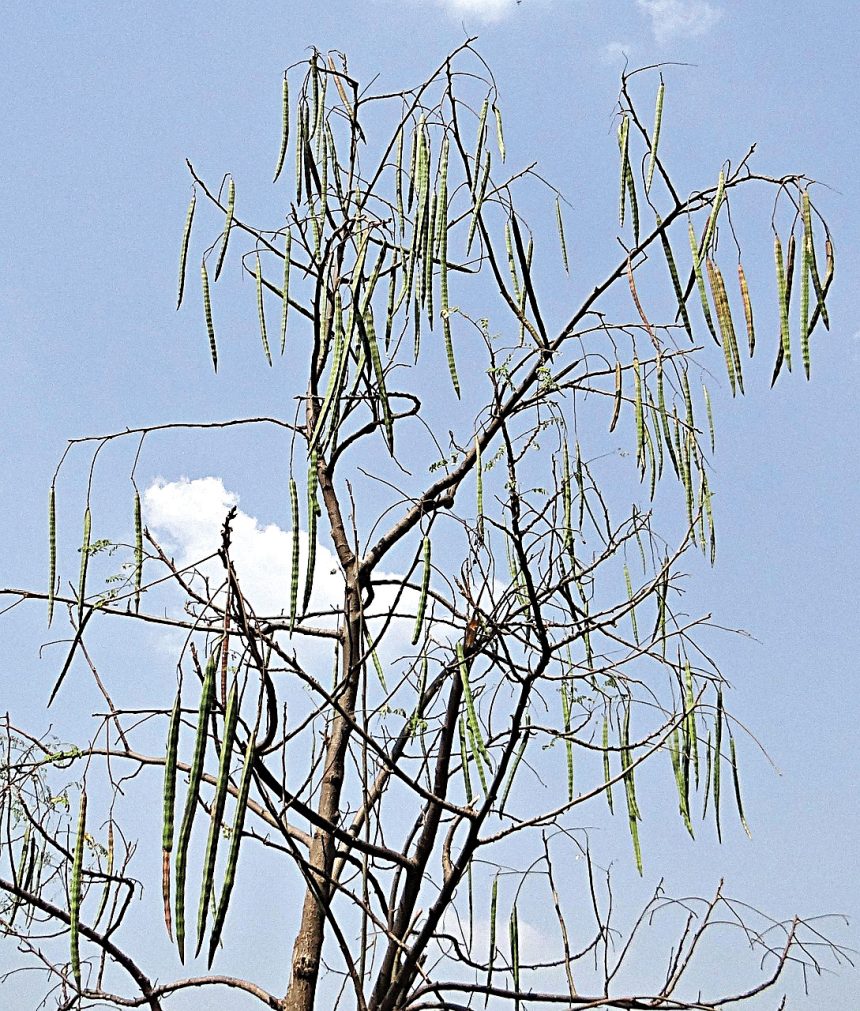
Between March and May, or from July to October, the tree is laden with long seed pods that hang down gracefully in clusters. These pods are called ‘drumsticks’ and are locally known as Shengyo, a favourite ingredient in Goan kitchens. They are parboiled, fried, and cooked into various curries, soups, and traditional dishes. In particular, they lend a wonderful flavour to classic Goan preparations like Tisryo (clams) curry or prawn curry.
Beyond its taste and aesthetics, the tree is also immensely valuable. Rich in nutrients, antioxidants, and vitamins, Moringa has been treasured in traditional Ayurvedic medicine and is believed to help treat as many as 300 ailments. A tea prepared from its leaves is known to help fight colds and infections. Today, Moringa powder made from dried leaves is also easily available and is often added as a healthy tweak to daily lifestyles.
When the tree blooms, it is adorned with clusters of creamish-white flowers that resemble tiny popcorn blossoms. With a gentle blow of wind, these delicate flowers drift down softly, settling on the ground like snowflakes and forming a tender white blanket beneath the tree. I love gathering these tiny fallen flowers and turning them into a tasty and nourishing vegetable.
I can spend hours patiently collecting the blossoms one by one in a dupatta. Even when dried, these flowers make a scrumptious treat, simply prepared by adding chopped onion, garlic, and chillies
It is said, “A house needs neighbours. A neighbour can be a support, but we cannot choose the neighbours who live around us. On the contrary, when we have trees as neighbours, they are often more useful and kinder than people.”
Marathi writer Madhu Mangesh Karnik has beautifully captured his heartfelt memory of a Moringa tree planted by his mother, titled ‘Aaicha Shevga.’ It makes one realise that trees are not just plants growing in the soil. They grow alongside our lives, silently witnessing our days, our routines, and our emotions. And when such a tree is lost, it is not merely wood that disappears, but a presence we had grown used to. One that continues to live within us, long after it is gone.