NT Reporter
Panaji
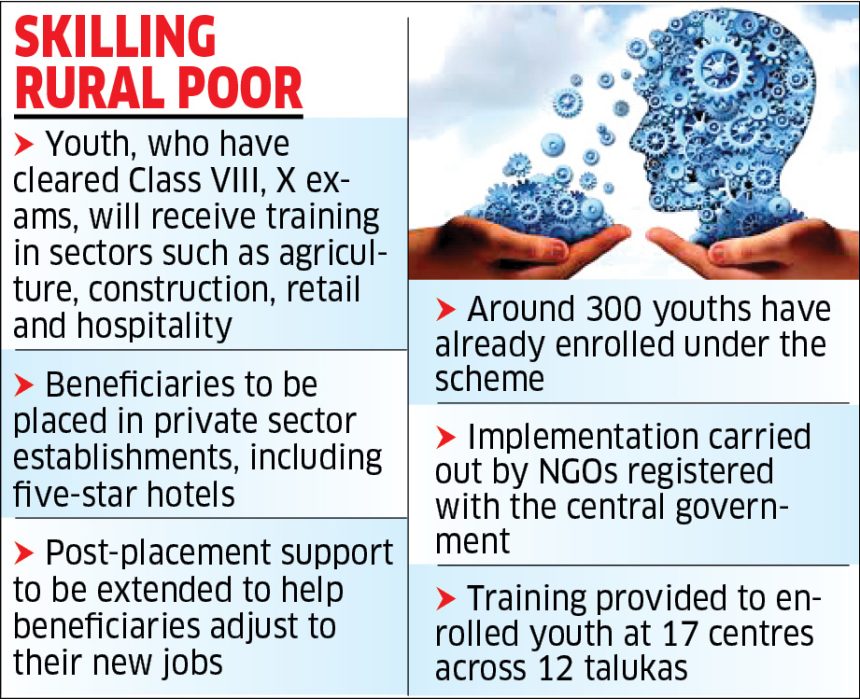
Goa has become the only state in the country to implement the Deen Dayal Upadhyaya Grameen Kaushalya Yojana (DDU-GKY) to provide skill training and assured placement to poor rural youth in private sector establishments, including five-star hotels, Chief Minister Pramod Sawant said.
Sawant said the scheme, introduced by the Union Ministry of Rural Development, is being implemented in Goa through the Rural Development Agency and focuses on providing sustainable employment to rural poor youth.
He said the scheme aims to offer high-quality skill training opportunities to the rural poor while creating an ecosystem that supports trained candidates in securing long-term employment, with incentives for post-placement tracking, retention and career progression. Sawant said youth who have passed Std VIII and Std X and are aged between 18 and 35 years from the general category are eligible under the scheme, while the age limit for women, Scheduled Castes, Scheduled Tribes and persons with disabilities is 18 to 45 years.
“The rural youth from below poverty line and poor households whose annual income is below Rs 5 lakh shall obtain a certificate from the local village panchayats. The government has given instructions to the local rural bodies to issue such certificates to the youth for the purpose of this scheme,” he said.
Sawant said around 300 youths have already enrolled under the scheme and that its implementation in Goa will be carried out by NGOs registered with the central government.
“Initially, training will be provided to enrolled youth at 17 centres across 12 talukas. The training will be provided free of cost, including free uniform and accommodation, and they will be paid Rs 160 per day as stipend during the training period,” he said.
After completion of skill training, beneficiaries will be provided placements in various private sector establishments, including five-star hotels. The programme offers training in sectors such as agriculture, construction, retail and hospitality, and includes placement assistance through employer linkages, resume preparation and interview support. Sawant said post-placement support will also be extended to help beneficiaries adjust to their new jobs, including mentorship, counselling and access to necessary resources. He added that identification of beneficiaries will be carried out through the Participatory Identification of Poor process.