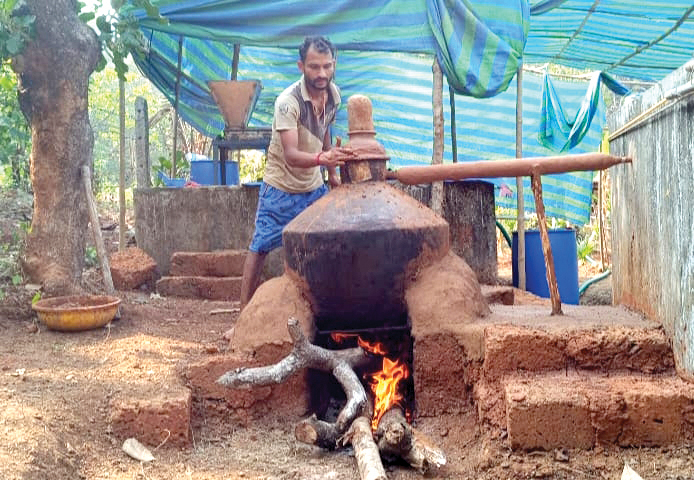
Shifting weather patterns, labour constraints and weak value realisation are steadily undermining Canacona’s once-thriving cashew-based rural economy writes Abel Barretto
Even as Canacona’s cashew secured a Geographical Indication (GI) tag in 2023, the taluka’s most defining inland crop is grappling with a growing crisis that threatens its long-standing economic and cultural significance.
The hills and countryside of Canacona, long synonymous with sprawling cashew plantations, continue to offer a picturesque landscape and sustain thousands of livelihoods. Introduced to Goa by the Portuguese from Brazil to arrest soil erosion, the cashew tree evolved into a cornerstone of the local agrarian economy. Today, it remains a key income source for small and marginal farmers, supporting seasonal activities ranging from orchard maintenance and harvesting to processing, distillation and sale.
Out of nearly 9,000 hectares under agriculture in the taluka, around 3,500 hectares are dedicated to cashew cultivation. Last year, Canacona produced 1,392 tonnes of raw cashew nuts, generating about Rs 24 crore for farmers. The crop also contributes to government revenue through the auction of forest department plots and distillation licences, while feeding into the production of popular local beverages such as urrak and feni.
However, beneath this economic significance lies a sector under mounting stress. Farmers say that the GI tag, while boosting recognition, has done little to address the ground realities that are steadily eroding profitability and sustainability.
Erratic climatic conditions have emerged as a key concern. Irregular rainfall, fluctuating temperatures and reduced winter stress—particularly the decline in night-time dew—have adversely affected flowering and fruit set, leading to lower yields and increased instances of rot. The decline of honeybee populations, essential for natural pollination, has further compounded the problem.
Agronomic challenges persist as well. Inadequate orchard care, limited use of manure and poor water conservation practices have contributed to declining productivity. With many cashew plantations located on hill slopes, the depletion of groundwater has made the situation more precarious.
At the same time, rising costs and labour shortages are placing additional pressure on farmers. Cashew farming remains labour-intensive, beginning with the clearing of vegetation after the monsoon—a process crucial for improving air circulation and boosting yields. This year, extended rains delayed these operations. Although government subsidies of up to 90 per cent have enabled the use of mechanised bush cutters, labour charges ranging from Rs 1,200 to Rs 1,500 per hour, excluding fuel costs, have made operations expensive.
The shift away from traditional family-based farming to dependence on migrant labour has further escalated costs, with farmers required to provide accommodation and food to workers amid persistent labour shortages.
Human-wildlife conflict has also become a recurring challenge. Farmers report frequent instances of leopards and gaurs entering villages during the cashew season, while monkeys, cattle and porcupines cause significant damage to fruits and nuts, reducing both yield and income.
Despite being organically grown by default, Goan cashew nuts do not fetch premium prices in the market. Even when processed kernels command higher rates, farmers say the benefits rarely reach them. Cashew apples, though rich in vitamin C and antioxidants, are often discarded by growers who lack the infrastructure to process them into value-added products due to their highly perishable nature.
While government support through subsidies, minimum support price (MSP) and equipment assistance has provided some relief, stakeholders say it is insufficient to offset rising input costs. Traditional distillers, in particular, point to the high cost of setting up and maintaining infrastructure such as cooling tanks, crushing units, copper vessels and storage facilities.
“Support for distillers would go a long way in sustaining this traditional occupation,” said Tolu Gaonkar, a cashew farmer from the taluka.
Small-scale distillers, or bhatti owners, continue to face stiff competition from commercial brands. Limited access to packaging, branding and distribution forces them to sell in bulk to middlemen, resulting in lower returns despite producing high-quality feni.
The influx of cheaper imported cashew nuts from African countries, Indonesia and Vietnam has further weakened the viability of local cultivation. Although the government has fixed an MSP of Rs 170 per kg, farmers maintain that a rate of at least Rs 250 is necessary to sustain the sector.
With climate uncertainties, rising costs, labour shortages and market pressures converging, many farmers are gradually shifting to alternative crops such as mangoes. Stakeholders warn that unless timely and coordinated interventions are undertaken, Canacona’s traditional cashew economy could face a steady decline despite its recognised GI status.
Farmers say a comprehensive approach involving policy support, improved market access, value addition and targeted assistance to small producers is essential to revive the sector and sustain livelihoods, while also aligning with the state’s broader goal of self-reliance under the Swayampurna initiative.