NT Reporter
Panaji
Goa’s handicrafts sector
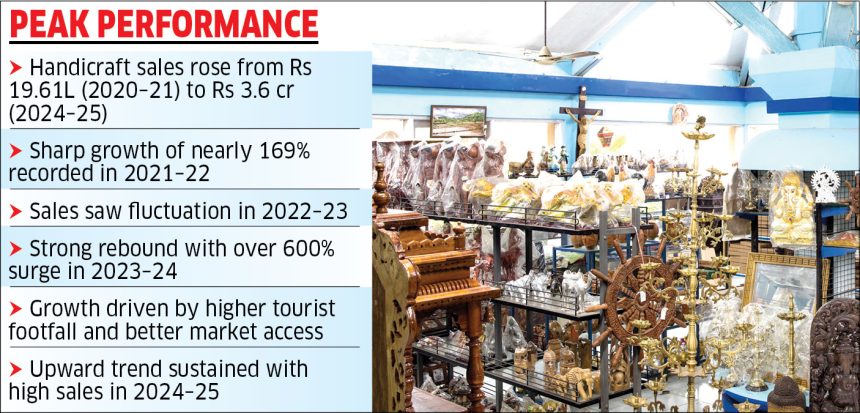
has recorded a growth of over 1,730 per cent in production and sales over the past five years, with data indicating a sharp rise in market demand and artisan output.
According to figures provided by the Department of Handicrafts, Textile and Coir, total handicraft sales increased from Rs 19.61 lakh in 2020-21 to Rs 3.6 crore in 2024-25.
After an initial rise of nearly 169 per cent in 2021-22 compared to 2020-21, the sector experienced some fluctuation in 2022-23. However, a strong recovery followed, with sales jumping by over 600 per cent in 2023-24, driven by increased tourist activity and improved market access. The upward trend continued in 2024-25 with sustained high sales volumes.
Among sales centres, the Calangute Craft Complex and DIM outlets emerged as dominant contributors, accounting for the bulk of total revenue, particularly in the last two years.
Category-wise analysis highlights ceramic items, fibre products, and cultured ivory crafts as the fastest-growing segments.
Ceramic items recorded one of the highest increases, with production value rising from about Rs 73,704 in 2021-22 to nearly Rs 4.26 lakh in 2023-24—an increase of over 470 per cent, before maintaining strong sales thereafter.
Fibre items showed consistent growth, rising from just Rs 7,417 in 2021-22 to Rs 2.89 lakh in 2023-24—an exceptional increase of nearly 3,800 per cent, making it one of the most rapidly expanding categories.
Cultured ivory products also registered strong performance, nearly doubling in value between 2022-23 and 2023-24, and maintaining steady growth in subsequent years.
Traditional segments such as clay items and bamboo crafts continued to contribute significantly in terms of volume, while Kunbi sarees and shawls saw renewed demand, reflecting growing interest in Goa’s indigenous heritage products. Meanwhile, sea shell, jute, and coconut-based items maintained stable demand, though with moderate growth compared to high-performing categories.