As Goa celebrates its 40th Statehood Day, the youth share their thoughts on what distresses them about the state today and the change they would like to see
One of the biggest changes I’ve noticed is how much busier Goa has become over the years. Places that used to be calm now have more traffic and construction. A lot of community-driven places feel more commercial now. At the same time, there’s definitely been development too like better roads, more educational institutes and hospitals and more opportunities compared to when I was younger. And, while traditions and local culture in Goa still exist, I feel the close knit village culture of Goa is slowly fading away.
I hope Goa develops in a balanced way where progress does not destroy its identity. I would love to see cleaner beaches, protected natural spaces, better infrastructure, and responsible tourism that respects local communities. I also hope future generations can still experience the peaceful and community-driven side of Goa rather than only seeing it as a tourist destination.”
– Chatla Mikel, Chicalim
Goa felt a lot safer when I was in school. That has changed. It’s a bit more crowded. While there are still a lot of local cafes, many chain restaurants have also come up.
My hopes for the future are that the place will be more accessible in terms of cab services and that it will maintain its greenery and cleanliness.”
Surabhi Vardam, Vasco
Personally for me, the biggest changes I have noticed are the rapid increase in deforestation and real estate activities. The Goa from my childhood is disappearing. Everywhere I go, I just see construction. One plus point is that now there are more facilities than before, which is good. But I want Goa to go back to how it used to be with less politics and more acceptance across the communities.”
Anuneet Singh, Dabolim
I’ve heard many stories from older generations about how Goa used to be quieter, more laid back, more community-oriented, and nature was much more untouched.
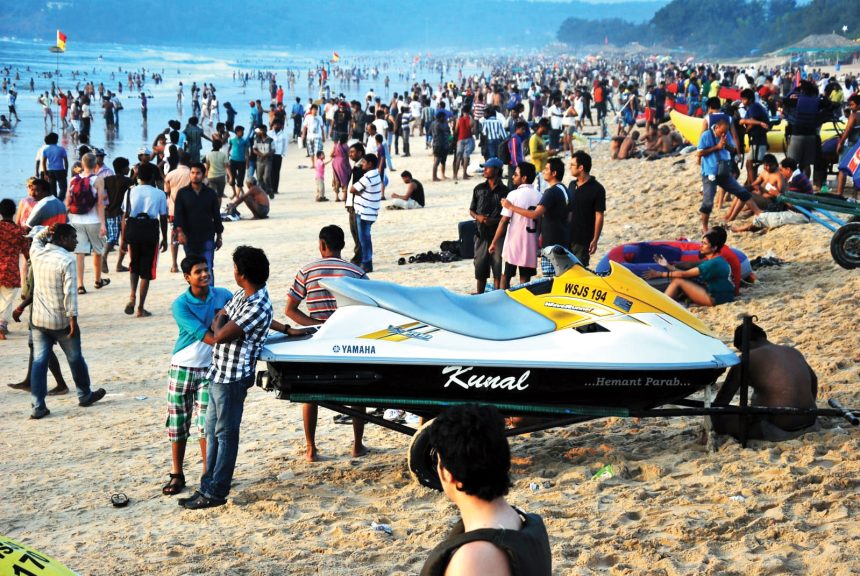
But over the years, I have noticed that there has been rapid development and an increase in tourism. There are more buildings and traffic, and many places that used to be peaceful are now crowded. Some areas feel heavily commercialised with new cafés opening every other day. The overall lifestyle is changing, especially in tourist-heavy areas, although the spirit of Goa is still present in many communities. At the same time, Goa has also become more connected and modern in terms of opportunities and infrastructure.
I’ve also noticed gradual changes in Goan culture and traditions. While many people still strongly value local customs, language, and festivals, modernisation and outside influence have made some traditions less common among coming generations. Yet, many families and communities are trying to keep these traditions alive.”
– Saanvi Naik, Vasco
Today, the roads have changed, the hills flattened, and the forests cleared, but the people remain the same. I envision a day where our tourism industry is known primarily for our vibrant and beautiful culture, cuisine, and ecosystem instead of its casinos, a future we are already heading towards. I think Goans, no matter their respective religions, castes, tribes, have all done their very best to protect their culture within their circles. I hope we continue to do so, in any way we can.”
Suhani Gupta, Dabolim
Having spent most of my life in Goa and watching it evolve over the years, I would like to see stronger measures to preserve the state’s identity and quality of life along with stricter enforcement against littering, reckless behaviour, and environmental damage by tourists. Goa also needs better higher-education opportunities so students do not have to leave their home state for building their careers. Illegal constructions, encroachments and unauthorised land acquisitions especially in ecologically sensitive areas, should be addressed firmly. The state government should also consider strengthening regulations surrounding land ownership and residency in order to prevent illegal encroachments and unchecked acquisition of land, helping preserve Goa’s unique cultural and demographic character. Improved waste management and protection of beaches, forests, and biodiversity are equally important.
-Umang Sharma, Vasco
As a young Goan, I hope to see development that respects the state’s unique cultural and ecological identity. While growth is important, it must not come at the cost of our heritage, green cover, and traditional livelihoods. I would like to see stronger policies for sustainable tourism, better waste management, and protection of local communities from unchecked commercialisation. Equally important is creating opportunities for Goan youth through skill development, creative industries, and research, so that we can contribute meaningfully without having to leave the state. Improved public infrastructure, transparent governance, and greater citizen participation in decision-making can help build a more inclusive future. Goa’s progress should be thoughtful, preserving its soul while embracing change responsibly.
-Benjamin Monserrate, Marcel
There is a need for large public garbage bins on our streets to help prevent littering. I recently noticed that Sada is becoming polluted again, which is really upsetting to see. Since the area was cleaned, there no longer seems to be a proper place for people to dispose of their waste, so many end up throwing garbage onto the roads instead..”
— Jenesia Anthea Da Cruz, Raia-Santemol
We need more indigenous plants in our homes and gardens because they support entire ecosystems. A single mango tree can shelter birds, feed insects and mammals, support butterflies and moths, and even provide fruit for people. Native trees like jamun also play an important ecological and cultural role in Goa. Many ornamental plants used in villas do little for wildlife, which is why several endemic species are slowly disappearing.”
— Vaishanavi Bharti, Baga
Since attaining statehood in 1987, Goa witnessed rapid growth in social, political, and economic spheres. Tourism sector expanded over time with new employment opportunities and development. Now, I think the true challenge faced by Goa in today’s world is to balance both modernisation and cultural preservation in order to protect Goa’s unique identity. More efforts should be made in sustainable development which would minimise environmental degradation thereby protecting Goa’s ecology.”
-Astha Mashelkar, Bicholim
Earlier, people used to care more about their surroundings and were more disciplined. Now people throw garbage all around and you also see them burning garbage down the street, we all breathe that smoke. We need to get into the habit of using dustbins more, keeping our beaches clean, and planting more trees. The community should work together to keep the area clean and safe.”
Rani Chavan, Valpoi
Old school Goa was the ultimate mood. We didn’t rush anywhere. Now you can’t even cross the street without dodging a million speeding SUVs and tourist scoters. We used to grow rice; now we just grow concrete villas and fancy resorts. Our traditional bakeries and quite village life got swapped for neon nightclubs, casinos, and influencer filming reels on every corner.”
-Shrusti Vazrikar, Sanquelim
Since statehood, we have seen Konkani finally get the recognition it deserves, which was a massive step forward for our culture. But progress can’t come at the cost of our home. The change we need to see next is strict regulation on tourism before it completely overwhelms our state.”
Devki Lawande, Sanquelim
We are facing a major identity crisis right now. We love the shiny new airports and the booming economy, but sometimes you look around the neon lights and think, ‘Where did the actual soul of Goa go?’ We are globally famous now but I would give anything for just one quiet, traffic-free evening.”
Sakshi Harmalkar, Bicholim
For Goa to truly thrive going forward, the focus must first be on building safer, smoother, and more reliable road infrastructure. This requires vision from our leaders, individuals who prioritise transparency, accountability, and the long-term well-being of the people of Goa over short-term gains. Furthermore, creating high-quality, diverse job opportunities within the state is crucial so that local youth don’t feel pressured to leave their roots behind in search of a livelihood. Balancing all of this requires a commitment to sustainable development, ensuring that economic progress never comes at the cost of Goa’s fragile ecosystems, beautiful coastlines, and unique cultural identity.
-Aaron Furtado, Navelim
(Compiled by Aakansha Chari, Rachel Shah, and Vinika Viswambharan)