FILM REVIEWS SACHIN CHATTE
Film: Disclosure Day
Cast: Emily Blunt, Josh O’Connor, Colin Firth
Directed by: Steven Spielberg
Duration: 2hours 25 minutes
Rating: * * * *
Master filmmaker Steven Spielberg is back with a theme that made him a household name. Close Encounters of the Third Kind arrived in 1977 and E.T. the Extra-Terrestrial followed in 1982. After all these years, no one crafts a science-fiction thriller involving extraterrestrials quite like Spielberg. Even though the film does not reinvent the wheel, his mastery of storytelling reminded me why I fell in love with watching movies in a theatre in the first place.
If one were to dissect the story of Disclosure Day, flaws might emerge here and there. Above all, it is not a particularly innovative story. But cinema is ultimately about how you feel as the visuals unfold before you, and how invested you become in the premise and the characters. On that count, Spielberg delivers in spades. He achieves this by sticking to the fundamentals of storytelling alongside his trusted collaborators—writer David Koepp, who first worked with him on Jurassic Park; cinematographer Janusz Kamiski, who has collaborated with Spielberg on more than 20 films; and the legendary John Williams, whose partnership with the director spans over
five decades.
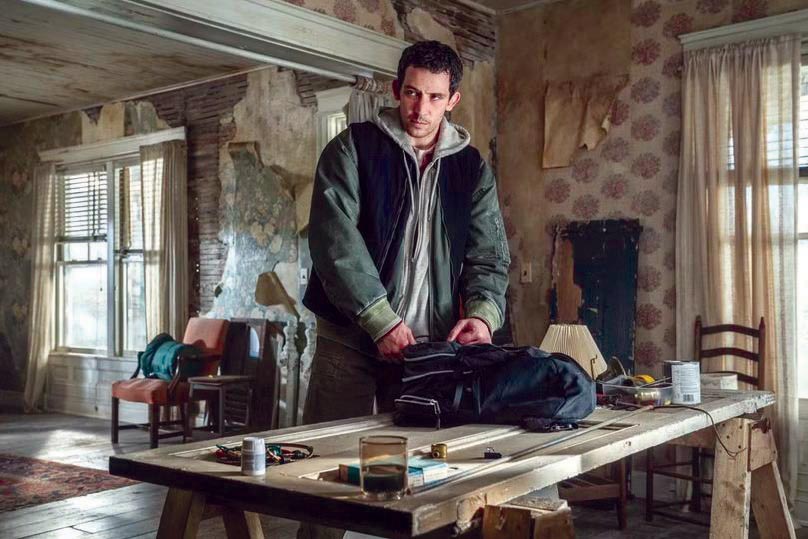
Disclosure Day wastes no time getting to the point. In the opening scene, we see Daniel Kellner (Josh O’Connor) on the run, pursued by an agency called WARDEX, headed by Scanlon (Colin Firth). We do not know why Daniel is being chased; all we know is that he is a tech expert who has stolen government secrets. To force his hand, WARDEX takes his girlfriend Jane (Eve Hewson) hostage.
Meanwhile, Margaret Fairchild (Emily Blunt), a meteorologist working for a local television station, is living a routine life until one day she suddenly begins speaking gibberish on air for no
apparent reason.
Daniel, it turns out, is working with another group of defectors led by Hugo (Colman Domingo, who recently played Joe Jackson in Michael). The film is crafted with such clarity and finesse that, even though the connections between the characters are not immediately revealed, it never becomes overly complex. Spielberg joins the dots with remarkable ease, allowing the audience to follow
along effortlessly.
Given the evidence, it must be difficult for any filmmaker to revisit a theme they have already explored so successfully. Yet the veteran director has no hesitation in venturing back into familiar territory. There are shades of Close Encounters of the Third Kind throughout the film, as Spielberg borrows liberally from his own work—and I am not referring only to the aliens.
On the surface, Disclosure Day functions effectively as a thriller, but there is more at play beneath that. Jane was once a novitiate and frequently struggles with doubts about God, bringing questions of faith into the narrative. The film also explores the idea of righteousness. Whether it is Daniel, Hugo, or even the apparent villain Scanlon, each believes they are acting in humanity’s best interests. Yet, as one line in the film suggests, even within government agencies, it is ultimately all about power.
Kamiski’s camerawork is exceptional. The camera is rarely still, lending a sense of dynamism and energy to nearly every scene. There is also an exhilarating, edge-of-the-seat action sequence involving a train that ranks among the
film’s highlights.
Emily Blunt makes her performance look effortless, though it clearly is not. Her character contains several shades and contradictions, all of which
she portrays with remarkable ease
and conviction.
The final word spoken in the film is “Listen”—something we all ought to do if the world is to become a better place.
Love in the time of Partition
Film: Main Vaapas Aaunga
Cast: Diljit Dosanjh, Vedang Raina, Sharvari
Directed by: Imtiaz Ali
Duration: 2 hours 46 minutes
Rating: * *
Main Vaapas Aaunga has its heart in the right place. A love story set against the backdrop of Partition and the horrors endured by millions has the ingredients for compelling cinema. But at over 160 minutes, it takes an awfully long time to get where it wants to go.
The Partition of 1947 has been explored extensively in cinema, from Gandhi to Deepa Mehta’s 1947: Earth (1998), Pinjar (2003), Train to Pakistan (1998), and the television classic Tamas (1988), all of which vividly depicted the human cost of the conflict.
Co-written by Imtiaz Ali and Nayanika Mahtani, this film revisits that turbulent chapter of history but offers little that feels novel—whether in its premise, storytelling, or character arcs.
Naseeruddin Shah plays an elderly Sikh gentleman on his deathbed. Almost delirious, he keeps mumbling things that make little sense to anyone except his grandson Nirvair (Diljit Dosanjh), who rushes in from London, much to the annoyance of his UK-based girlfriend. Nirvair works as a software engineer and occasionally tries his hand at stand-up comedy, with limited success. That does not stop him from performing when he arrives in India, where he finds a far more receptive audience. The jokes remain equally lame; only the audience has changed.
The old man speaks constantly about Sargodha, now across the border in Pakistan. The town also found a mention in Sriram Raghavan’s Ikkis earlier this year. He longs to cross the border one final time because, well, the title of the film gives away that much. Through flashbacks, we learn how his younger self (played by Vedang Raina) fell in love with Afsana (Sharvari). Complications arise when the country is divided, violence erupts, and lives are torn apart.
If you have not seen many films on Partition—or read much about it—the proceedings may hold your interest. Otherwise, there is little here that feels fresh.
The film repeatedly underlines the themes of longing and generational trauma suffered by those displaced by history. The point comes across, but its impact is diluted by the excessive runtime. In one scene, a group of youngsters discuss which cities and villages in Pakistan their grandparents still dream of visiting. “Mere Dadaji Sargodha jaana chahte hain,” says one. “Aur mere Lahore,” replies another. “Aur mere Rawalpindi,” adds a third. The exchange continues like a roll call, making the point rather more bluntly
than necessary.
The songs are beautifully picturised and feature music by A.R. Rahman, but they do little to advance the narrative. Of the cast, Sharvari stands out. She has made remarkable strides since her debut and continues that upward trajectory with another assured performance here.
There is no denying the emotional resonance of a story about people separated by borders and history. While Main Vaapas Aaunga may not offer a fresh perspective on Partition, its themes of love, loss and longing remain universal. One only wishes the film had trusted its story enough to tell it with greater
economy.
No room for interpretation
Film: Backrooms
Cast: Chiwetel Ejiofor, Renate Reinsve
Directed by: Kane Parsons
Duration: 1 hour 50 minutes
Rating: * *
Backrooms joins the growing list of films made by directors who transitioned from YouTube to feature filmmaking. Directed by 21-year-old Kane Parsons, it presents itself as a high-concept film—perhaps so high-concept that grasping exactly what it is trying to say becomes a challenge. By the end, one is left wondering what the point of it all was.
The theatre was mostly filled with young adults who seemed familiar with both the film and its director. Usually, after a film like this, you can overhear animated discussions as audiences dissect its themes or attempt to explain its mysteries to one another. This time, however, the conversation I overheard while leaving the auditorium was about the monsoon
and raincoats.
The film does have an intriguing premise and an impressive mise-en-scène. Chiwetel Ejiofor plays Clarke, the owner of a furniture store called Cap’n Clark’s Ottoman Empire. He spends most of his time there alone, save for the occasional assistant. One day, he passes through a wall in the store and finds himself in the Backrooms—a seemingly endless maze of empty rooms and corridors. Getting in is easy; finding a way out of the labyrinth is another matter entirely.
Clarke is also seeing a therapist, Dr. Mary (Renate Reinsve), who is dealing with childhood traumas of her own. He, meanwhile, struggles with alcoholism, a failed marriage, and several other personal demons—not unlike the mysteries lurking behind the wall at his workplace. Part of the film is told through the found-footage format, a device that has long since worn out its novelty. When the footage is not obscured by grain and distortion, however, the production design is genuinely striking.
Parsons certainly demonstrates a flair for atmosphere and visual world-building, but a compelling setting can only take a film so far. Backrooms leaves behind plenty of questions—unfortunately, most of them concern why it exists rather than what it means.
If the Backrooms are intended as a metaphor for being swallowed by the endless void of the internet, then the film’s central idea begins to make sense. The question is whether it really needed nearly two hours to make that point.