It is e-wheels for Goa, with Niti Aayog assigning the state 5th rank in the India Electric Mobility Index (IEMI), 2025, covering 36 states and union territories, reports Shoma Patnaik
Goa is on track on the clean mobility front with a score of 65, and fifth place in the recently released Niti Aayog, India Electric Mobility Index (IEMI), 2025.
Overcoming numerous problems in the road transport sector, the state outdid its larger and more industrialised peers in EV adoption. As per the latest electric mobility ranking, the state is just six counts lower than Chandigarh (score 71) which is at number four position.
Delhi is India’s top vehicle electrified state obtaining an overall score of 84 in the index, followed by Maharashtra at second place (score 78) and Karnataka third (score 73).
The EV adoption tally shows that Goa jumped in the ranking by climbing up 10 positions from the previous year. In IEMI 2024, the state had scored 43 and was ranked 15.
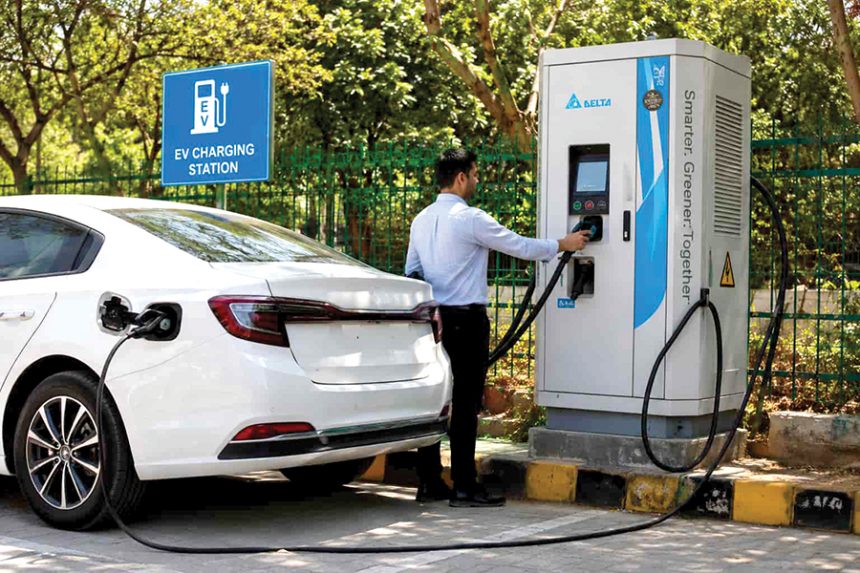
As per the index, Goa’s EV shift is driven by its charging infrastructure (score 92) with high charger-to-vehicle ratio, power availability, and initiatives such as building byelaws for EVs. The index gives the state a score of 53 in transport electrification progress and score of 51 in EV research.
It highlights the state’s USP is private adoption of electric two-wheelers and cars. Registration of private e- scooters, e-bikes and e-cars at 12 per cent (of the total vehicle registration) is the highest in India.
The other factors responsible for the state’s EV success story are government subsidy of up to Rs 8 lakh, to set up public charging infrastructure and designation of specific areas such as Panjim Smart City, heritage zones, tourist zones, airports, and railway stations where the transition to 100% EVs is mandatory. Goa has 8 EV startups, discloses the index.
Niti Aayog has recommended the state to support commercial EVs. The state must also foster startups in EVs as well as invest in R&D, establish Centres of Excellence and enhance e-vehicle skill development.
Niti Aayog’s index indicates that EV adoption is steadily gaining traction in the country. In 2018, EVs constituted only about 0.5% of all vehicle sales. However, by 2025-26, the share had reached 8.25%, with more than 8.7 million e-vehicles on the road. The union government’s goal is 30% sales of EVs by 2030.
The index points out that road transport is responsible for roughly 12% of the country’s energy-related carbon dioxide emissions and an estimated 18% of total nitrogen oxide. Strengthening the case for clean mobility, it says that EV adoption is necessary for lowering air pollution as well as reducing crude oil import. As such road transport accounts for 70% of diesel and 99.6% of petrol consumption in the country.
Niti Aayog has remarked that the centre is pursuing EV adoption through schemes such as the Faster Adoption and Manufacturing of (Hybrid and) Electric Vehicles (FAME) and Pradhan Mantri Electric Drive Revolution in Innovative Vehicle Enhancement (PM E-DRIVE) schemes. States are also supporting the goal by having active EV policies covering adoption, charging infrastructure, research and innovation, and manufacturing investments.
However, “policy notification is no longer an adequate measure of progress. The more consequential question concerns policy design and whether states are advancing beyond purchase subsidies and road tax waivers toward regulatory measures, charging infrastructure, startup support, manufacturing-linked incentives and the broader ecosystem enabling e-mobility to accelerate within their jurisdictions,” observes Niti Aayog.
The index methodology consists of three themes with weightage to each theme according to its importance. The Transport Electrification Progress theme carries the greatest weight at 50%. It captures the extent of EV adoption by states and UTs, together with the policy initiatives that support the adoption. The Charging Infrastructure Readiness theme has a weight of 30%, and evaluates the availability of charging infrastructure and the supporting ecosystem. The EV Research and Innovation Status theme has a weight of 20% and measures the innovation system for supporting the transition.
India’s EV ecosystem is getting better: Index
Niti Aayog’s India Electric Mobility Index is in its second year now. The index reveals that, the overall performance of states and UTs has improved compared with 2024, with the top score increasing to 84 in 2025, compared to 77 in 2024, and the median score improving to 40 from 36. However, the progress towards e-transport remains uneven with charging networks and EV adoption moving at different speeds across the country.
Limited charging infrastructure, dispersed settlements and a nascent innovation ecosystem are some of the barriers in progress for faster EV transition. The index monitors the EV shift in states. It recognises states and UTs that perform strongly, pinpointing the reasons for their success and prompts more ambitious action by states.