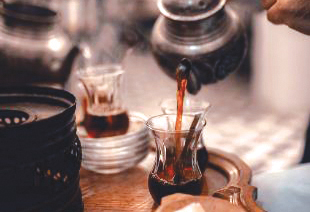
Often referred to as liquid gold, coffee is undeniably helping many run their lives from morning to night. NT BUZZ explores this all-time favourite drink
KALYANI JHA | NT BUZZ
It’s the energy drink that many swear by. And indeed the bitter brew has captivated the heart of people the world over.
India too has a long history associated with this morning favourite. Saint Baba Budan is credited with having brought coffee beans from distant Yemen and planted them in the Chandragiri Hills of Karnataka some four centuries ago.
According to the Coffee Board of India, India cultivates all of its coffee under a two-tier mixed shade canopy, comprising evergreen leguminous trees. Nearly 50 different types of shade trees are found in coffee plantations. Traditionally, coffee is grown in the Western Ghats spread over Karnataka, Kerala and Tamil Nadu. Cultivation is also now expanding into non-traditional areas of Andhra Pradesh, Odisha and the North East states.
Two main varieties of coffee – Arabica and Robust – are grown in India.
A mild coffee, the Arabica beans are more aromatic while Robusta has more strength and is, therefore, used in making various blends. Cool temperatures, ranging between 15 degree Celsius to 25 degree Celsius, is suitable for Arabica while for Robusta, 20 degree to 30 degree Celsius is suitable.
“Arabica has a higher price compared to Robusta since it is grown in the hills as it requires cooler temperatures. Hence, only about 30 percent production can be done. Robusta meanwhile is a more flavourful plant. It is hardier and can take the harsh sunlight. Thus it can grow in the lower parts of the hill,” explains Nell, the founder of My Cuppa City, an artisanal specialty coffee brand and roastery based in Goa.
Having spent a good number of years in Seattle, Nell used to visit a lot of cafes which were using different coffee beans or a coffee roast. “I was intrigued how the same coffee bean could be roasted in different variables and how that changes how the coffee tastes in your cup,” she says. She then went on to pursue this love for coffee further and secured a Speciality Coffee Association certification for roasting.
While she uses Arabica beans for her speciality coffee, she is now also experimenting with a Robusta blend. “Robusta has twice the amount of caffeine than Arabica and the perception usually is that Robusta has a very harsh flavour which tastes a little bit acrid, and that’s why earlier, people weren’t using it in a speciality coffee. This is now changing,” she says.
Explaining what makes a certain coffee, a speciality coffee, she states that it depends on how it is grown, processed, and how the coffee gets roasted.
“A Robusta coffee, for instance is roasted at a different temperature as compared to an Arabica coffee to bring out the best flavour,” she says.
Explaining the roasting process, she states that factors like how it is processed are considered before sampling begins. “We roast it in different profiles and see which tastes the best,” she explains.
After the roasting comes the blend and brewing. Blends are when different beans at different level of roasts are brought together to make one flavour.
“The coffee roasts are usually light, light medium, medium, medium dark, dark. Within these, there are lots of minor differentiations, but we just stick with these five,” she says.
A lot of cafes which have coffee on their menu like a latte, mocha or cappuccino, are usually espresso-based coffees. “Those usually stay in the medium dark to dark range because there is either milk added or sweetener added. Milk takes away some of the flavour,” shares Nell.
There are different types of other brews also available. The Pour-Over for instance is now available in certain cafes. “It’s a manual method and takes up to 10 minutes. So most cafes will not offer that readily. One can use light roast and light medium roast. People usually only drink it black,” explains Nell.
The French Press meanwhile is quite popular and is one of the easiest brewing methods. One just has to immerse the coffee grounds in hot water in the coffee market. These are then pressed down to get the final brew.
The traditional South Indian filter coffee, is another brew which all the Udupi cafes offer. It uses Chicori root in usually 70:30 proportion, adding body to the coffee. Because it’s extremely bitter, it has to be mixed with milk and a sweetener. The Mocha pot is also another popular brewing method which people usually have at home.
And according to the co-founder of The Grounded Bean Café, Margao, Gauraw Welling, coffee is a superior and a better choice of drink compared to many others. “It is virtually calorie-free (when consumed without heavy sugar and cream), packed with antioxidants, and offers a clean, sustainable mental boost without the chemical additives found in many commercial alternatives,” he says,
In fact, Welling recently hosted a pre-event on International Coffee Day for his upcoming Goa Coffee Festival that will be held on November 14 and 15.
Health experts also recommend coffee as part of a balanced diet, but warn of moderation, preparation method, and individual tolerance.
“Most healthy adults can consume coffee in moderation. The ICMR–NIN Dietary Guidelines for Indians, 2024 advise limiting total caffeine intake to 300 mg per day and avoiding tea or coffee for at least one hour before and after meals, as they can interfere with iron absorption,” says Dr. Pratista Kunkolienkar, BHMS.
People with sleep disturbances, anxiety, palpitations or caffeine sensitivity should limit their intake, she states. Pregnant women should also discuss caffeine intake with their healthcare provider or doctor.
According to nutritionist Richa Shet Talaulikar, coffee is also recommended for fatty liver patients because it actively protects the liver by lowering liver enzymes. “It reduces markers of liver inflammation and stress. It can help fight fibrosis by slowing down or preventing the progression of liver scarring (cirrhosis). It reduces fat and oxidative damage,” she says. “Polyphenols and antioxidants in coffee help decrease fat accumulation in liver cells and lower insulin resistance.”