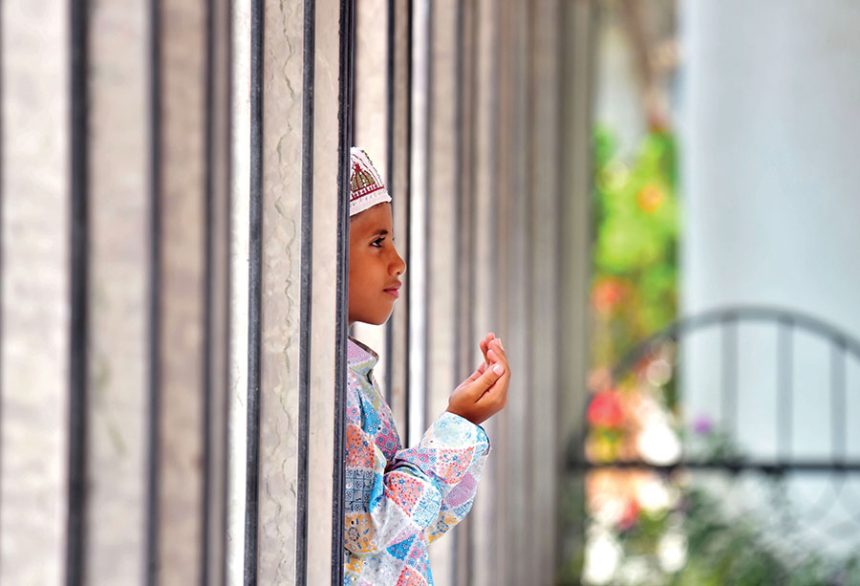
August 26, which is celebrated by Muslims as Eid-e-Milad, marks the birth anniversary of the last Prophet of Islam – Muhammad
NAZRANA DARVESH
Just as God provides food for our bodily needs, he has also provided food for our soul by means of guidance given to us through his prophets.
These are outstandingly pious representatives of God who convey the message of God to the people with pure intention and personally practicing the same in their own life, despite all kinds of hardships and threats.
Adam, Nuh, Abraham, Moses, Jesus, are few of the prophets who came to cast away the shadows of darkness in the lives of people with divine guidance.
Muhammad (S.A.W.) was the last of this link of prophets. Prophethood was bestowed upon Muhammad at the age of 40 while he was living in Makkah- his birth place. He had all the qualities for being a prophet. He was known to be the most pious, truthful and trustworthy in whole Arabia. His prophethood began while he was sitting in seclusion in cave Hira worshipping and worrying about the state of affairs in Arab, which was at that time a hub of evil. It was then that the Quran started to reveal itself to him. It is also worth noting that the Prophet was illiterate and hence it was not possible for him to concoct the Quran himself, as is the general misunderstanding. For a span of around 23 years, he fulfilled his duty as a prophet sincerely and conveyed the message of the Quran to people, implemented it in his life and advised others to follow it, without forcing it on anyone.
His selfless service as a prophet can be understood from the incident during the early days of his prophethood. The makkan leaders approached him and offered to him wealth, leadership, women to give up his message which the Prophet spurned saying, “I swear by the name of God, O Uncle, that if they place the sun in my right hand and the moon in my left hand in return for giving up this matter, I will never desist until either God makes it triumph or I perish defending it. (narrated by Ibn Ishaaq in al-Maghaazi,1/154)
The records of the Prophet’s life bear testimony that during the 13 years of his life in Makkah as the messenger of God, he faced all forms of abuse, boycott, expulsion, and threats of physical violence. Finally, he had to leave his birthplace and migrate to the city of Madina where he and few followers formed a peaceful state to follow the path as ordained by the Almighty based on the following verse of Quran: “If we give authority to these men on earth they will keep up prayers, and offer poor-due, enjoin what is right and forbid what is evil” (Quran 22:41).
The constitution formed by the Prophet in the new Islamic state of Madina safeguarded the rights of non-Muslims in following words: “If anyone wrongs a man with whom a covenant has been made [i.e. a dhimmi (non Muslim under covenant in Islamic state], or curtails any right of his, or imposes on him more than he can bear, or takes anything from him without his ready agreement, I shall be his adversary on the Day of Resurrection” (Hadith Abu Dawud).
The ‘jizya’ tax was the only tax imposed on non-Muslims, and it was less in number and amount than taxes on the Muslims of that state.
The leaders of Makkah were in constant enmity with the prophet and the believers even after their migration to Madina and were plotting against them to wage a war. It was in these circumstances that the Prophet and his followers were commanded by God to defend themselves and fight the evil forces without exceeding the limits. These limitations included not killing a child, woman, and sick who is not involved in the war, no punishing with fire, no mutilation or treachery, and no harm to trees or cattle. The Prophet alone liberated as many as 63 slaves.
For the Prophet, all were equal before law. Once a woman belonging to a high and noble family was arrested in connection with a theft. The case was brought to the prophet, and it was recommended that she may be spared the punishment of theft. The Prophet replied: “The nations that lived before you were destroyed by God because they punished the common men for their offences and let their dignitaries go unpunished for their crimes; I swear by Him (God) who holds my life in His hand that even if Fatimah, the daughter of Muhammad, has committed this crime then I would have amputated her hand.”
This is why Micheal H. Hart places Mohammed at the forefront of his analysis of historical figures knowing that he was the only person who succeeded on both the religious and secular levels.
Hence, he is called the benefactor of humanity.