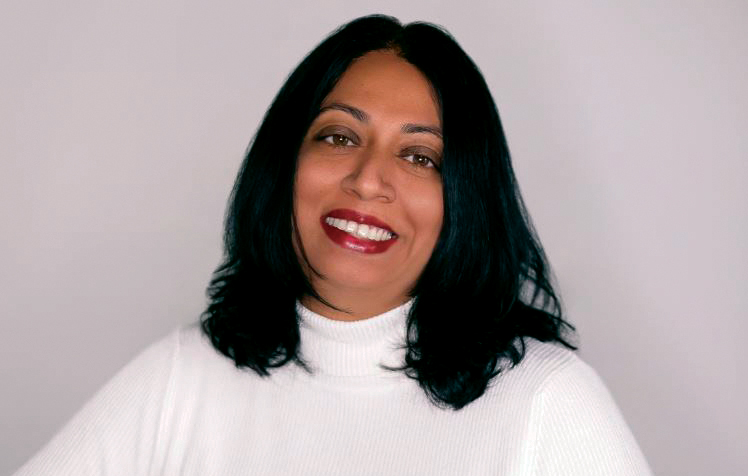
Selma Carvalho’s upcoming book, ‘Guts, Glory and Empire’, is an engrossing account of Goans who migrated to Zanzibar, Africa, in the mid-19th century and went on to play a significant role in the region’s development
CHRISTINE MACHADO
Over the years, writer Selma Carvalho has been involved in researching the Goan presence in Africa. She has authored three books on the subject: ‘Into the Diaspora Wilderness’, ‘Railway Runs Through: Goans of British East Africa’ and ‘Baker Butcher, Doctor Diplomat: Goan Pioneers of East Africa’.
The author is now set to release her new book, ‘Guts, Glory and Empire: The Epic Story of Goans’ in Zanzibar 1865–1910, next week. Published by Speaking Tiger Books, the book traces the journeys of Goans such as C. R. Souza, D. B. Pereira and Bras Souza, who arrived in mid-19th-century Zanzibar as sailors, cooks and clerks and went on to become part of one of East Africa’s wealthiest and most influential communities.
Excerpts from an interview:
The idea for the book began after you presented a paper at the Crossings in the Indian Ocean: Memory and Heritage 2022 conference in Zanzibar. Could you tell us more about it?
I was invited by the State University of Zanzibar to speak on the Goan contribution to Zanzibar. The response was enthusiastic. I had been researching the subject since 2008 and the conference finally convinced me to write a book on Goans in Zanzibar. The working title was ‘Half-caste’ because the British referred to Goans in Zanzibar as “half-caste Portuguese” and viewed them as biracial Europeans.
You have written extensively about Goans in Africa. What new findings came out of working on this book?
‘Guts, Glory and Empire’ contains a great deal that has never appeared in Goan history writing before. When I started out, I thought it would be a slim volume but it eventually grew to 500 pages. During the research, I came across an archive in Lisbon, Portugal, with extensive records on 19th-century Goans. It is among the most valuable archives I found while working on the book.
The records documented the way people lived, their politics, caste dynamics, morality and ambitions. There was also substantial coverage in the Zanzibar Gazette of weddings, funerals and travel, which helped piece together everyday life in Zanzibar at the time.
It is often said that Indians do not have a habit of archiving. How difficult was it to undertake research in such a setting?
Extremely difficult. I must have interviewed over a hundred families. Between 2011 and 2014, I headed an oral history project funded by the British heritage sector to record the voices of East African Goans living in the U.K. Even at that stage, we had interviewed 40 families. After that, my work continued privately. With Zanzibar specifically, the information families remember is usually vulnerable to misremembering. It therefore has to be verified against archival records. In that sense, relying solely on oral history is not enough.
As part of your research, you also spent time visiting cemeteries in Goan village churches. Tell us about these experiences.
Yes, I visited several cemeteries, including those in Velsao, Colva, Raia, Chinchinim, Orlim and Saligao. Of these, the cemetery in Velsao was the most informative because it contained the headstones of the Souza family.
The chief patriarch of Goan migration to Zanzibar was C. R. Souza, along with his nephews from Velsao.
Their caste background later became the subject of political intrigue in 19th-century Zanzibar. Many of the caste tensions between Brahmin and Chardo Goans were replicated there as well.
Research for this book involved people helping you decipher old baptism certificates and transcribe Portuguese documents, some of which were in poor condition. What kept you going despite the painstaking work involved?
In cases where I could not find headstones, I began searching for old baptism records. It was not an easy task. It saddens me to say this but the staff at the Goa archives treated me poorly. I worked with the brilliant U.K.-based genealogist Richard D’Souza, who helped me construct intricate family trees. He has done extensive research on Goan genealogy.
During the course of examining these records, Richard and I also came to understand the families’ caste identities and how caste was preserved through marriage. All this appears in the book. The biggest expense was transcribing Portuguese documents from various archives. This is also why I believe Portuguese should still be treated as an important language in Goa, or perhaps even recognised as a Goan language.
You have mentioned that traces of Africans who arrived in Goa as servants, slaves and soldiers remain, now integrated into Goan society. Could you tell us more about this?
I discovered that Goans had owned African slaves, which often blurred the line between servant and slave. These individuals could be legally brought to Goa if the owner chose to do so. Oral histories and photographs suggest that some of them travelled to Goa.
There is also anecdotal evidence of African soldiers based in Goa having children out of wedlock, who were later adopted into Goan families. Today, biracial African-Goans are not distinctly recognised, largely because they are well integrated into society.
How aware are the descendants of the Goans you mentioned in your book of this history?
Most families are not aware of this wider history. In fact, the book may come as a surprise to many of them. If certain men were well known, families have tended to preserve that image. But they were also human beings with achievements, flaws and at times questionable choices. All of this is revealed in the book.
How much is known in Zanzibar today about Goan contributions in different fields?
It depends on the period and context. When I travelled to Kenya, I was frequently met with enthusiasm. One Kenyan teacher told me, “Tell all the Goans to come back, they built our schools.” It was a proud moment.
In Zanzibar, however, there is little awareness that St. Joseph’s Cathedral, built in the 19th century and located in the heart of the town, was funded by Goans. Hopefully, this book will help change some of those perceptions.
What other aspects of the Goan presence in Africa would you like to explore further?
I would like to investigate the role of Goans in early Nairobi and Mombasa in Kenya. However, funding is a challenge. It is not possible for one individual to finance this kind of research alone. Institutions such as Goa University need to take greater interest in supporting such work.