

‘Growing Up in Mario’s World’, a rare private collection, traces the artist’s wit and observation
VINIKA VISWAMBHARAN | NT BUZZ
As Goa marks the centenary of one of India’s most observant visual chroniclers, a private collection, decades in the making, opens a rare window into cartoonist Mario de Miranda’s world of humour, humanity, and quiet social commentary. From May 9 to June 13, Sunaparanta Goa Centre for the Arts, Altinho, Panaji, will present ‘Growing Up in Mario’s World’, a centenary exhibition that reflects both his artistic legacy and the personal histories intertwined with it.
At the centre of it is Shaun Nicholas Lobo, who has inherited and now stewards a deeply personal collection built by his father, Ronnie Lobo. “My father was a very good friend of Mario,” he says. “This collection has been in our family for years. After he passed away nearly nine years ago, it became my responsibility. And because it is Mario’s centenary, I wanted to exhibit it.”
Ronnie began collecting Miranda’s works in the 1970s and 1980s, often acquiring them directly from the artist. “He collected because he loved the work,” says Shaun. “That is something I always tell people. If you want to collect art, you must genuinely like what you collect, not do it for value.” On that regard, Shaun has since continued to grow his father’s collection.
The exhibition includes early sketches from the late 1950s, works from Miranda’s time abroad, as well as illustrations from the 1960s to 1980s, including those published in The Illustrated Weekly of India.
Yet for Shaun, the works are inseparable from lived experience. “For me, he is not just an artist. He is someone from my personal memory.”
That sense of closeness extends to his role as custodian. “It means being responsible for preserving his legacy properly,” he says. “This is not just about holding artworks. It is about ensuring they are presented with care.”
The show also features letters, magazines and other archival material, offering insight into Miranda’s world. Among the highlights is a depiction of Goa’s 1967 Opinion Poll. “People have spoken about that transition, but Mario actually drew it,” says Shaun.
According to Shaun, Miranda’s continued relevance lies in his understanding of people. “He captured human behaviour like no one else. Settings may change, but people remain the same. That is why his work still connects. He could deal with serious subjects, but always with humour.”
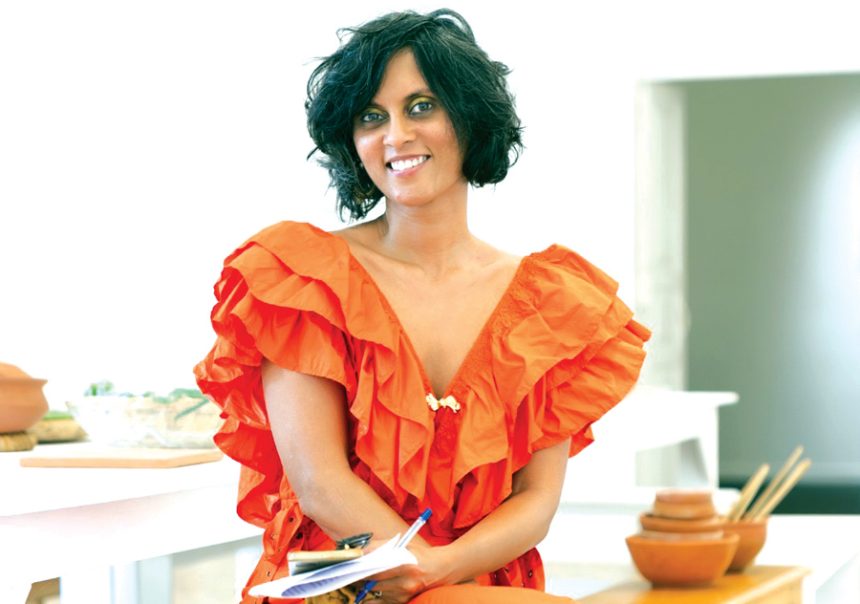
Working closely with Shaun to shape the exhibition is creative director at Sunaparanta Leandré D’Souza, who describes the project as an evolving collaboration. “It began quite organically when Shaun approached us with this extraordinary body of work,” she says.
As the team began sifting through original drawings, magazine covers and archival material, the process became immersive. “It felt like we were entering a treasure trove,” says D’Souza. “With each work, Shaun would recall where it came from, what it meant, why it was made. Very quickly, we realised we were seeing only a fragment of a much larger world.”
Rather than arranging the exhibition chronologically, the curatorial approach leans towards thematic groupings. “We have put together strands like the Bombay series, the Goa series, and archival works,” she explains. “It is less about categorising and more about creating a way for audiences to move through his world.”
Central to this process was understanding Miranda’s way of seeing. “There is a lightness and humour in his work, but he notices everything – small gestures, fleeting expressions, the rhythms of everyday life,” she says. “We wanted to stay close to that sensibility.”
D’Souza also points to the unexpected tonal range within the collection. “I found myself drawn to some of the darker works, which people do not usually associate with Mario,” she says. “There is an underlying depth there that complicates the humour.” The challenge, she admits, was narrowing down the selection. “This is a massive collection, and we could only include around 100 works.”
Alongside the exhibition, an anthology titled ‘Growing Up with Mário’ has also been developed, extending the engagement with his work.
For Sunaparanta, the exhibition is not just commemorative. “It is also about reaffirming our commitment to artistic practice,” says D’Souza. “Mario’s work is deeply rooted in place and people, but it resonates across time. That is what makes it enduring.”
Echoing this, chairman of Sunaparanta Goa Centre for the Arts Dattaraj V. Salgaocar, who was a close friend of Miranda’s, reflects on his rare ability to observe the world with warmth, precision and gentle irreverence. “Through his drawings, he captured the nuances of everyday life with humour and insight, revealing both its rhythms and contradictions. This exhibition invites audiences to encounter him not only as a beloved illustrator, but as a perceptive chronicler of society whose work continues to resonate with clarity and relevance,” he says.
D’Souza returns to the idea of connection. “I want audiences to recognise a part of themselves in these works,” she says. Shaun echoes the sentiment. “At the end of the day, it is about how you see the world,” he says. “And once you start seeing it the way Mario did, you cannot quite look at it the same way again.”

