

PTI
Islamabad
A US delegation led by Vice-President JD Vance held historic face-to-face talks with top Iranian negotiators in Pakistan on Saturday to reach a peace agreement to end the war in West Asia that has paralysed global energy markets and disrupted trade.
The Pakistan-brokered talks – the first direct, high-level engagement between the two sides since the 1979 Islamic Revolution – are being watched globally amid increasing expectations of a breakthrough.
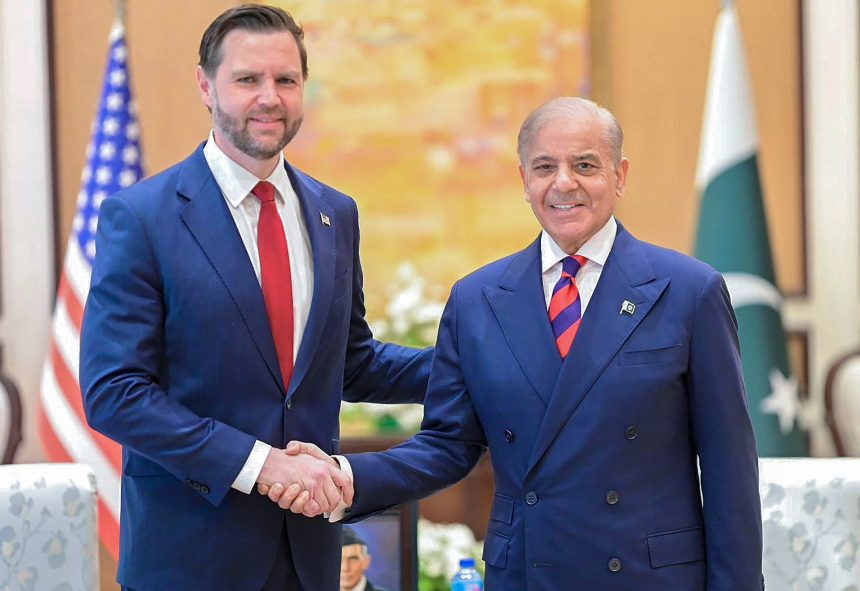
Ahead of the trilateral negotiations in Islamabad’s Serena hotel, the Vance-led US team and the Iranian delegation headed by Parliament Speaker Mohammad Bagher Ghalibaf held separate meetings with Pakistan Prime Minister Shehbaz Sharif.
“After Pakistan PM Sharif held separate meetings with both the delegations, formal round of direct negotiations between Iran and the United States has officially begun,” a senior Pakistani official told PTI.
Pakistan’s state-run PTV said Iranian and US officials sat across the table for “landmark peace negotiations”. The format of the talks was not very clear.
As the negotiations continued, the Iranian government said on social media that “talks between Iran and the US in Islamabad entered the expert-level stage as economic, military, legal, and nuclear committees joined in”.
Without elaborating, it added that certain “technical details” are being finalised.
Sources in the Pakistani establishment said the overall atmosphere in talks was “encouraging”.
There were reports that talks may continue on Sunday if no breakthrough was achieved on Saturday night.
Iran’s semi-official Tasnim news agency reported that the negotiations have moved beyond general issues and entered technical-level discussions on “certain topics”.
While Vance is accompanied by special envoy Steve Witkoff and Jared Kushner, President Donald Trump’s son-in-law, the Ghalibaf-led Iranian delegation comprised Foreign Minister Abbas Araghchi, Supreme National Defence Council secretary Ali Akbar Ahmadian and Central Bank Governor Abdolnaser Hemmati.
The two sides travelled to Islamabad on Saturday for the talks, four days after Iran and the US announced a two-week ceasefire. However, a massive wave of Israeli strikes on Lebanon, killing more than 300 people, has left the truce in tatters.
While Tehran claimed the assault violated the terms of the ceasefire understanding, the US and Israel said Lebanon was not part of the deal.
Earlier, both delegations were received at the Nur Khan airbase by Deputy Prime Minister Ishaq Dar, Army chief Field Marshal Asim Munir and Minister for Interior Syed Mohsin Raza Naqvi.
In his meeting with the Iranian delegation, Prime Minister Sharif affirmed Pakistan’s sincere resolve to continue playing its role as a mediator towards achieving meaningful results from the peace talks.
Sharif, during his meeting with the American delegation, expressed hope that the talks between the US and Iran would lead to durable peace in West Asia.
In a related development, Mohammad Reza Aref, Iran’s first Vice-President, said the peace talks could produce a deal if the American side worked in the interest of the US in sync with President Donald Trump’s America First approach.
“However, if we face representatives of ‘Israel First’, there will be no deal,” he said on social media.
Aref cautioned that the world will face “greater costs” if there was no peace deal.
Tasnim news agency earlier reported that negotiations between Iran and the US will not begin until Tehran’s “preconditions,” including stopping Israeli hostilities against Lebanon and de-freezing of Iranian assets are met.
Quoting an “informed source”, it later claimed that the American side has agreed to release Iran’s frozen assets. However, there is no confirmation yet on the report.

