


NT Reporter Panaji
Kushavati has become the first district in Goa to receive ‘Surakshit’ status for its efforts in HIV control, while South Goa has achieved ‘Saksham’ status, indicating progress in HIV testing, treatment and support for people living with the virus, said Goa State AIDS Control Society (GSACS) project director Dr Jasmine Pinto.
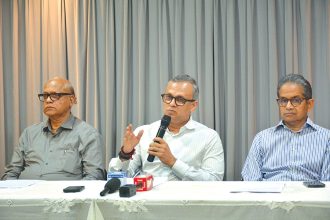
She was speaking at a programme held at the Secretariat on Friday to mark World AIDS Day, observed on December 1.
Health Secretary Yatindra Maralkar said progress in HIV control must go hand in hand with efforts to end discrimination against people living with the virus.
“Across various countries, nearly 50 per cent of the adults continue to hold discriminatory attitudes towards people living with HIV. This stigma and discrimination must change,” he said.
Referring to the 2026 World AIDS Day theme, ‘Ending AIDS starts with access’, Maralkar said every person living with HIV deserved dignity, equal opportunities and quality healthcare without fear of prejudice.
Dr Pinto said GSACS had secured the first rank in the national evaluation of states conducted by the National AIDS Control Organisation (NACO) for the first quarter of the 2026-27 financial year, from April to June.
Under the National AIDS Control Programme Phase-V ‘95-95-95’ targets, Goa has achieved 99 per cent coverage in identifying people living with HIV and 98 per cent viral suppression among those on antiretroviral therapy (ART). Treatment coverage stands at 84 per cent. HIV testing has increased, while the positivity rate has remained stable.
The ART centre at Goa Medical College has been upgraded to an ART Centre Plus, while its State Reference Laboratory has received ISO 15189:2022 NABL accreditation. Follow-up drives have also reduced the number of patients lost to follow-up by 23.9 per cent since April 2026.
GSACS has extended monthly financial assistance of Rs 2,000 under the Dayanand Social Security Scheme to 503 beneficiaries. Another 1,924 people living with HIV have received 100 per cent free travel concessions on KTCL buses through smart transit cards.
A total of 195 complaints officers have also been appointed in government and private establishments to address HIV-related grievances.