Architect, educator, curator, and director of Charles Correa Foundation, Nondita Correa Mehrotra
reflects on a design approach shaped by context and lived experience. She shares insights
on meaningful spaces, climate responsiveness, and architecture’s evolving role
MARIA FERNANDES | NT
You were exposed to architecture and design from an early age. What experiences shaped how you see and approach design today?
From very early on, I understood that design was a way of problem solving rather than just an exercise in aesthetics or personal expression. In architecture especially, it’s about organising space thoughtfully; considering how people move through it, how they use it, and how it responds to climate, site conditions, and available resources.
Growing up and working in India, these constraints were impossible to ignore. Issues like heat, density, and limited resources shaped every decision. India in the 60s, 70s, and 80s was an extremely frugal society. In many ways, it still is, though the context has evolved. So buildings needed to work hard to be in place.
I was also influenced by traditional architecture, where solutions were simple but deeply thought through. That perspective helped me realise that good design doesn’t come from imposing ideas, but from truly understanding the context. Once that clarity is achieved, the form emerges naturally.
Your career spans teaching at Michigan and MIT, designing furniture, theatre sets, curating exhibitions and writing. How would you summarise your journey so far?
These are all parallel ways of thinking through design involving the same fundamental questions; how ideas are structured, how spaces or objects communicate, and how people interact with them.
Teaching has sharpened my thinking, forcing you to articulate ideas that are often intuitive in practice. It requires you to break that process down step by step so it becomes clear to the students. Working across different scales, from furniture to exhibitions to buildings, keeps me both grounded and curious. Writing and curating meanwhile, allow me to step back and reflect more critically on my work and the discipline as a whole.
Each of these strands helped me develop a broader, more thoughtful approach to design.
Over time, architects develop their own design philosophy. What influences your approach to architecture?
My architectural philosophy has been shaped by lived experience, through practice, teaching, and observation. Teaching, in particular, has been influential because it forces you to slow down and question your assumptions. Engaging with students across different cultural contexts has made me more aware of how deeply architecture is embedded in social, economic, and environmental realities.
At the same time, working in India has kept me grounded in everyday constraints like climate, density, limited resources, and informality. These experiences have reinforced my belief that architecture cannot be abstract or detached from how people actually live.
Balancing beauty, functionality and social responsibility is a challenge. How do you approach this balance in your work?
I don’t really see these as separate or competing concerns. When a building functions well, when it is comfortable and responds thoughtfully to how people actually use it, it often develops its own kind of beauty.
For me, social responsibility comes from taking context seriously which includes climate, resources, economy and the lives of the people who inhabit the space. It’s not something added at the end but something that is integral to the process.
The balance emerges through careful decision-making, understanding what is essential and letting go of what is not. When architecture is honest about its purpose and its means, it can be both humane and quietly beautiful.
You mentioned that in some projects you have to let go of certain ideas and move forward with what is possible. Could you share an example from your work where this happened?
It’s difficult to single out one project because each one evolves through its own unique process. For me, every project begins with listening to the people involved and to the context. Each has a different purpose and setting, so the questions we ask are always different.
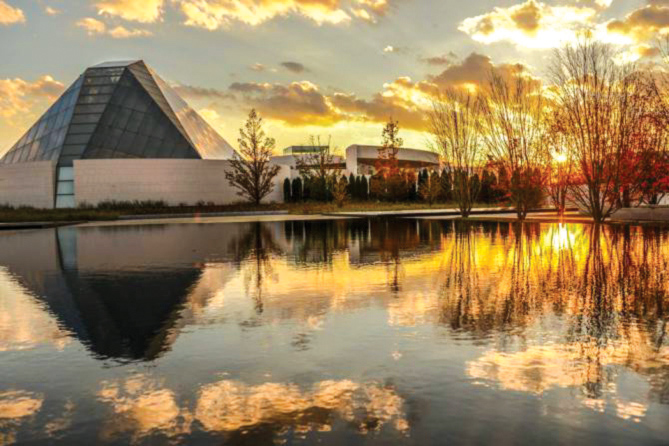
Take, for instance, a project like the Ismaili Centre in Toronto. There, cultural meaning, institutional values, a harsh climate, and the urban context all play a significant role in shaping the response. Rather than carrying a fixed design language from one project to another, we try to understand what is appropriate for each situation. In some cases, that might involve engaging with symbolism and ritual; in others, it could mean focusing on flexibility, innovation, and collaboration. Like the Novartis building in Basel, where working closely with scientists and understanding their systems becomes essential.
What remains consistent is the method, not the outcome. Every project goes through multiple phases. There are always moments of uncertainty, even stages that feel unresolved or difficult. But over time, through careful refinement, things begin to come together.
Ultimately, it is the clarity of intent and respect for context that guide the process. That requires close observation, deep understanding, and a commitment to applying core principles thoughtfully.
How do you define urban design? What makes it meaningful beyond traditional city planning?
I see urban design as the space between architecture and planning. It’s less about regulations and control and more about the lived experience of the city.
While traditional planning often focuses on zoning, infrastructure, and systems of control, urban design is concerned with how streets, buildings and public spaces come together to shape everyday life. What makes it meaningful is the human scale, how people walk, gather, interact and claim space. It’s about continuity rather than isolated objects.
In the Indian context, this becomes particularly significant because our understanding of urban space is very different. Our cities are more fluid, more porous, shaped by climate, culture, and patterns of everyday life.
At its best, urban design provides a framework that enables social life, economic activity, and cultural expression to flourish, rather than prescribing a fixed or uniform outcome. This contrasts with more rigid or controlled models seen in many Western contexts or highly planned cities like Singapore or Dubai.
In India and much of South Asia, urbanism is inherently dynamic. So the challenge is to develop an approach to urban design that is more flexible and responsive; one that balances necessary planning controls with the realities of how cities actually evolve and function.
The Nagari films have become an important part of the Charles Correa Foundation’s work. Could you share more about it?
We’ve been organising it for about six years now. Each year, we produce around 10 short films. with each exploring a specific issue within urban India, such as housing, transportation, water, distribution or flooding.
We don’t begin with rigid themes or predefined outlines. Instead, we review submissions, interact with filmmakers and then curate the final selection. We consciously avoid jargon and expert-led narratives. Instead, the stories unfold through the lived experiences of individuals, families, or communities navigating everyday urban challenges. We’ve also made a deliberate effort to represent diverse geographies and voices across India.
While we commission the films, we don’t produce them directly. Instead, we work with a group of experienced practitioners who guide young filmmakers. This not only ensures quality and rigor, but also helps nurture emerging voices, encouraging them to continue engaging with urban issues through documentary filmmaking. Ultimately, the aim is to build a meaningful and accessible body of work that reflects the complexity of Indian cities through multiple, grounded perspectives.
Over the course of your career, you must have encountered challenges. Is there one that stands out as particularly demanding?
Many projects can feel challenging at different stages, there are always moments when things seem uncertain or overwhelming. But I’ve found that the difficulty usually stems from its complexity which is often because of multiple stakeholders, tight constraints, high expectations, and the strong emotions that accompany them. In such situations, the challenge is as much about listening and negotiation as it is about design. It’s essential to truly understand what people want and to identify the core issues, whether they relate to cost, scope or expectations.
Over time, I’ve learned the importance of distinguishing between what is essential and what is negotiable. That clarity becomes critical, especially when working within a team. Communication, both within the design team and with clients and consultants is key.
Rather than trying to resolve everything at once, I focus on establishing a strong underlying idea that can guide decisions as conditions evolve. And they do evolve, sometimes over months, sometimes over years. That central clarity provides stability, even when circumstances are uncertain.
Ultimately, in the most complex situations, the process requires patience, careful listening, and a willingness to continually reassess and realign the project.
With climate change and shrinking resources reshaping the construction and design world, what changes do you think are needed?
We need to move away from energy-intensive and often wasteful building practices and instead focus on efficiency, adaptability, and long-term performance. This means designing buildings that work with the climate rather than against it, using strategies like orientation, shading, natural ventilation, and daylight as primary tools. The moment we rely entirely on mechanical solutions, we’ve already compromised the design. While they may offer quick fixes, they often come with long-term costs, both financially and environmentally, like maintenance and energy consumption.
We need to prioritise passive systems through more thoughtful use of materials; perhaps building less, building lighter, and valuing durability, adaptability, and reuse.
It also requires a shift in perspective: from seeing buildings as finished objects to understanding them as systems that evolve over time. Architecture must become more responsible, not just environmentally but socially as well; recognising that resources are finite and every design decision carries long-term consequences. In many ways, this isn’t entirely new thinking. It’s a return to principles that were once common sense, especially in traditional architecture. That is something the profession needs to rediscover and build upon.
Charles Correa’s vision shaped Indian architecture in profound ways. Does his vision still survive in Goa or does it need to be deliberately reintroduced through policy and planning?
I think it still survives in fragments, in certain buildings, in spatial traditions and even in ways of living. However, it is increasingly under strain, as market-driven development and short-term planning often override concerns about public space, ecology, and community. Because of this, his ideas can no longer be taken for granted; they need to be actively reinforced through planning frameworks, design practices and sustained public engagement.
As you know, Charles Correa led the Regional Plan for Goa 2021, a landmark participatory exercise. It aimed to guide sustainable development by protecting ecologically sensitive areas, placing nearly 80% of land under conservation while also identifying balanced growth centers. The idea was not to resist growth altogether but to channel it thoughtfully, safeguarding heritage landscapes, forests and natural slopes while allowing development in appropriate areas. Unfortunately, the plan was never fully implemented. In that sense, his broader vision has not survived institutionally in Goa. Without deliberate intervention, these values risk being steadily eroded rather than allowed to evolve meaningfully.
Growth in Goa is inevitable, but it needs direction and clarity, an understanding of what must be preserved and where development can responsibly occur. Without that, we risk continued haphazard expansion, which is already becoming evident. It’s deeply concerning.
Having taught and guided young architects, what advice would you give someone starting out today?
I would say, start by paying close attention. Observe places, people, and how buildings actually perform over time. Don’t rush to develop a signature style. Instead, focus on clearly understanding problems and responding to them thoughtfully.
Learn to value constraints. They are not limitations but design parameters that shape the solution. Working within them and pushing them carefully is an essential part of the design process.
From my experience, rigour and patience matter far more than quick results. It’s also important to remain ethically grounded and open to learning. Some of the most valuable lessons come from craftspeople on site, from the communities you design for, from collaborating with other disciplines and even from failure; failure teaches you a great deal.
Architecture is a long journey. It’s not about immediate visibility or recognition but about a sustained commitment to relevance and responsibility. That, ultimately, is what gives the work meaning.
In today’s rapidly changing social, technological, and environmental landscape, which trends will shape architecture, urban design, and the architect’s role?
From an environmental perspective, climate responsiveness and resource consciousness can no longer be treated as optional, they must form the basis of how we design moving forward.
As the impacts of climate change become more evident, architects will need to rethink how buildings are conceived, ensuring they work with the environment rather than relying on energy-intensive systems.
Technologically, digital tools are transforming the way we design and build. However, I believe their true strength lies not in producing complex or visually striking forms, but in improving performance, collaboration, and efficiency. They enable better coordination between architects, engineers and consultants, leading to more integrated and thoughtful outcomes.
Socially, there is also a growing recognition that architecture must engage more directly with issues such as inequality, public space access, and the impact of private development.
Together, these shifts are expanding the architect’s role from being primarily a form-giver to becoming a mediator, collaborator, and steward of the built environment. This requires working more closely with planners, engineers, policymakers and communities.
Despite the challenges we face, this moment presents an opportunity to reassert architecture’s public purpose to design with greater care, intelligence and responsibility and to contribute meaningfully to a more equitable and sustainable environment.
Architecture is, in many ways, a future-oriented discipline. Every project is an act of projection, imagining how people will live, work, and interact over time. That makes our responsibility even greater. Encouragingly, the next generation of architects is far more sensitive to environmental and social concerns. I believe the profession will continue to evolve in response to that awareness. There is, certainly, reason for optimism.