

- LUIS DIAS
You have probably heard of the expressions “as rich as Croesus” or “richer than Croesus”, used to describe someone
fabulously wealthy.
Croesus was the last king of Lydia (a kingdom in western Anatolia in modern-day Turkey during the Iron Age) from 561 BCE to 547 BCE.
In 550 BCE, Croesus’s brother-in-law, the Median king Astyages, was overthrown by the latter’s own grandson, the Persian king Cyrus II (‘the Great, c. 600 BCE – 530 BCE). Croesus responded by waging war against Persia.
Before Croesus did so, however, he consulted the famed Oracles at Delphi and at Thebes. The account by Herodotus may be apocryphal, but apparently both Oracles told Croesus that “if he made war on the Persians, then he would destroy a mighty empire”.
However, it was the empire of Croesus, not that of the Persians, that was defeated, fulfilling the prophecy but not his interpretation of it.
I was reminded of this interesting historical nugget while reading, of all things, a 2011 book by American mathematician and philosopher David Berlinski on ‘Absolutely Elementary Mathematics (AEM)’, aptly titled ‘One, Two, Three’.
Berlinski used this example to illustrate the hypothetical proposition(“If____, then___”). “Hypothetical propositions make their case in two swoops instead of one, for their truth depends on the truth of their constituents, the hinge of fate creaking twice. If you attack the Persians – that is one proposition. Then you will destroy a great empire — that is another proposition.”
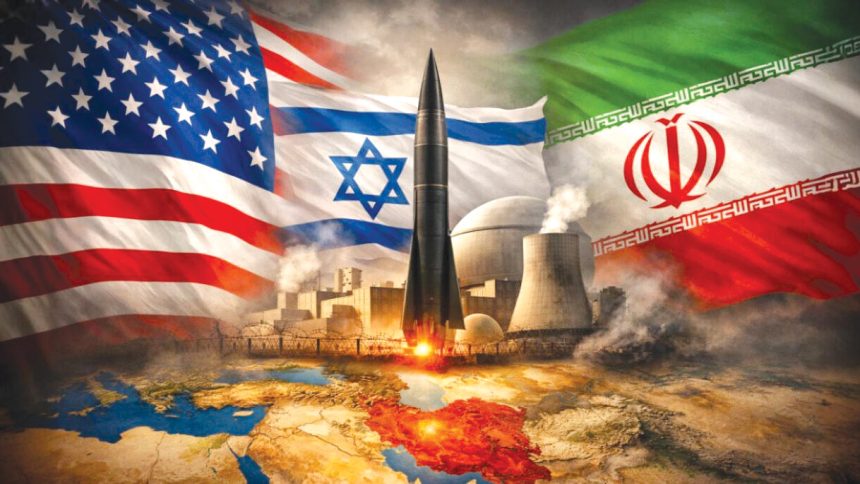
Any similarity with contemporary geopolitics is of course utterly coincidental, but it definitely made me think about it.
The Oracles gave Croesus a hypothetical proposition, which he misinterpreted at his peril. Had he not attacked Persia, Croesus may not have been “the last king of Lydia”. Both “swoops” “creaking on the hinge of fate” were the truth.
What happened to Croesus? The various accounts may be just as apocryphal: some say he tried to commit suicide on a pyre, others that he was condemned to be burned at the stake “until a thunderstorm extinguished the fire after either his or his son’s prayers to the god Apollo (or after Cyrus heard Croesus calling the name of Solon, one of the Seven Sages of Greece).” It is even possible Croesus became “advisor” to his former
enemy Cyrus!
In Leo Tolstoy’s short story ‘Croesus and Fate’, Solon chastises Croesus for his vanity over his wealth and might, and says the happiest man he had ever met was a poor Athenian peasant who was content with what he had. Tolstoy also ends the story with the two foes (Croesus and Cyrus) becoming friends after the ill-undertaken war.
The parallels with this present war are many. Among the 40 countries with the highest military spending in 2024 according to the SIPRI (Stockholm International Peace Research Institute) Military Expenditure Database, the U.S. is the world’s highest in military expenditure. Israel ranked 12th, while Iran trailed far behind at number 34. (Incidentally, India was sixth).
The two sides (U.S. and Israel versus Iran) are extremely unequal by this yardstick. There are no Oracles to consult, but several military strategists and technicians aver that despite the odds, Iran will win this ‘attritional’ war if it holds its ground as time is on its side.
As I was reading Berlinski’s book, I came across an intriguing concept called ‘The Prisoner’s Dilemma’ which is sometimes also applied to
international politics. ’Prisoner’s Dilemma’ is a game theory thought experiment involving two rational agents, each of whom can either cooperate for mutual benefit or betray their opponent (“defect”) for individual gain. It got its rather bizarre appellation because rewards were framed in terms of prison sentences when the experiment was
being designed. ‘Prisoner’s dilemma’ can be applied to any situation in which two entities can gain important benefits by cooperating or suffer by failing to do so, but find it difficult or expensive to coordinate their choices.
In international relations theory, the ‘prisoner’s dilemma’ is often used to demonstrate why cooperation fails in situations when cooperation between states is collectively optimal but individually suboptimal.
A classic example is the “security dilemma” whereby an increase in one state’s security (such as increasing its military strength) leads other states to feel insecure out of fear of offensive action from that state. Each state then resorts to “security-increasing” measures leading to tensions, escalation or conflict, in which “one or more parties produce an outcome which no-one truly desires”.
The “security dilemma” is particularly intense in situations when it is hard to distinguish offensive weapons from defensive weapons (such as possession of enriched uranium or similar radioactive material that could be used to build a nuclear weapon). In this game theory “logic”, offense has the advantage in any conflict over defense. It is the supposed rationale for the “pre-emptive strike”, based on wanting to “obliterate” (sound familiar?) the other so it cannot pose a challenge in the future. Therefore, one is an “aggressor for peace” (the term was actually bandied about in the U.S. in the 1950s as rationale for “pre-emptively” striking the erstwhile Soviet Union; mercifully it remained just a slogan).
This encapsulates perfectly the conundrum of the spiraling nuclear arms race that began ever since the Manhattan Project in the early 1940s. Once one nation-state has this “defensive” security deterrent, the security of every other one is compromised until they also possess it.
An overview of the nine nuclear states and their capacities shows that the U.S. is again number one with 3,700 warheads; Israel is eight with 90; and repeated inspections by International Atomic Energy Agency (IAEA) have proven that Iran has none. In a Wall Street Journal article dated March 2, 2026, Rafael Gorssi, head of IAEA stated that “Iran has no structured program to build nuclear weapons.”
The problem with game theory is that it is a study of mathematical models of strategic interactions and doesn’t factor in the human element of impulse, irrationality or even error. Take the definition of ‘prisoner’s dilemma’ which presupposes the interaction between “two rational agents”. What if more than one agent is literally and figuratively “at play”, and what if one or more of the players or agents are not acting “rationally”? We have both these scenarios in our present reality.
When the ‘prisoner’s dilemma’ concept was tested by American political scientist Robert Marshall Axelrod (and described in his 1984 book ‘The Evolution of Cooperation’),the simplest program (nicknamed ‘Tit for Tat’) was the winning deterministic strategy. The strategy is simply to cooperate on the first iteration of the game; after that, the player does what his or her opponent did on the previous move.
After analysing the top-scoring strategies, Axelrod noted four conditions necessary for a strategy to succeed: 1. Being “nice” i.e. not being the first to “defect” or attack, 2. Retaliating if attacked, 3. Forgiving some attacks: can stop long runs of revenge and counter-revenge, maximising points, 4. Non-envious, a pattern of ‘trust’: One must not strive to score more than the opponent.
I totally understand that geopolitics cannot be reduced into a simplistic game theory thought experiment. But work out for yourself which side among the current belligerents shows these “winning” strategies.

