

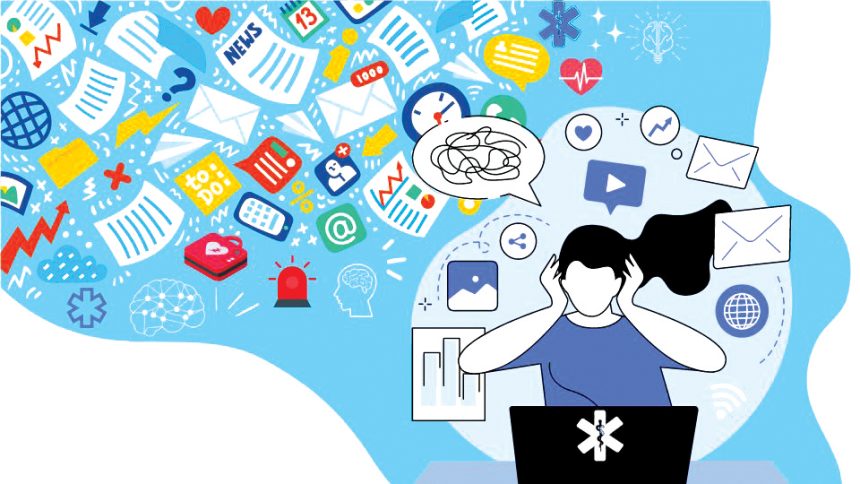
From ‘Posting Zero’ to digital detoxes, Gen Z and professionals are rethinking their online habits to protect mental health and find balance
KALYANI JHA | NT NETWORK
Social media has become an essential part of daily life but users engage with it in very different ways depending on their purpose.
A Gen Z user from Ponda, who prefers to remain anonymous, says, “I don’t post publicly. I only share content with close friends who know me personally,” she says, adding that social media helps her stay in touch with work contacts without sharing her personal number.
For entrepreneur Yukta Prabhu, co-founder of GoCo, a travel agency, social media is both a business tool and a source of fun. “I enjoy using Instagram. Posting regularly doesn’t feel exhausting,” she says.
However, she acknowledges that maintaining engagement can be demanding. “Creating engaging content affects our reach and visibility. Likes and engagement do matter. When work piles up, I limit my time but social media is also my main form of entertainment when I’m alone,” she explains.
The burnout behind the scroll
What began as a space for connection and creativity is now, for many, a source of exhaustion. The term “social media fatigue” describes the mental, emotional and physical weariness caused by excessive online engagement. A systematic published study titled ‘Drivers of Social Media Fatigue’ by Han Zheng and Rich Ling, published in the journal, ‘Telematics and Informatics’, defines it as a response to compulsive use and overwhelming volumes of ambiguous or unverified content. The COVID-19 pandemic only intensified this fatigue, as people turned to digital platforms for connection and information.
Psychologist Shobhika Jaju of The Silver Lining, Margao, explains that fatigue arises not only from actively posting but also from passive scrolling without engagement. “Even when we watch reels or read posts, the content usually doesn’t register or stay with us,” she says. Signs include feeling mentally drained, heaviness in the head and reduced posting or engagement.
Excessive social media use can affect mental health, sleep, attention and emotional regulation. “People who spend long hours on platforms like Instagram tend to be more irritable and restless. In children, we are noticing delayed verbal expression and reduced attention spans, likely linked to prolonged screen exposure. It can also contribute to mood swings anxiety and depressive symptoms,” Jaju adds.
Mahesh Tangde* from Mapusa has noticed the effects firsthand. “When my teenage son is absorbed in scrolling, he struggles to recall even simple things from school,” he says.
Jaju observes a generational divide: “Millennials tend to overuse social media, while Gen Z engages more deliberately and mindfully. She adds that a mental health professional can guide healthier social media habits and overall online exposure.
The new trend
In response to this fatigue, more users are choosing a quieter digital presence. The trend, known as ‘Posting Zero’ and coined by The New Yorker columnist Kyle Chayka, means posting rarely or not at all. Some may do it to protect their privacy and reduce stress, while others might adopt it to appear
cool or mysterious.
A Financial Times survey of 250,000 users across 50 countries found a 10% drop in posting among younger generations. Jaju sees this as a healthy change. “The less you post, the less you feel the need to check likes or views. It gives you more mental space to focus on what really matters.”
Prabhu says she may never adopt it. “Most of us no longer watch TV or read newspapers as before. Social media is now our main source of news and entertainment. Sharing small moments of life is fun; even if it doesn’t matter to anyone else, it’s still a form of expression.
Author Yashila Lobo adds that ‘Posting Zero’ allows users to stay connected without feeling stressed. “If posting every day makes you happy, do it. But ‘Posting Zero’ lets you control your online interactions,” she says, adding that balance is important; you shouldn’t feel overwhelmed but your profile should stay somewhat up to date,” she adds.
Jaju agrees. “‘Posting Zero’ can be freeing. The less you post, the less you feel the need to check likes or views. It gives you more mental space to focus on what really matters. People are getting tired of constantly sharing and are choosing privacy instead.”
The mental toll
Lobo says that backhanded compliments and anonymous accounts that take pleasure in rude comments have made her post and interact less on social media. “I try to make every post or reply perfect, which leads to overthinking and delays. I used to post without much thought, but now I hesitate,” she says.
To protect her mental health, Lobo only posts when it feels right. “People are very judgmental. Since I have a public account, I worry about what I call ‘CCTV cameras’, people who watch my profile even if they don’t follow me.” She looks for inspiration in fashion, cooking and memes, but avoids frequent posting. “Balance is important. You shouldn’t feel overwhelmed but your profile should stay somewhat up to date.”
Veena Priolkar, who hasn’t posted on Instagram since 2019, says the platform lost its appeal. “People I knew would post the same things from their day. Scrolling through it felt like a waste of time. I’d rather just call someone and talk to them.” She now prefers YouTube and Reddit for content and finds Instagram increasingly cluttered. “It’s mostly ads, videos or influencer promotions. Everything feels fake.”
Teacher and musician Gaurav Padte Armstrong ran Goa’s largest meme page for five years, posting daily to over 30,000 followers. He then took a two-year break. “It was the best decision of my life,” he says. During his “self-imposed detox”, he returned to his creative pursuits and felt truly alive. “Why show my life to people who don’t know me? Posting doesn’t give me anything real.”
He adds, “People think more followers mean more value but likes and followers can be bought. Most of social media is fake.” Now, he uses YouTube to learn and keeps WhatsApp for work only. “I don’t check messages unless necessary. I focus on my family and myself.”
Even casual interactions can feel obligatory. “Often, it’s just similar pictures from the same background. It feels more like a responsibility I somehow signed up for,” Priolkar adds. However, she values private posts from friends. “They use it like a personal album, not for likes.
(* name changed)

