MAYA DE SOUZA
With 10 million tourists visiting Goa in 2025, continuing the construction of second homes, and just 1.5 million locals, a dialogue is overdue on sustainable tourism, also known as regenerative tourism. It is the kind of tourism that adds value to a place, people and planet, and allowing culture to flourish rather than watering it down; supporting investment in heritage protection, museums as well as art and craft that helps provide the funds to protect natural resources and supports communities financially.
It’s a difficult balance. Some European cities like Venice, Malaga and Sevilla have gone too far. But when local people cannot afford to live there, the places become mere facades, or stages, where visitors are the performers and the locals the backstage staff.
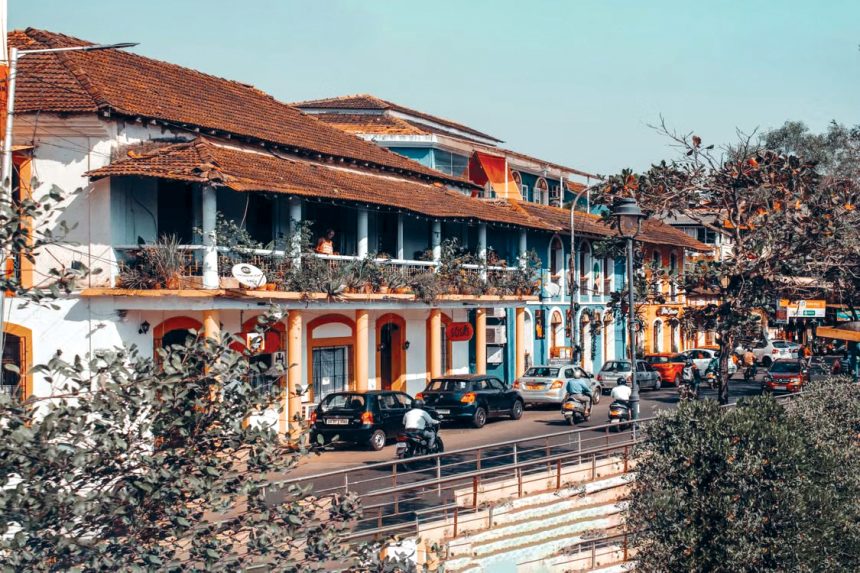
Goa is a rich tapestry of culture and nature, with its artistic, architectural, and ecological sense. Think of the beauty of the Konkan home – red laterite or earth, the Goa-Portuguese style, the bone white village churches, the temples with so many deities with their own stories, the Kunbi houses in the hills, the music – whether it is Fado, Konkan jazz, or the songs of Lata Mangeshkar and Asha Bhonsle, who are also of Goan origin. The fusion is fascinating. There is also Konkani re-establishing itself as a language. Then there are the sandy beaches, wide rivers lined with mangroves, the paddy fields and lotus covered water bodies, and of course the immensity of the Ghats.
However with the pace of a visit, for most tourists, Goa just passes them by. They miss it all. The regenerative tourism I am suggesting involves ‘slow tourism’, which has an immersive quality. But the two words do not sit well together these days, with one jumping on a flight and heading to Goa for a couple of nights. For the host community, a slow approach like ‘Sussegad’ may also feel old fashioned, as this is the time to enjoy, get rich quick and there is certainly such opportunity in Goa.
As a result, hotels, Airbnb apartments, shops, and restaurants are sprouting up everywhere. Volumes of large cars block narrow lanes with loud music disturbing tranquility, as the tropical starry skies disappear with bright white lights, and hotels take up the space of old fishing villages with their “slow rhythm of life”. Costs shoot up for accommodation and even for the basics like fish and mangoes. With the addition of local people leaving, the distinctiveness fades.
So what do we do? Tourism is essential as it brings in 30 per cent of Goa’s GDP and it can align well with safeguarding what we value. However, if unplanned, it can destroy the essence of the place. Having just been on a holiday cum study tour in the Ile de France and the Low Countries, I’d like to suggest these four elements of regenerative tourism that I saw there:
Slow tourism
Which means visitors being located in a place like a village, a locality, or a neighbourhood and staying there for some time and moving around slowly either by foot, on bicycle etc. In terms of ‘slow’, some countries, houses and apartments are generally rented for a week. You can stay in a village and get to know it. This year I visited a fairly ordinary French town. You could stay in a charming old house, wander around the old town, stroll along a river in the park and have lunch in the square. In places like Amsterdam, bicycles can be hired easily. The travel becomes part of the experience. The speed fits in with the rhythm of the village and nature. The same can be done in Goa.
Respect of the place
This will involve information, tours and showing places as real living spaces and not just buildings for selfies. In Amsterdam, facades are protected by law, so we see and feel the history of the place in every canal-side house, and every worn stone threshold. In Goa, we have the laterite walls, the cool verandahs, the Goan villas with their oyster-shell windows and decorative balconies. They are a civilisation’s answer to the landscape, climate, craft, and the art of living well that go back hundreds of years. Respect also means that hotels, eateries, Airbnbs and the tourists manage waste, sewage, and vehicles with care.
Activity and experience based
This includes interaction with local people, supporting local jobs and livelihoods. Tourists can stay in local guesthouses, visit farms, feni distilleries, bakeries etc. A little Omani mountain village did this perfectly. We learnt about moringa oil, date sugar and much more. In Europe, hotels like The Social Hub that we stayed at in Brussels, are designed to enable mixing, where young professionals, long-stay guests and short-stay visitors share common rooms, events and activities. The level of interaction may vary of course, with some being more immersed than others.
Supporting the local economy
This questions where the money actually goes. A resort may employ many, but its profits may flow elsewhere. When a visitor rents a bicycle from a family-run shop, eats at a place where the owner is of the area, buys a piece of craft from the hands that made it, that is an economy that nourishes a community rather than extracting
from it. The power to recreate is possible. Regenerative tourism asks Goans to, with confidence and with pride, to invite tourists to learn, engage and respect. The next task in my view is co-creating and building it into the framework of standards such as star ratings, certification schemes, booking sites, etc. They can aid the process of improvement. But a change of mindset is also needed, and change is already afoot.