Dr. Nandkumar M. Kamat
My association with vice chancellor of Goa University, Prof. H. B. Menon, goes back to 1988, when he first joined the university. Over the decades, I have followed his scientific journey with interest and respect, particularly his work as an expert in marine and atmospheric optics and in the study of the monsoon and ocean-atmosphere interactions. I recently met him in his office, and our conversation was a useful, productive scientific exchange. It gave me an opportunity to learn about his latest initiative: a new app that he said would soon be available for free download on Google Play. What immediately interested me was his clarification that the app had been designed specifically for Goa’s fishermen venturing into open waters within the state’s maritime jurisdiction.
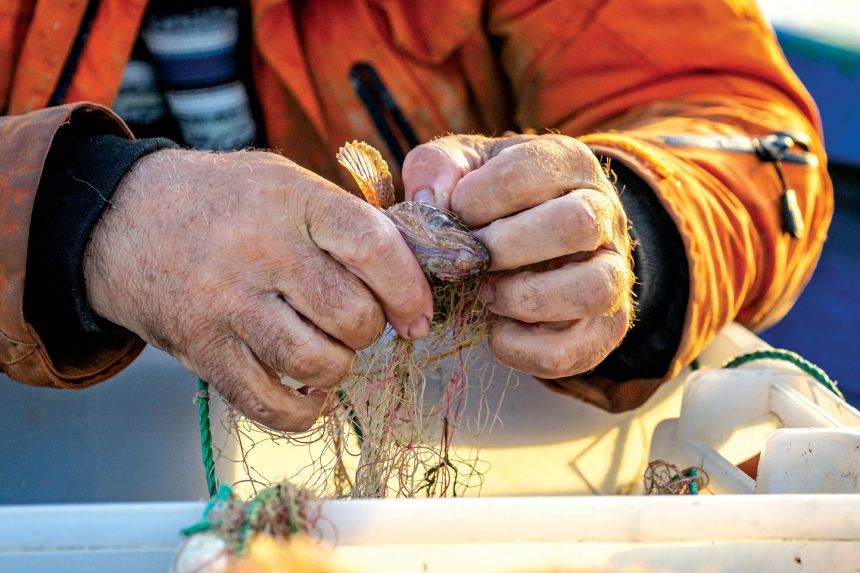
For generations, these fishermen have read the Arabian Sea through their experience. They observe winds, waves, and currents, recognise seasonal shifts, detect changes in water colour and behaviour, and remember fishing grounds known to their families. Today, another way of reading the same sea is available to us. Satellites can repeatedly observe changes in ocean colour, temperature, and circulation. Prof. Menon does not view these two forms of knowledge as rivals. His vision is constructive: satellite information can add another layer to fishermen’s experience, while fishermen’s observations can help scientists better understand
coastal fisheries.
This thinking is reflected in the Matsya Sandhana Kshetram, a non-profit initiative on Potential Fishing Zone guidance developed by Goa University for Goa’s fishing communities. Prof. Menon explained that the idea should not be mistaken for an attempt to observe fish directly from space. Satellites read the signs in the sea. By combining observations of chlorophyll-a, sea surface temperature, ocean fronts, currents, and persistent sea features, scientists can identify areas where conditions appear favourable for fishing. Chlorophyll-a provides important clues. Prof. Menon explained its significance through microscopic phytoplankton, tiny plant-like organisms that form the foundation of much of the marine food web. Surface waters are generally more productive where these organisms are abundant. Satellite observations of chlorophyll can therefore help scientists identify productive regions, although this must never be mistaken for direct evidence that commercially important fish
are present.
The use of ocean colour involves a difficult scientific problem. Open-ocean waters can be relatively simple to interpret, but coastal waters contain mixtures of phytoplankton, suspended sediments, and coloured dissolved substances. All these factors affect the light leaving the water and the signal received by the satellite. Extracting reliable information from mixed signals requires
specialised methods.
Goa University has made an original contribution to this study. Prof. Menon and Dr. Arjun Adhikari developed the Goa University Case II (GUC2) algorithm for estimating chlorophyll-a in optically complex coastal waters. Developed using observations from the eastern Arabian Sea, their work was published in the Journal of Geophysical Research: Oceans in 2018. The approach was later evaluated using observations from coastal environments, including Chesapeake Bay and waters associated with the Gulf of Mexico. However, chlorophyll alone cannot tell fishermen where favourable conditions might occur. Prof. Menon stressed that the distribution of productive waters and physical ocean conditions are equally important for understanding the ocean. This brings us to one of the fascinating features visible from space: ocean fronts. A front is a narrow region where ocean properties change. A change in temperature can produce a thermal front, whereas a rapid change in chlorophyll can reveal a biological front. The strength of the Goa University approach lies in its ability to synthesise evidence rather than rely on a single compelling satellite image. Chlorophyll patterns and biological fronts can be considered alongside temperature fronts and other oceanic information. When different signs point to an area, the evidence becomes stronger. Persistence matters too. A feature observed over time is more significant than one that appears briefly in a single satellite observation. Currents add another dimension by showing how these features move.
This study has some limitations. Clouds frequently obscure the sea, particularly during monsoons. Satellite observations may be incomplete, weather may interfere with measurements, and an excellent observation may lose value if the ocean has changed since it was acquired. Candidate locations must also be considered against coastal and depth conditions so that unsuitable areas are not casually presented as offshore fishing guidance for the future. Here, scientific caution is necessary. A Potential Fishing Zone is exactly what its name suggests. Prof. Menon was categorical that such guidance cannot be interpreted as an assurance that fish will be present at the indicated location or that a particular quantity will be caught at that location. It identifies areas where the available evidence indicates favourable conditions. This distinction is important because the sea is a dynamic ecosystem, not a warehouse with fish stored at fixed coordinates. Fish respond to food availability, temperature, currents, season, reproduction, predators, and many other factors.
Perhaps the most appealing part of Prof. Menon’s vision is his attitude towards the traditional knowledge of fishermen. He does not consider technology as a substitute for generational experience. Fishermen possess intimate knowledge of traditional grounds, currents, seasons, weather, water conditions, and fish behaviour. Some observations arise from repeated encounters with the sea and cannot be fully represented by satellite sensors or mathematical algorithms. Matsya Sandhana Kshetram can therefore develop into more than a one-way advisory service. Prof. Menon envisages fishermen contributing information. Reliable georeferenced observations from fishing trips can document fishing locations, catches, species, and other relevant details. Actual experiences at sea can then be compared with the conditions indicated by satellite-based guidance. This creates a powerful feedback loop. As observations accumulate, scientists can examine where the guidance corresponded with actual fishing outcomes, where it did not, and under what conditions its performance changed. Such field information can help improve Goa University’s framework. Thus, the fisherman ceases to be merely the final recipient of information. He becomes a participant in the generation of new knowledge about the coastal sea of Goa.
There is also a larger philosophy of what public universities can contribute to society. Prof. Menon sees Matsya Sandhana Kshetram as research that moves beyond laboratories and scientific journals into practical public service. Years of work in ocean studies and remote sensing acquire another dimension when translated into information useful to communities whose livelihoods depend on marine resources. The purpose is not simply to display promising locations on a screen but to create an interface between scientists and fishing communities that could support informed, efficient, and
sustainable fishing.
As vice chancellor, Prof. Menon will retire on September 2, 2026. We wish him well in his new projects and hope this initiative continues to grow as a bridge between the university and Goa’s fishing community. My meeting with Prof. Menon left me thinking less about an app’s novelty and more about a new relationship with the Arabian Sea itself. Fishermen have been reading this sea from their boats for centuries. Ocean scientists are now reading data from space instruments. One sees the sea at close quarters through generations of experience; the other observes vast stretches through sensors, algorithms and analysis.
Matsya Sandhana Kshetram is more than an experiment in finding favourable fishing grounds. It points towards participatory ocean science, where the view from space meets knowledge from fishing boats. For someone I have known since his earliest years at Goa University, it is heartening to see Prof. Menon’s long scientific experience being shaped into public service for Goa. Its most important contribution may be this: not replacing the fisherman’s understanding of the Arabian Sea but adding the power of modern science to it while allowing his own experience to make that
science better.