VINIKA VISWAMBHARAN | NT BUZZ
Food transcends flavour for Odette Mascarenhas. At Art Park, for the Serendipity Arts Festival, she unites years of research, personal experience and emotional effort in ‘The Culinary Odyssey of Goa’ a culinary arts initiative inspired by her recent book bearing the same title.
Mascarenhas who worked for three decades in the hospitality industry, reveals that her turning point came unexpectedly, through a scrapbook owned by her husband’s father Miguel Arcanjo Mascarenhas, the executive chef of the Taj Mahal Palace in 1939. The pages uncovered a life deeply connected to history, creativity and flexibility. During prohibition, he crafted dishes for viceroys and princes by replacing banned ingredients. If a person like him could achieve so much with food, she wondered, what stories were we overlooking in Goa?
That question followed her into journalism as she began writing restaurant reviews for local dailies. Beneath the reviews was a profound discomfort. Chefs often boasted that their dishes were based on their grandmother’s recipes. “I constantly questioned, who taught the grandmother?” she says. No one probed the origins of these recipes or what culinary traditions existed before Portuguese impact shaped mainstream Goan food.
This curiosity prompted Mascarenhas to investigate what existed beyond the known vindaloos and xacutis. Before Portuguese rule, there were dynasties in this region. There was cuisine,” she says.
Her studies resulted in nine publications. However, Mascarenhas felt that books, by themselves, were insufficient. Recipes were disappearing silently in kitchens unrecorded. The homemakers were getting older. The knowledge was fading away.
In 2014 she helped establish the Goan Culinary Club, a non-profit group of chefs and restaurant owners committed to safeguarding genuine Goan cuisine. For her, persuading individuals to disclose family recipes proved challenging. “Food is considered property,” she explains. “A lot were reluctant to share.” Her approach was straightforward yet effective: document the recipe, capture an image of the cook and guarantee that it is remembered.
Seven years of study further delayed by the pandemic culminated in ‘The Culinary Odyssey of Goa’. The book explores Goan food traditions dating back to the third century CE and illustrates how ingredients, cooking methods and communities have influenced present-day cuisine. At SAF, Mascarenhas turns this research into an experiential display.
The project unites samples from five heritage cuisines: Hindu craftsmen, heirs of the Bijapur dynasty, Gaud Saraswat Brahmins, Indo-Luso heritage, and Christian lineages.
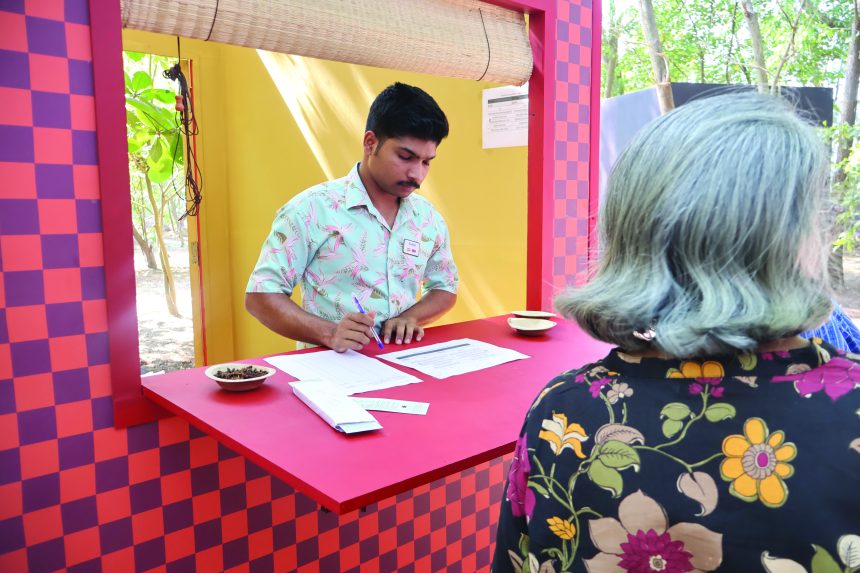
Central to the experience are five elements: turmeric, kokum, black peppercorn, tamarind and star anise. Visitors encounter interactive spice booths where stories are narrated, connecting flavour to trade routes, migration and memory. Star anise for example, was never cultivated in India. “Then what is its origin?” Mascarenhas inquires. The answers lie in maritime exchange and cultural assimilation.
The tasting plates are thoughtfully assembled. Each thali features five dishes, including appetisers, main courses, salads and sweets giving guests a chance to explore a variety of quantity. “This isn’t about satisfying hunger,” stresses Mascarenhas. “It’s about understanding what goes into your grandmother’s cooking.”
For example, chef Alex Dias who is heading Star Anise booth at Art Park along with sous chef Adesh Vast says, “Before the Portuguese, there were no chillies, tomatoes, potatoes, or cashews. Developed after nearly a year of research with the Goan Culinary Club, the menu here draws only from spices and produce traditionally grown in Goa. Adesh went to each and every home to collect old recipes, and our tastings began in April 2025. What you see here is the result.” The menu highlights dishes such as yam bhaji, smoked banana, traditional gario made with coconut, cucumber and rice flour, and ragi bakri. Non-vegetarian offerings include smoked mackerel and mutton sukhem, complemented by ragi bakri, gario and a bite of smashed burnt onion.
For Mascarenhas, the ultimate aim is emotional connection. “We are forgetting our Goan cuisine,” she says. “A lot of recipes will die a natural death.” Through taste, story and conversation at her exhibition, Mascarenhas hopes people will reconnect with the soul of Goan food.