New Delhi: Fortunes can turn quickly, and the INDIA bloc learnt it the hard way on Monday.
The resounding defeats of the Trinamool Congress (TMC), the DMK and the CPI(M)-led Left Front come less than a month after a united Opposition handed a rare legislative setback to the ruling NDA in Lok Sabha, leveraging its increased bench strength following the 2024 general elections.
While these losses at the state level will not immediately alter the INDIA bloc’s numbers in Parliament, Monday’s results are likely to leave a deeper imprint on the coalition’s internal dynamics, which have been shaped as much by shared purpose as by underlying contradictions.
The BJP’s capture of West Bengal, among the frontiers that had eluded the party so far and which sends as many as 42 MPs to Lok Sabha, holds the potential to expand its footprint further in 2029. It also opens a new window for the party to augment its Rajya Sabha strength.
However, to begin with, the setbacks for the TMC and the DMK, key pillars of the Opposition and the third- and fourth-largest contributors to its Lok Sabha strength, are expected to further dent the bloc’s morale, already strained by a string of electoral reverses since its general election gains that now risk appearing fleeting.
At the same time, the verdict is set to trigger another subtle but significant shift within the INDIA bloc – the likelihood of renewed calls for a change in leadership appears diminished.
Regional parties that had earlier questioned Lok Sabha Leader of Opposition Rahul Gandhi’s leadership have themselves suffered electoral reverses, reducing the appetite for internal challenges, at least in the immediate aftermath of these results.
Over the past decade, regional ruling parties, particularly the TMC, have rarely missed an opportunity to project themselves, sometimes subtly and at other times assertively, as the principal
drivers of the Opposition, often pointing to their record of taking on and defeating the BJP in their respective states in successive elections since 2014, the year that marked the rise of an ascendant BJP under Prime Minister Narendra Modi.
This dynamic played out as recently as last month, a day before the introduction of the Constitution (131st Amendment) Bill in Lok Sabha.
The INDIA bloc huddled at Congress president Mallikarjun Kharge’s residence to chalk out a floor coordination strategy aimed at blocking its passage.
The meeting, also attended by Rahul, saw participation from representatives of almost all major Opposition parties, including the then ruling TMC and DMK. At the meeting, the TMC indicated it would be unable to spare many MPs from its 28-member contingent due to the ongoing election campaign.
Rahul pushed back firmly, arguing that such a move would effectively aid the BJP. The intervention prompted the party to revise its stance and send as many as 21 MPs to Delhi.
A united Opposition eventually brought down the bill. However, Rahul’s remarks did not sit well with sections of the TMC leadership, with some senior leaders privately remarking that before “lecturing allies who know how to defeat the BJP”, he should reflect on his own “dismal track record”.
The TMC’s defeat, therefore, marks a significant inflection point. It weakens one of the most vocal claimants to Opposition leadership and blunts its ability to assert primacy within the INDIA bloc, potentially recalibrating internal equations in favour of the Congress.
The Congress-led UDF also dislodged the CPIM-led LDF from power in Kerala, leaving the Left, another major constituent of the INDIA bloc, without the control of any state for the first time since 1977.
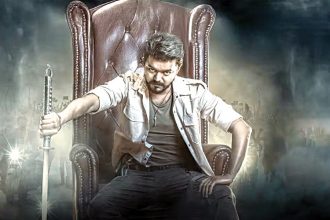
In Tamil Nadu, meanwhile, efforts by Congress leaders such as Manickam Tagore and Praveen Chakravarthy, widely considered faces of the Rahul Gandhi-led lobby, to ditch the DMK and tie up with Vijay-led TVK bore no fruit.
The results, however, suggest that Congress could have gained from the shift that Rahul was pushing for.
“A combination of Rahul Gandhi and Vijay would have swept Tamil Nadu,” Chakravarthy told reporters on Monday.