AP
DUBAI, UAE
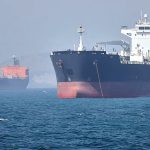
US forces fired on and disabled two Iranian oil tankers on Friday after exchanging fire with Iranian forces in the Strait of Hormuz overnight. The United Arab Emirates, meanwhile, reported another Iranian missile and drone attack.
The attacks cast more doubt on a tenuous month-old ceasefire that the United States has insisted is still in effect. Washington is awaiting an Iranian response to its latest proposal for a deal to end the war, reopen the strait and roll back Tehran’s disputed nuclear program.
US Secretary of State Marco Rubio said he hopes to receive “a serious offer” from Iran later Friday.
The US military said Friday that its forces had disabled two Iranian tankers that were trying to breach an American blockade of Iran’s ports. Hours earlier, the military said it thwarted attacks on three Navy ships and struck Iranian military facilities in the strait.
Iran has mostly blocked the critical waterway for global energy since the US and Israel launched the war on February 28, causing a global spike in fuel prices and rattling world markets. The US has imposed its own blockade of Iran’s ports.
The UAE’s Defense Ministry meanwhile said three people were wounded after air defenses engaged two ballistic missiles and three drones launched by Iran. It was not clear if all were successfully intercepted.
The US military posted video of the two Iranian tankers as their smokestacks were struck by an American fighter jet on Friday. Earlier in the week, an American military jet shot out the rudder of a tanker the US military said was attempting to breach its blockade.
Late Thursday, the US military said it thwarted Iranian attacks on three Navy ships in the Strait of Hormuz and struck Iranian military facilities in response. It said no American ships were hit.
“They threaten Americans, they are going to be blown up,” Rubio told reporters Friday.
Iran’s Foreign Ministry condemned what it called “hostile” US military action, saying it violated the ceasefire. “Every time a diplomatic solution is on the table, the US opts for a reckless military adventure,” Iranian Foreign Minister Abbas Araghchi posted on X.
A US strike overnight killed at least one sailor and injured 10 others aboard a cargo vessel that caught fire, a news agency affiliated with Iran’s judiciary reported. It was not clear if the ship was one of the two tankers the US acknowledged striking.
US President Donald Trump has insisted the ceasefire is holding. He also has reiterated threats to resume full-scale bombing if Iran doesn’t accept an agreement to reopen the strait and roll back its nuclear program.
Pakistani Prime Minister Shehbaz Sharif said his country has been in contact with the US and Iran “day and night” in an effort to extend the ceasefire and reach a peace deal.
Satellite images show what appears to be an oil slick in the Persian Gulf emanating from the western side of Kharg Island, Iran’s main crude export terminal.
The images taken Wednesday show the slick covering roughly 95 square kilometers (36 square miles). Windward AI, a maritime intelligence firm, said it first detected the spill in satellite images taken Tuesday and the slick was spreading southwest at a rate of about 2 kilometers (1.2 miles) an hour.
“If the slick continues drifting southward, there could also be risks to ecologically sensitive and protected marine areas in the Gulf,” said Nina Noelle, an international crisis operations expert with Greenpeace Germany.
The Pentagon declined to comment on whether the US military was tracking the spill or whether there had been recent strikes on the Iranian island. Based on the imagery taken earlier this week, the spill occurred before the most recent round of US strikes.
Rubio said Friday that it’s “unacceptable” for Iran to have a government agency that vets and taxes ships seeking passage through the strait.
Lloyd’s List Intelligence, a shipping data company, reported Thursday that Iran has created such an agency, known as the Persian Gulf Strait Authority.
The Iranian effort to formalize control over the channel raised new concerns about international shipping, with hundreds of commercial vessels bottled up in the Persian Gulf and unable to reach the open sea.