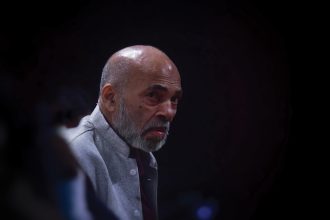
ADV. RAJESH NARVEKAR
Some years ago, a news channel broadcasted a report implying that August 15, India’s Independence Day is not celebrated in Goa. This was because when India became independent on August 15, 1947, Goa was still under Portuguese rule. Therefore, they had made the ‘discovery’ that the country’s Independence Day is not celebrated in Goa. Some politicians got angry over this news, filed a complaint against that news channel, and demanded immediate action from the government.
I don’t think the news channel made a mistake or committed a crime by saying that Independence Day is not celebrated in Goa. From my experience, it seems that in most places, we do not ‘celebrate’ Independence Day but rather ‘present’ or ‘perform’ it like drama or tiatr. What we observe from the bottom of our hearts for example, a festival, can be called celebrating; but doing it like putting up a play (natak) without feeling it in the heart is ‘presenting’ it.
A few years ago, I was invited as the chief guest by a school on August 15. After the flag hoisting, I stood up for my speech. Just then, it started raining. The teachers took shelter in a nearby shed while students took cover under the trees. A school employee came to me with an umbrella and stood holding it over my head, making me ‘Chhatrapati’. Saying I didn’t want the umbrella, I stood getting drenched in the rain. Without giving a speech, I stood smiling in front of the microphone until the rain stopped. When the rain subsided, everyone returned to their original positions and I started my speech. I began by asking the question, “Who was I laughing at and why?” No one answered. Everyone started laughing. Then I said, “This is not an occasion to laugh it off. I had come to speak about some brave heroes who became martyrs by taking bullets on their chests so that the country could get independence; but to listen to that, you are not even ready to take a few raindrops on your head. I don’t know whether to laugh or cry at this.” It goes without saying that I was never invited to any function at that school again.
Last August 15, I went to another school. Students presented patriotic Hindi songs; but the entire ceremony, right from the introduction to the chief guest’s speech, and the vote of thanks, was conducted in English. There are many indigenous languages in India. The ceremony could
have been arranged in Hindi, Marathi, or Konkani. The country became independent from the oppressive yoke of English rule, yet we glorify their English language and use it with great pride in our Independence Day celebration. Can this
be called celebrating Independence Day? Or would it be appropriate to say that we ‘presented’ it in the foreign English language? This should definitely be pondered upon.
(The writer is retired president, Administrative Tribunal)