Padmavati Prabhu
For effective Parkinson’s Disease (PD) management, there is a need to bridge the care gap by building a multidisciplinary care model, the Goa chapter of the Parkinson’s Disease and Movement Disorder Society (PDMDS) has said.
The chapter has also demanded the creation of a Goa-specific patient registry for those suffering from PD.
World Parkinson’s Day is observed on April 11 every year, and the theme this year is ‘Bridging the care gap’.
PDMDS Goa chapter coordinator Dr Joanne D’Souza said that Goa, being a small state with a single tertiary care hospital — Goa Medical College and Hospital, Bambolim — and a limited number of neurologists, has an extremely thin pipeline of movement disorder specialists.
“People living with Parkinson’s in the interiors — Sattari, Canacona, Quepem — have to travel significant distances for consultations, making regular follow-ups unsustainable for many families. Additionally, in Goa, many patients are first seen by general practitioners who may not be fully familiar with the complete spectrum of PD symptoms, resulting in delayed or missed diagnoses,”
Dr D’Souza said.
She said the absence of PD-specific physiotherapy programmes in Goa, along with the lack of mental health integration into neurology care, means patients are managing only motor symptoms while the non-motor burden remains
entirely unaddressed.
“Lack of awareness, limitation of human resources, and cost factors deny the benefits of therapy to many patients. Levodopa-based medications, dopamine agonists, and newer formulations are not always available at government pharmacies. Their cost at private pharmacies places them out of reach for lower-income patients. There is also a critical issue of medication timing — Parkinson’s medications must be given at precise intervals — which is poorly understood even among general medical staff in non-specialist settings,” she said.
On early recognition of PD, Dr D’Souza said the most scalable intervention is training general practitioners, family physicians, and doctors at primary health centres (PHCs).
“Most PD in Goa is first encountered at the general practitioner’s level. Equipping frontline healthcare workers with simple screening tools — identifying a unilateral tremor, masked face, or slowed gait — can significantly compress the time between symptom onset and specialist
referral,” she said.
She added that effective PD management requires more than just a neurologist.
“A comprehensive care team should include physiotherapists, speech therapists, occupational therapists, nutritionists, and mental health professionals,” she said.
“A Goa-specific patient registry maintained by the Society — tracking patient demographics, diagnosis timelines, access to care, and medication adherence — would generate the evidence base needed to make a compelling case to government and healthcare institutions for greater investment in Parkinson’s care across the state,” she said.
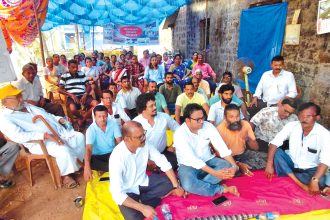
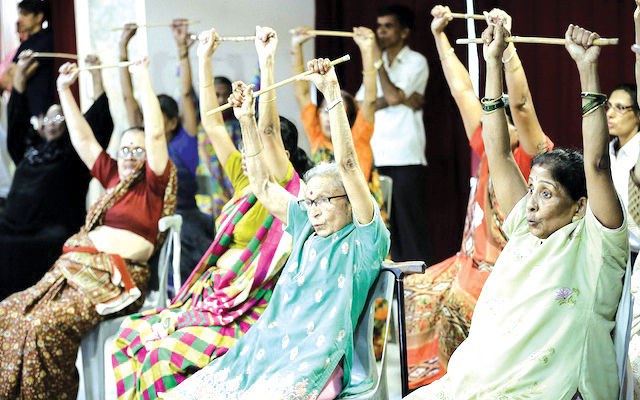
PDMDS in India provides a multidisciplinary care model designed to make rehabilitation accessible and affordable for People with Parkinson’s (PwPs) and their caregivers.
“In Goa, we have support groups at four locations — Mapusa, Panaji, Margao and Porvorim — providing rehabilitation absolutely free of cost,” she said.