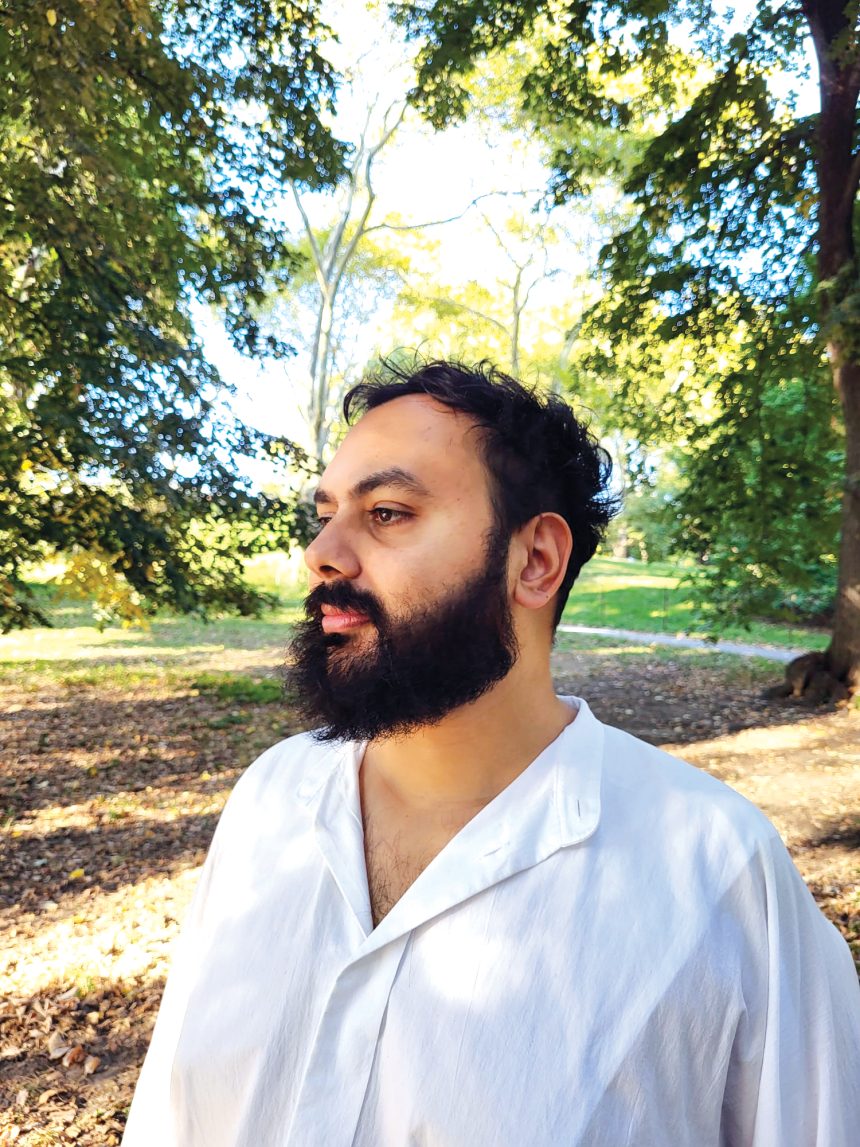
London-based food writer Jonathan Nunn who is at GALF, traces his roots to Goa. In conversation with
NT BUZZ he shares why he looks at food as testimony to home and heritage
VINIKA VISWAMBHARAN | NT BUZZ
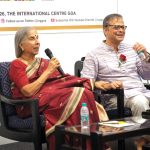
At the ongoing Goa Arts and Literature Festival (GALF) at the International Centre Goa, Dona Paula, the conversations are as layered as the place itself. History, language, migration, and memory overlap.
Among these, the first day witnessed a session with London-based food writer and editor Jonathan Nunn titled ‘Table for Nunn’. The title felt apt, suggesting both an invitation and an intimacy. A table for one that quickly becomes a table for many, because Nunn’s work has always been about widening who gets to sit down and be seen.
“My writing is primarily an attempt to deal with the vastness and ever changing nature of London through its food culture,” he says. “That means trying to cover it in its entirety, not just the restaurants that often get written about, but the places serving different communities and neighbourhoods across the city.” In fact, he is wary of how food media often frames those spaces as ‘marginal’ or ‘interesting’ because they are cheap or authentic. “For me, these are the centres of London culture,”
he says.
That shift in perspective runs through everything he does. Nunn is not interested in chasing trends or compiling lists. He is more concerned with food as a way of reading a city. Who gets priced out. Who gets erased. Who survives.
Nunn’s food writing journey was unconventional. “I worked in the tea industry in London for 10 years. Selling, sourcing and writing about tea. That gave me grounding in flavour and in how food can be both cultural and agricultural,” he shares. But he believes that his affinity for food goes further back and he credits his mother for it.
What frustrates him today is how serious food coverage has shrunk just as public interest has exploded. That frustration led him to start ‘Vittles’ when he found himself without a job during the pandemic. “The idea was simply to publish anything that interested us about modern food culture, particularly the stories that rarely make it into the mainstream.” Since then, the newsletter has grown into a widely read platform with contributors across continents, including a South Asian editor based
in Delhi.
If ‘Vittles’ expands the map of food media, his politics sharpen its focus. “Culture, identity and politics fundamentally shape how I tell stories,” he says. “My politics are socialist, anti-racist and anti-imperialist. That informs how I write about gentrification, housing and capital, because all of that shapes what we eat.”
It is also personal. Nunn describes himself as a ‘Goan Londoner’, a position that allows him to see multiple ways of belonging. “I write about restaurants as a way to work out my own feelings about how the city is changing.”
His presence at GALF is a quiet homecoming. His maternal family traces its roots to São Jacinto Island. But their story is one of movement. Many left for East Africa decades ago, before later migrating to Britain. “My connection with Goan food is perhaps stronger than my connection with Goa,” he admits. “Growing up, it was the thing that marked us out as different. Even from other Indian families.”
Food became a memory bank. Church celebrations. Family gatherings. Goan stews and chilli fries eaten alongside Kenyan style ugali. “What I got from my family was a sense of omnivorousness and a bedrock for assessing food,” he says. “Food was always being talked about, in a way that it wouldn’t in English families.” It is fitting, then, that his first visit to Goa is not framed as a holiday but as immersion.
After everything he has tasted, written and edited, what still excites him? “Food is still the most immediate way of getting into a subject,” he says. “It infuses every aspect of our lives, in obvious and hidden ways. Ask someone about their favourite dish growing up or what they last cooked for themselves, and I guarantee there will be a story there.”