NT Reporter
Panaji
Nearly 9 per cent of people above 65 years in Goa are affected by Alzheimer’s disease, compared to 6 per cent nationally, experts said, pointing to a higher incidence in the state than the national average.
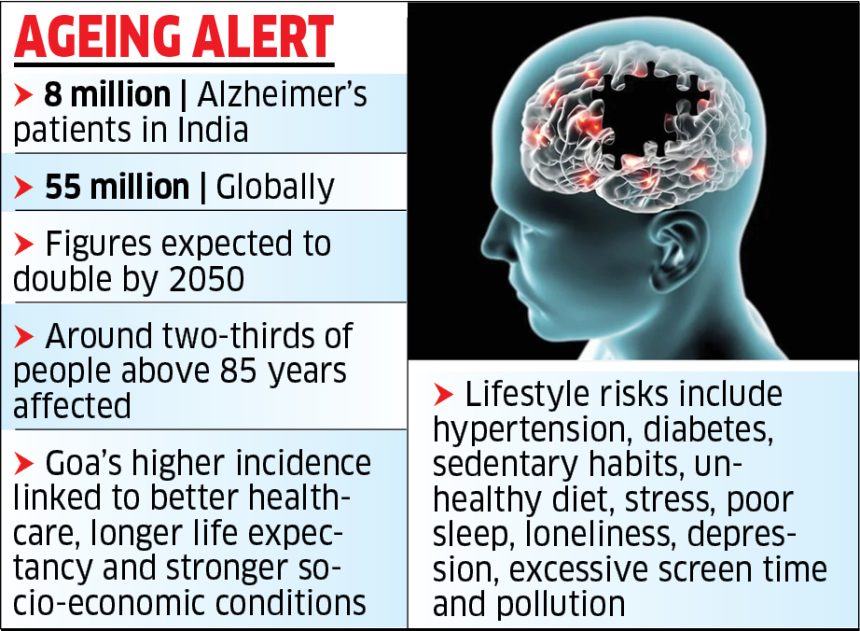
Professor of Pathology and former Dean of Goa University, Dr R G Wiseman Pinto, said Goa’s higher percentage is linked to better health indicators, improved healthcare systems, higher life expectancy and stronger socio-economic conditions, resulting in a larger elderly population.
“India currently has around 8 million Alzheimer’s patients, while globally the number stands at approximately 55 million. Nearly 10 per cent of the world’s population above 65 years is estimated to suffer from the disease, and this figure is expected to double by 2050,” he said.
Two-thirds of people above 85 years are affected, Pinto said, adding that prevention is the need of
the hour and that strong public health education campaigns focusing on healthy lifestyle practices are necessary.
Dr Tereza Ferreira, Professor and head of the Neurology Department at Goa Medical College, said rising cases are linked to lifestyle factors such as high blood pressure, diabetes, sedentary habits, unhealthy food, stress, lack of sleep, loneliness, depression, excessive screen time and pollution.
Professor and Head of the Geriatrics Department at Goa Medical College (GMC), Dr Edwin Gomes, said loneliness is an emerging risk factor and that prolonged sitting and excessive screen time must be restricted. “Senior citizens should have access to recreational or day care centres in every village and town where they can meet, interact and engage in activities to keep their minds alert,” he said.
Ferreira said panchayats, municipalities, government bodies and NGOs should set up recreational centres across Goa, while Pinto said preventing Alzheimer’s is a collective responsibility of the government, NGOs, panchayats, municipalities, social clubs and other organisations.
Speaking about diet, Gomes said meals should include vegetables, fruits, seeds, nuts, fish, eggs and whole cereals, and that fast foods, refined foods and aerated drinks must be avoided. “Alcohol, smoking and narcotics also must be avoided. Regular exercise, seven to eight hours of sleep, maintaining a calm mind, adequate hydration, good oral hygiene, proper intake of vitamins and minerals, and regular medical check-ups are essential,” he said.
Alzheimer’s is currently identified through cognitive tests, memory assessments, MRI and PET scans, and spinal tap for CSF study.
Referring to a newly approved test introduced by Fujirebio Diagnostics known as Lumipulse G, Pinto said it has been approved by the US Food and Drug Administration. “The test is meant for adults aged 55 years and above who show signs of cognitive decline, memory loss and confusion,” he said, adding that clinical trials were conducted on 500 patients with mild cognitive impairment.
However, Ferreira said it is not a screening test and should not replace clinical evaluation. “The results of Lumipulse G test should be interpreted along with other clinical information of the patient as well,” she said.