Miguel Braganza
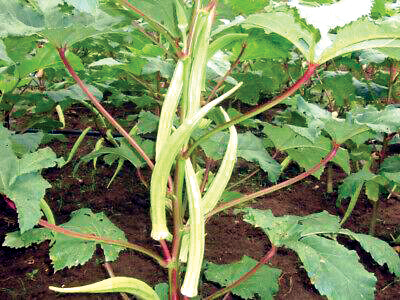
The spring festivals of Carnival, Holi or Shigmo are reminders that summer is nigh. The noon temperature has already touched 36 degrees celsius and the night temperatures dips to 24 degrees in the wee hours. It is time to plant ladyfingers or Bhendi, (Abelmoschus esculenta), a hot favourite during summer. The long, light green to old ivory coloured, local, long ladyfingers or ‘Sath Xiramcho Bhendo’ now has a Geographical Indication or G.I. tag for Goa alongside the Taleigao and Agasaim brinjals and the Khola and Harmal chilies. The time to sow ladyfinger or corn seeds and transplant chili or brinjal
seedlings are now!
Vegetable seeds are available with the zonal agriculture offices across Goa in packets of ten grams weight costing just Rs.36 for ladyfingers, Rs.13 for sweet corn and just Rs.5 for baby corn seed. One can also buy seeds from the Goa Bagayatdar Society’s outlets across Goa. Young and enthusiastic farmer from Dabal, Varad Samant is the State Ambassador for vegetable cultivation and the exotic looking Red Bhendi from Karnataka is one of his crops along with chilies, cabbages and watermelons. Varad conducted training for Bardez farmers in mid-February, 2026 at Guirim-Sangolda. A visit to Varad’s farm and the nearby RRP Farm of a young agriculture graduate-turned Krishi Ratna awardee, Rajat Rudresh Prabhu, is a learning
experience by itself.
The Botanical Society of Goa has successfully promoted organic practices and also exposed school and college students as well as adults to organic practices through the annual ‘Festival of Plants and Flowers’ at SFX School complex since 1992. In the last 33 editions, hundreds of students from more than 30 schools have participated in trainings prior to the competition and used the competitions to show the skills that they have learned. This laid the groundwork for the starting of a college of agriculture in Goa with a focus on organic practices and we now have the Goa College of Agriculture at Ela, Old Goa (GCA-Ela). The young graduates in agriculture are taking the work forward as practitioners, entrepreneurs, teachers in schools and even as NET-passed assistant professors in the college. One can schedule a visit to GCA-Ela and learn about the crops from Satish Patil or Pranjal Parab, the Farm Superintendent, or from the teaching faculty in various disciplines.