Although a subject of much debate, there is no denying that homeopathy has continued to
have a following for years. With World
Homeopathy Day observed on April 10,
NT NETWORK examines its presence
in the state
KALYANI JHA | NT NETWORK
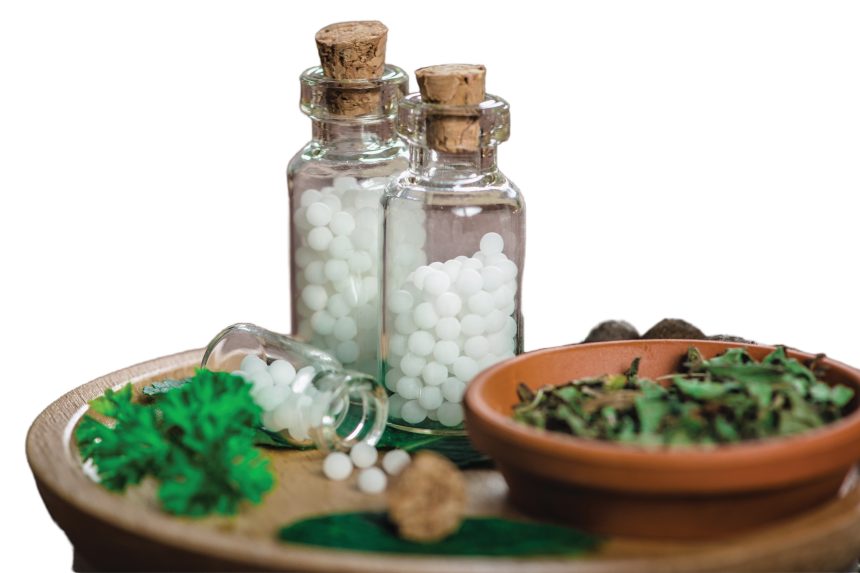
Every year on April 10, World Homeopathy Day is observed to commemorate the birth anniversary of Dr. Samuel Hahnemann, the founder of homeopathy. The day serves as a reminder of a system of medicine that began in 1796 and continues to be practiced widely, especially in India.
Built on the principle of ‘similia, similibus, curentur’ i.e. ‘like cures like’, the system proposes that a substance causing symptoms in a healthy person can be used in diluted form to treat similar symptoms in a sick person.
Explaining this further, chairman, Goa Board of Homeopathy Dr. Bipin Salkar emphasises that this method is not merely about matching symptoms but focuses on understanding the individual. “We homeopaths consider homeopathy to be more of an art than a science. In other medical sciences, there are fixed drugs for a particular disease. This is not possible in homeopathy. Instead here, every patient’s individuality, their subjective and objective symptoms are taken in consideration before any prescription,” says the doctor who previously served as chairman of the Goa Homeopathic Medical Association and vice chairman of Goa State of Indian System of Medicine and Homeopathy.
Scope of homeopathy
What sets homeopathic treatment apart from others is also the fact that it has no side effects, says Dr. Salkar. Surgery too is not advised unless absolutely necessary. This makes homeopathy especially safer for treating newborns and small children. But one has to consult a good qualified doctor, he states.
The effectiveness of the medicine also depends on precision. Doses have to be curated according to the body’s constitution. “Homeopathy is such a medical system where finding a drug is not difficult but when to give, how to give, and how much to give must be very precise,” says Dr. Salkar.
He further stresses that homeopathy is not a quick fix. It takes time. “People in today’s world want an instant cure. This is not possible with homeopathy. There are some cases like in diarrhoea or fever etc where it give instant results but not for everything,” says Salkar, adding that time and dietary discipline is important while the treatment is on.
Today, homeopathy’s growing relevance is particularly evident in managing chronic and lifestyle-related conditions. According to state nodal officer for homeopathy, Dr. Vidhya Malik, homeopathy has strong potential in diabetes (early stages and supportive care), hypertension (adjuvant management), thyroid disorders, allergies, asthma, skin diseases, PCOD, and menopausal issues. “Its holistic and individualised approach makes it particularly suited for long-term disease management, reducing dependency on long-term medication, and improving quality of life,” she says, adding that this potential positions homeopathy as a complementary system.
Most chronic cases such as asthma, arthritis, gynaecological complaints such as fibroid polyps and dismennorhea and skin-related conditions can also be treated with homeopathy, says Dr. Salkar. But he does state that there are certain conditions where people must opt for advanced medicine and treatments. “For some surgical conditions and fractures, homeopathy is not advisable. However, in some specific cases even tumour can be treated with the medicines over time, avoiding surgeries,” he says.
History of homeopathy in Goa
In Goa, homeopathy practice in health centres began in 1984-85 when Dr. Usha Salelkar began her practice at the Urban Health Centre, Panaji, shares deputy director of National AYUSH Mission (NAM) Minal Joshi. After Salelkar’s retirement, the ex-deputy director AYUSH Dr. Datta H. Bhatt continued this practice.
Over the years, homoeopathy has gradually developed into an organised system with the establishment of the Goa Board of Homeopathy in 2001 which is responsible for the registration and regulation of qualified homeopaths. The state also has a network of government health centres and private practitioners offering homeopathic treatment, along with institutional frameworks such as medical colleges and
regulatory boards.
Highlighting the expansion of homeopathy in India and Goa, Dr. Salkar notes, “Previously, doctors from Goa used to register themselves with the health centres. But now, we can register qualified homeopaths.”
According to Joshi, nine homeopathic physicians have been appointed as state governments officers all over Goa on contract basis. Besides this, there are 38 community health officers (homeopathy) at sub centres. “They are getting a very good response,”
she says.
Public trust and demand
One such homeopathic physician, Dr. Vijayalaxmi D. Dessai, has been practicing at Primary Health Centre, Balli for 18 years now. “When I joined, the flow of patients was less but now the awareness of homeopathy has increased,” she shares. She adds that despite dietary restrictions during treatment like no consumption of coffee, garlic, and onion, people opt for this treatment as it has no side effects.
Dr. Malik agrees that public perception has improved significantly especially in chronic and paediatric cases, as it is seen as safe and cost-effective. “Demand has gradually increased, especially post-pandemic, where people are more open to preventive and holistic care,” she says.
To further enhance the awareness and success rate of this form of treatment, Joshi believes that homeopathic practitioners themselves must bridge the gap between practice and public perception. “For instance, if you have a good treatment for certain ailments, make it public by publishing such 10 good cases,” she suggests.
The road ahead
Homeopathy in Goa is undergoing a transition—from a niche system of private practice to a more structured and integrated component of public healthcare under the AYUSH framework, states Dr. Malik, adding that the shift reflects both policy support and growing public acceptance.
“Over the years, government support has increased through integration into Primary Health Centres (PHCs), dispensaries, and district-level services,” she says. There has also been institutional support from colleges like Shri Kamakshi Devi Homeopathic Medical College, and growing patient footfall, especially for chronic and lifestyle-related conditions. “The system is now transitioning from basic service delivery to more integrated and preventive healthcare,”
she says.
Efforts are underway to improve standards of care through training and collaboration, include participation in CME programmes through the Ministry of AYUSH, collaboration with academic institutions, clinical discussions and case reviews, and encouraging evidence-based practice
and documentation.
But challenges persist. “I would say that homeopathy is really a boon to the world but the government has to support us,” says
Dr. Salkar.
One suggestion he makes is for the government to set up free clinics. “Nowadays, private practitioners are not everywhere. People should be able to afford the charges as well,” he says.
Pointing to Kerala’s approach, he notes that there is one homeopath for every panchayat in that state along with other systems of medicine. “We too have asked the government to appoint one homeopath for every village or in every health centre,” he says.
According to Dr. Malik, the expansion of homeopathy in the state is constrained by multiple reasons. “Infrastructure remains an issue, with limited dedicated homeopathy OPDs and space constraints in PHCs. There is also a shortage of sanctioned posts and reliance on contractual staff,” she says. Public awareness, she states, also still varies, as many patients approach homeopathy only after exhausting other options. Funding too is modest compared to
allopathy and ayurveda.
Dr. Malik too points to Kerala as a benchmark for successful integration. Kerala’s success was recently highlighted by president of Indian Homeopathic Medical Association ( IHMA) Dr. E. S. J. Prabhu Kiran at the National Conclave of Science and Scientific Seminar: Futuro De Cancer held at Kala Academy, Panaji.
“The Kerala model stands out due to strong government backing, dedicated homeopathy hospitals and dispensaries, a robust drug supply chain, integration at all levels of healthcare, and strong public trust with high utilisation. They also have houseboat AYUSH dispensaries,” she says adding that it wouldn’t be fair to compare the situation in Goa with Kerala, given that Goa is a much smaller state with a smaller population.
For Goa to emerge as a leader in homeopathy, she believes that a multi-pronged strategy is essential.
“The focus should be on policy and governance through strengthening the dedicated AYUSH directorate, permanent posts, and infrastructure. Human resources should be strengthened through recruitment and regularisation, along with specialist clinics such as oncology support and palliative care,”
she says.
Capacity building, she states, should include continuous medical education, research, and documentation units while public outreach should involve IEC campaigns, school health, and community programmes. “Beyond this, digital and data systems should focus on patient records, outcome tracking, and evidence generation for policy support,” she says.
Homeopathy is evolving, says Dr. Salkar, adding that what excites him the most is the effort to bridge traditional principles with modern scientific tools.
“One promising area is nano-scale and physicochemical research, where scientists are studying whether ultra-diluted remedies may retain structural or nanoparticle-level information,” he says. “This could potentially offer a scientific framework to understand how homeopathic medicines act, something that has historically been difficult
to explain.”