Miguel Braganza
Forest fires, unseasonal rains, flash floods, cyclones are things that grab the headlines and make visual news that grabs the eyeballs and keep them glued to the TV set or smartphones. Climate change is making us concerned about our environment and to think of what we are doing to the planet that is known to support life: the Earth. On June 5, World Environment Day coincides with the onset of the South-West monsoons in the Konkan, helping us to put it into action.
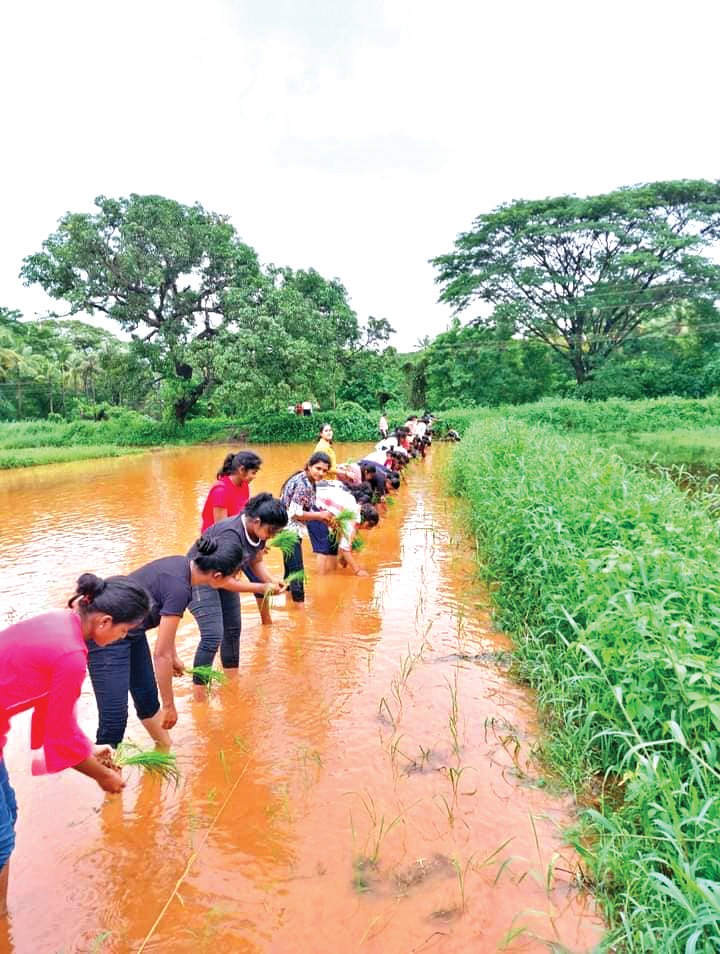
The theme of this year’s World Environment Day is ‘Inspired by Nature. For Climate. For Our Future.’ The advent of COVID-19 pandemic in 2020 made us aware of the need to produce food locally. The Chicalim Youth Farmers’ Club (CYFC), mentored by the late Fr. Bolmax, was inspired to work with Mother Nature to reverse a little of the adverse climate change by cultivating fields left fallow for two generations and create a hope for the future. Adv. Agnelo Furtado has led the Chinchinim Agriculture Club in expanding cultivation of fallow fields covering almost eight lakh to a million square metres of land in just one village. Carbon dioxide, a deadly greenhouse gas, is actually an ingredient in the production of sugars and starch by plants. Environment is a collateral beneficiary.
Environment sounds like a big, complicated, technical term but, actually, the word simply means our surroundings. The word ‘ecology’ has its root in the Greek word ‘oikos’ or ‘ekos’, meaning ‘home’ and the word ‘economy’ has the same root. They are not opposites: they are balancing factors for management of our common home: the Earth. This year the people of Ponda will be planting trees near the eight hundred houses in St. Anne’s parish to mark the eighth centenary of St. Francis of Assisi. He had a simple advice to his companions, now called as the Order of Franciscan Missionaries (OFM), “Let your life be your message: use words only if necessary.”
Our actions to save the Earth and improve the environment can be simple and easy to practice. By composting our biodegradable waste, we can convert biodegradable food and garden wastes into rich manure for the plants. This simple action will greatly reduce the mixed garbage that is dumped into landfills. It also enables recycling of some of the non-biodegradable wastes.
Putting off the lights when not needed, walking where we do not need a motor vehicle, re-using a water bottle instead of a disposable one, avoiding wastage of water and reusing grey water for irrigation or just planting and nurturing a few trees, are some of the simple ways we can show our concern for our planet, Earth.