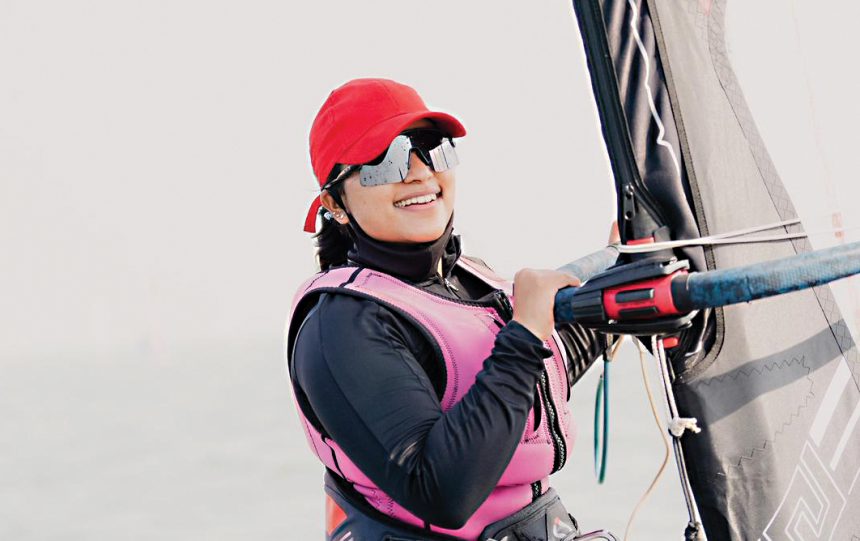
Windsurfer Katya Coelho, a National Games gold medallist and Asian Games competitor, has been included in the Class 8 Konkani textbook. She speaks about the recognition and her sporting journey
RAMANDEEP KAUR | NT BUZZ
Katya Coelho’s windsurfing journey began at the age of 11, although her connection with the water started much earlier. It was her father and brother’s involvement in the sport that inspired her to take it up. She is now the second Goan sportsperson, after former Indian footballer and captain Brahmanand Shankhwalkar, to be included in the state
school curriculum.
Excerpts from the interview:
How does it feel to be included in a Class 8 Konkani textbook?
When I got the message in September 2025 that I would be included in the Konkani textbook, I was overwhelmed. It was a different feeling to know that my journey will now be part of what children study in school.
In my TED Talk in 2023, I had said that I would consider my journey meaningful if I could inspire even one child to follow their dreams. When this happened, I felt that promise had come true in a very real way.
Did it bring a sense of responsibility as well?
Yes. Being part of a textbook means children will look at you differently. I am now seen as a role model, and that comes with accountability in how I carry myself and what I represent. I take
that seriously.
What should children take from your story?
They should understand that distractions and doubt will always exist. What matters is how they respond. If they stay focused and consistent, progress will come. Even small periods of discipline can make a real difference over time.
What sacrifices did you have to make along
the way?
Being an athlete means making sacrifices almost every day. I’ve missed family gatherings, holidays, and celebrations because training and competitions always came first. While my friends were out enjoying themselves, I was training or recovering. I also put academics and career opportunities on hold to pursue my dream of representing India. Injuries, setbacks, and financial struggles were part of the journey but they taught me discipline, resilience and gratitude. Looking back, I see those sacrifices as part of what shaped who I am today.
What has been the toughest part of your journey?
Injuries have been one part of it. In 2018, I tore my ACL and meniscus during the Asian Games. In 2023, I had a severe lower back injury. Both required long recovery periods and affected training and competition. I still competed through them, which is part of being an athlete. You learn to manage pain and return when possible.
But beyond injuries, the harder part has been how sport is structured at times. Athletes are sometimes expected to arrange large security deposits just to access equipment. That pressure affects preparation even before competition.
Physically, injuries are something you recover from. Mentally, system-related challenges take longer to deal with.
What challenges have you seen in the system?
From my experience, there are structural issues within sports systems and associations. I can only speak about what I have gone through. Goa has a lot of talent, but the support is not always equal for everyone.
My brother and I could have gone much further, possibly even to the Olympics, if we had the right infrastructure and guidance. A large part of our journey, including funding and international exposure, came from our parents. Without that support, it would have been very difficult to continue at this level. If systems are more transparent and supportive, many more athletes from Goa will be able to progress to higher levels.
Which achievement means the most to you?
The 2023 National Games gold medal is the most memorable achievement of my career. I was also the torchbearer at the event and had the honour of handing over the torch to the Prime Minister Narendra Modi at the inaugural function. I won that gold with my brother, which made it special as both of us contributed to Goa’s performance. It also helped Goa finish in the top 10 in the medal tally, which was significant for a small state.
The 2018 Asian Games qualification is another important achievement. Representing India and seeing the flag on the international stage is something I still remember clearly.
What are you currently focused on?
Right now, I am training for the 2026 Asian Games in Japan. This will be my third time through the national trials. I first qualified in 2018 and represented India at the Asian Games in Jakarta.
I qualified again later but was not sent due to certain issues and influences. That was not easy to accept, but I continued training and competing. I went back and qualified again for 2026 and I am still working towards securing my place.
What do you want young athletes to understand from your journey?
There will always be doubt from outside. People will question your ability or your choices but you cannot let that decide your path. You have to stay committed and keep working towards your goal.
A few years of discipline can change the direction of your life. I have seen that in my own journey.
It is also important to be visible about your work. Share your journey and let people see your training and effort. It builds awareness and also confidence in your process.
Mental strength is just as important. There will be times when results do not go your way or things do not work out despite your effort. You have to keep going and not let setbacks stop you.
What would you tell young Goans in sport?
If you want to represent India, commit fully to your sport and routine. There will be sacrifices and things will not always feel balanced but that is part of the process.