New Delhi: After six straight days of disruption over NEET fiasco, the Lok Sabha is likely to function smoothly on Tuesday when it takes up for discussion a bill to amend the anti-paper leak law, which was introduced in the House amidst din.
The Public Examination (Prevention of Unfair Means) Amendment Bill 2026 with stricter punishment of up to 10 years in jail and Rs 50 lakh fine was introduced by Union Minister of State for PMO Jitendra Singh, days after large-scale student protests led by the Cockroach Janta Party (CJP) forced Dharmendra Pradhan to resign as education minister.
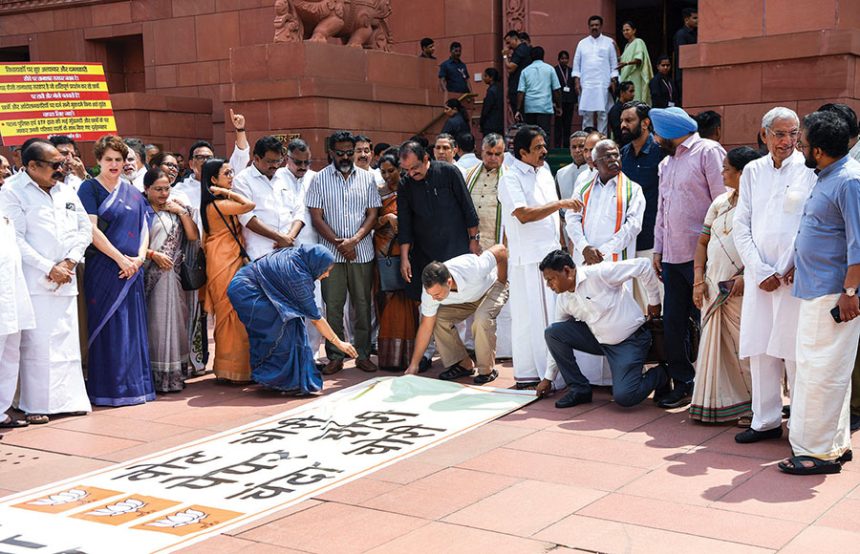
No discussion could take place on the Bill as the Opposition refused to relent from its demand of seeking response from the government over police action on the student protesters in the national capital and other parts of the country.
Rajya Sabha, which has been witnessing protests ever since the monsoon session started on July 20, failed to transact any business on Monday with no sign yet of ending the logjam. The Upper House saw repeated adjournments as Opposition ruckus demanding accountability of Union Home Minister Amit Shah over police action against protesting students continued.
A parliamentary source said all political parties have agreed to discuss the bill to amend the anti-paper leak law on Tuesday. “Following Lok Sabha Speaker Om Birla’s initiative and sustained dialogue, floor leaders of political parties have agreed to commence discussion on the anti-paper leak bill,” the source said.
The Speaker announced in the Lok Sabha that he has allocated six hours for the debate on the bill and if necessary, more time can be given based on the sense of the House. The proposed legislation was brought as a response from the government to the students’ protests led by the CJP, which started on June 20 and culminated after 36 days on July 25 following resignation of Pradhan and acceptance of other demands by the government.
According to the bill, investigations into paper leak cases are to be completed within two months. It says that individuals involved in paper leaks or unfair means in exams will get jail terms for a minimum of five years and a maximum of 10 years, and a fine of up to Rs 50 lakh.
For organised crimes, the bill proposes a minimum sentence of seven years and a fine of up to Rs 10 crore. The present law has provisions for a minimum of three to five years of imprisonment to curb cheating and those involved in organised crimes of cheating face five to 10 years of imprisonment and a minimum fine of Rs 1 crore.
All the states and UTs will be empowered to set up fast-track courts, which will conduct hearings swiftly and complete the trial within three months of filing of the chargesheet, according to the bill. The Centre will be empowered to set up a special task force to investigate cases of paper leaks in certain circumstances, it says.
After the introduction of the bill, Speaker Birla said it was the first step towards improving the public examination process.