As scientist and author Ram Ramaswamy prepares to launch his new D D Kosambi biography, he tells NT BUZZ why he feels the scholar has not received the attention he deserves
KALYANI JHA | NT BUZZ
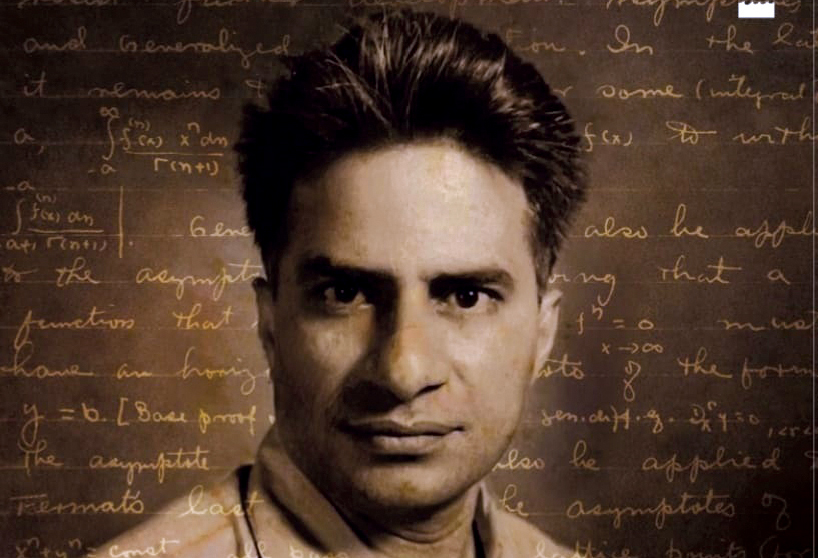
Damodar Dharmananda Kosambi popularly known as D D Kosambi was a multi-faceted personality whose work ranged from mathematics and genetics to history, archaeology, Sanskrit literature and environmental activism. Yet, not enough has been written about this great Goan and his contributions to modern India, says scientist and author Ram Ramaswamy.
“There is one biography in Marathi, but it did not reach enough readers. I was surprised that someone of his stature had no real biography in English,” says the D D Kosambi Chair in interdisciplinary studies at Goa University. Thus, the scientist and author is now all set to release ‘D D Kosambi: One Life, Many Worlds’, the first full-length biography of Kosambi in English, tracing his journey from birth to his final years.
“This biography traces where he went, what he did, the people he met and the work he produced. There is also a little about his father and family. In fact, both father and son contributed enormously to modern India, and their achievements deserve to be remembered and discussed,” he shares. Set in the background of social, political, scientific and historiographical transformation in the subcontinent, and drawing from letters, journal entries, family accounts and archival material, ‘D D Kosambi: One Life, Many Worlds’ has been published by Harper Collins.
Research for this book took over three and half years which was made difficult due to challenges in accessing archives. “Archives in India are extremely difficult to use. Often they don’t exist. When they do exist, cataloguing and access are poor,” says Ramaswamy. Thus, much of the material came from overseas. As Kosambi studied at Harvard, Ramaswamy could obtain letters, records, grades, and archival material from there.
And although Kosambi made landmark contributions across disciplines, Ramaswamy insists his importance lies less in always being right and more in the way he thought.
“It isn’t that he was always right. In fact, he was more often wrong than right. But he represented intellectual daring. He was exceptionally sharp and willing to explore problems from entirely new directions,” he says.
In an age where multidisciplinary education has become a policy buzzword, Ramaswamy believes Kosambi remains one of its finest examples. “Today everyone says Indian education should become multidisciplinary and interdisciplinary. Kosambi was already living that ideal,” he says, adding that genuine interdisciplinarity cannot exist without academic freedom while pointing out that Indian students are encouraged to specialise far too early.
The scientist states that Kosambi also transformed the way Indians look at history. “One of his greatest contributions was showing that if you simply look around you, you can still find traces of ancient history in everyday practices. History is not locked away in museums. It continues to live around us.”
Having studied Kosambi for years, Ramaswamy says very little in his intellectual life surprised him. What did surprise him was his stubbornness. “Earlier in life he constantly questioned authority and challenged accepted ideas. But towards the end of his life, when he made a major mistake, he simply refused to accept it,” he says adding that Kosambi was not rebellious socially but intellectually. “He simply followed wherever his curiosity took him.”
Researching thousands of letters and archival records also revealed a complicated personality.
“He could be very sharp with people he didn’t respect. He didn’t have many friends. He could lose his temper and be difficult to get along with. If he really liked someone — which was rare — he could be affectionate and warm. But generally, he was a somewhat difficult person,” shares Ramaswamy.
Despite his immense scholarship, Ramaswamy believes several factors contributed to Kosambi fading from public memory including his Marxist ideology.
“In our country, we mostly celebrate film stars and politicians. Scholars rarely receive that kind of recognition,” notes Ramaswamy.
At the same time, many of Kosambi’s ideas, says Ramaswamy, were ahead of their era. “He made a fundamental mistake towards the end of his career. People pointed it out, but he refused to withdraw it. That damaged his standing in mathematics. He argued for solar energy in 1958, when the country was focused on nuclear energy. It wasn’t fashionable then, and it went against the political mood,” says Ramaswamy who believes Kosambi’s ideas remain deeply relevant even today.
“I think people today would actually be surprised by how contemporary many of his ideas feel. He believed in observing the world around him. He would probably have felt completely at home among people questioning society and engaging with public life,” he says.
And even after years of research, Ramaswamy admits there are still mysteries he wishes he could ask Kosambi about. “As a mathematician, I would ask him why he moved away from mathematics and why he did not contribute more to it,” he says.
He adds that Kosambi’s life demonstrated that intellectual boundaries are meant to be crossed. “The example of his life gives courage. You don’t have to remain in one discipline. You can begin in one field and move into another.”
(The book will be released on July 31, 6 p.m. at International Centre Goa, Dona Paula. This will be followed by a discussion featuring scholars Vivek Monteiro, Parag Porobo, and Kaustubh Naik.)