Shahin Bepari Lambe
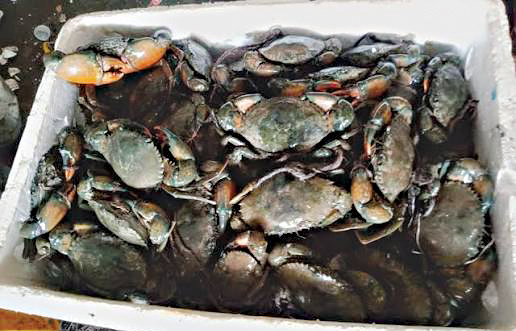
Panaji: Identify female mud crabs carrying eggs, avoid harvesting them and release them back into the water — this is the three-step conservation message being promoted by ICAR-CCARI to protect Goa’s mud crab stocks.
The institute said a berried female mud crab may carry hundreds of thousands to several million eggs, making its survival important for future crab populations. Removing such crabs before they spawn can have a greater impact on future crab numbers than the loss of a single crab.
“Scientists and the state are seeking greater awareness among fishing and vending communities on how to identify egg-bearing female crabs,” said ICAR-CCARI scientist Trivesh S Mayekar, who started the conservation effort under the leadership of ICAR-CCARI director Dr Parveen Kumar.
The initiative also aims to encourage the voluntary release of such crabs at landing centres and markets, along with the distribution of identification material across coastal talukas.
Chief Minister Pramod Sawant, during the State Swayampurna Vision of Responsible Resource Use and Sustainable Local Production workshop held at ICAR-CCARI, urged fishermen, vendors and consumers, particularly those involved in mud crab harvesting, to identify and release female crabs carrying eggs.
“The effort is aimed not only at protecting individual crabs but also at supporting the future recruitment of crabs in Goa’s estuaries and mangroves. Allowing berried females to return to their natural habitat and release their eggs could gradually support crab populations,” saidKumar.
The initiative is expected to support the availability of legal-size, non-breeding crabs for the fishery while reducing pressure on wild broodstock.
The campaign is intended to encourage fishermen to protect the resource on which their livelihoods depend without stopping fishing. A more resilient crab population could support a more sustainable fishery and more stable catches over time.
The initiative could also serve as a model for other coastal states.