

Abdul Wahab Khan
Panaji
With the government restricting access for motorists on the new elevated corridor, the North Goa District Road Safety Committee (NGDRC) said the move will not resolve the problem of five black spots in Porvorim.
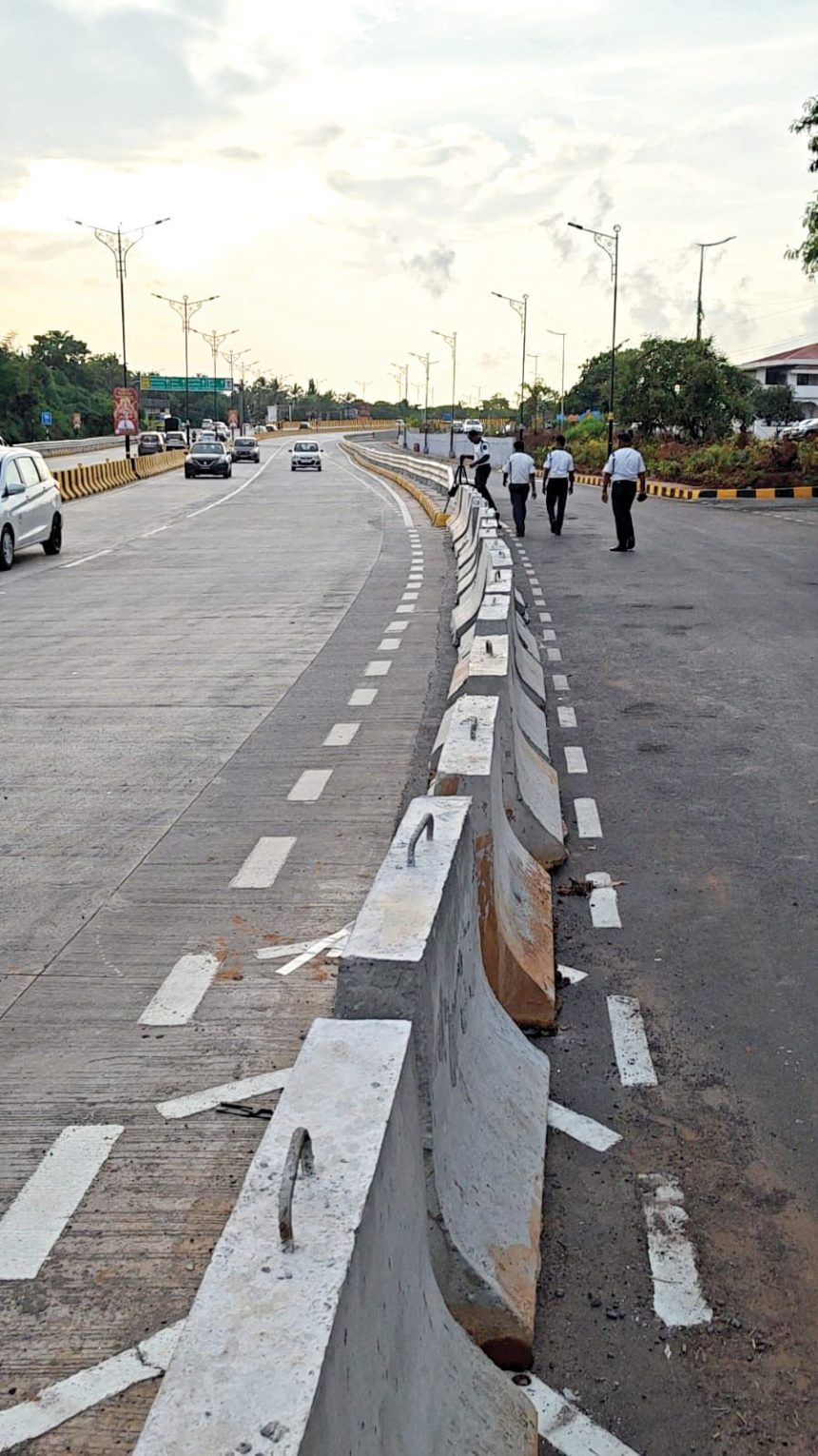
A fatal accident within 24 hours of its opening led to a ban on two-wheelers and closure of access points towards the Atal Setu side.
“There were five black spots in Porvorim. The elevated corridor was built to eliminate these black spots. If vehicles are forced to go down the service road, then those black spots are not eliminated,” said NGDRC Member Secretary and PWD SE Circle Office III (R) Jude Carvalho.
He said that adequate advance signage and sufficient merging space at the Atal Setu point were essential for the corridor.
“Information boards have to be erected 1 km or 2 km away. And the opening has to be at least 60 metres wide as per IRC standards so that merging can be smooth,” Carvalho said.
PWD has directed two-wheelers to use the service roads below after the fatal accident near an access point. With access points towards the Atal Setu side closed, motorists are forced to enter Porvorim from the service road.
“What is the logic of banning two-wheelers? They are catching the bull by the tail. The main purpose was to eliminate those black spots for Porvorim. We should not present elevated corridors as places where you can drive fast,” said NGDRC member
Roland Martins.
He said the committee could have been consulted on signage and other arrangements before the corridor was opened. “We have never been taken on a single visit on the flyover,” he said.
Martins also alleged a lack of coordination between PWD, traffic police and Transport Department, and questioned the haste surrounding
the opening.
Carvalho said the committee had not been consulted before the corridor was opened, but clarified that it does not have statutory power to approve or stop such projects.
“We are just a recommending body,” he said. The committee was constituted following Supreme Court directions, he said, but there was no specific instruction making prior consultation mandatory.
“We cannot blame them also that they have not consulted. But it is always advantageous to take suggestions from all,”
Carvalho said.

