The launch of the MC Square Plus (MC²+) incubation centre for deep tech energy startups was one of the highlights of the Energy Technology and Innovation Meet 2026, Betul, writes Joao Mergulao
The MC square is sector-specific accelerator and has already empanelled 42 promising startups within its operational matrix in less than 6 months. The initiative comes at a critical juncture when early-stage tech innovators face the notorious “valley of death” phase where lab-scale prototypes struggle to transition into commercial realities due to capital constraints and the lack of high-grade testing infrastructure.
Addressing this gap head-on, the MC Square platform offers structured, end-to-end hand-holding that equips deep-tech entrepreneurs with the strategic tools required to scale. A senior official in the ministry for petroleum & natural gas (MoPNG) said, India has been brilliant in terms of innovations but historically, small-scale innovators have found it notoriously difficult to navigate the rigid, high-volume tendering processes of massive public utility boards.
“As a result lot of ideas have remained on paper without proper application and commercial utilsiation of these ideas and that is how the idea of setting up MC square incubator came up. It is now turned into one of the world’s largest incubating center,” he said.
To systematically remove regulatory and market barriers, the central government is concurrently framing a path-breaking procurement policy tailored specifically to help startups go commercial. The police will allow the enlisted start ups find a way around the stringent rules in landing commercial orders. The incoming procurement policy framework will further seek to alleviate constraints by creating a streamlined mechanism for public sector entities to purchase directly from empanelled deep-tech firms. To complement the commercial pathway, the central government is also prepared to provide robust funding for critical research, offering milestone-linked convertible grants of up to Rs 2 crore per venture. The grant aims at absorbing the initial financial shocks associated with hardware research and development
In what is being hailed as an unprecedented collaborative framework, the government has mandated all public sector oil and gas companies to make their R&D facilities available for the listed startups. Indian companies including ONGC, Indian Oil, BPCL, HPCL, and GAIL India are actively opening their decentralized research labs and industrial nodes to startups.
For startups with access to the PSU R&D labs it means immediate, cost-free access to specialized pilot sites, live operating assets, and refinery infrastructure. Tech founders can now validate their clean-energy hardware, AI-driven digital assets, and carbon-capture tools under real-world, high-pressure industrial conditions.
“The framework to bridge the gap between innovation and commercial deployment for the 42 empanelled startups will tackle early-stage market risks. The MC Sq platform offers funding, mentorship, and direct procurement access and is supported by policies that ease market entry and mandate public sector R&D facilities for pilot testing,” said MoPNG, secretary Dr Neeraj Mittal.
While the MC Square initiative represents a massive, multi-corporation scale-up, its organizational blueprint tracks back to a pioneering step taken nearly a decade ago. The first dedicated incubation centre of this nature was set up by GAIL India in 2017, under its flagship Pankh initiative.
In the early years GAIL’s incubation centre was strictly limited to specialized areas such as gas distribution, petrochemicals, renewable energy, natural gas, CNG, and clean fuel technologies.
A senior GAIL official said, Pankh was once of the first incubation centre set up however start-ups with interest within the scope of the specialised sectors were only empanelled and have done wonders. MC square on the other hand is an open end incubation center and each of empanelled firm can use the nearest R&D centre nearest to them.
What began in 2017 as a specialized corporate social intervention has now evolved into an expansive, cross-functional national ecosystem. Backed by premier academic hubs like IIT Madras and IIT Bombay, the modern MC Square framework explicitly mandates that Indian innovations be engineered not just for the domestic market, but built to hit global benchmarks of cost and efficiency.
A start up which recently got empanelled with MC square said, the incubator initiative is life-changing to young tech driven start-ups like his which has the ideas but lacks infrastructure and funding.
“My experience has been phenomenal during the last couple of months. As we got empanelled and were given an opportunity to use the RND facility we met experienced scientists at the facility which otherwise would not have been possible. We are looking to forward to the new procurement policy,” he said.
Innovations take centrestage at ETM 2026, Goa
At the recently concluded 29th ETM 2026, Goa emerged as a definitive roadmap for India’s green future. Against the backdrop of the state’s scenic coastline, the event became a high-powered
hub of innovation.
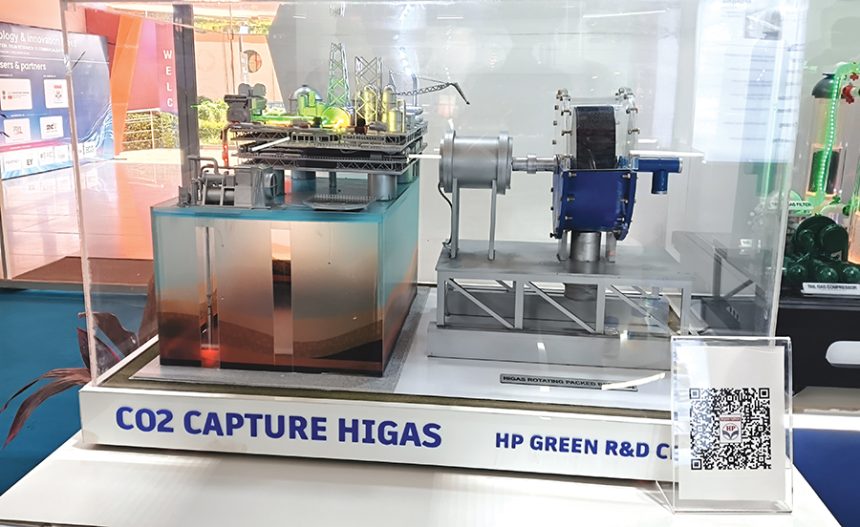
Industry giants and technology experts converged to unveil breakthroughs in carbon capture, utilisation, and storage (CCUS), compressed biogas (CBG), and advanced fuel formulations designed to tackle the dual challenges of climate change
and energy security.
At the heart of the exhibition was the transformation of conventional hydrocarbon technology by Bharat Petroleum Corporation Limited (BPCL) which unveiled its newly engineered winter grade LPG, a specialized fuel designed to withstand extreme sub-zero temperatures.
Alongside this breakthrough, the industry showcased next-generation diesel formulations and advanced crude-to-chemicals technologies. These high-temperature refining innovations are engineered to maximize processing efficiency, signaling a shift where traditional crude components are increasingly optimized or repurposed into high-value petrochemicals.
A senior official from BPCL informed that the new innovation was primarily designed and largely used by the defence sector where extreme temperatures are very harsh and conventional LPG and diesel remain by and large ineffective. The new innovation is also available for general public living in extremely high altitudes.
Underscoring this tectonic shift, Hindustan Petroleum Corporation Limited’s (HPCL) Green R&D Centre was honoured with the prestigious Best Innovation in R&D Award specifically for its breakthrough work on developing and scaling up indigenous materials, cells, and batteries for sodium-ion storage which could replace the exisiting
lithium ion battery.
The shift toward sodium-ion battery technology drew special praise from the Union Minister Hardeep Singh Puri who termed the innovation as game changing that could revolutionalise the cost of the electric vehicles and other applications. “Driven by the abundant, universal availability of sodium, this indigenous innovation is increasingly positioned as the primary alternative likely to replace traditional lithium batteries in key applications,” pointed out Puri.