Drawing from his training in fine art, Jonathan Vas is building a body of work that centres on storytelling, encouraging deeper engagement with art in everyday life
VINIKA VISWAMBHARAN
Jonathan Ananias Vas belongs to a generation of artists rethinking the role of art in everyday life. At 24, the visual artist and graphic designer from Santa Cruz, who has a bachelor’s and master’s degree in fine art, frames his practice through illustration, design, and storytelling.
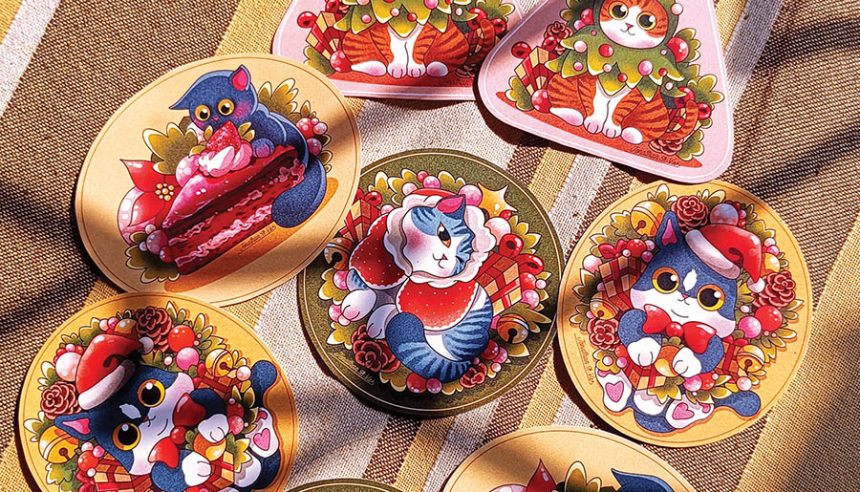
“I focus on creating work that blends traditional and contemporary visual languages,” he says, describing a process that is as much about thought as it is about form. Through his independent brand, Vas creates custom artworks alongside a range of tactile pieces such as prints, postcards, playing cards, and collectibles. Each work is rooted in narrative. “I want my pieces to carry a strong sense of identity, something people can connect with and even own in their
everyday lives.”
The decision to build his own practice came from a need to move beyond surface-level engagement with art. “What inspired me was the desire to see my work in the hands of people who genuinely connect with it,” he says. “I wanted it to go beyond decoration and be appreciated for its meaning and thought.”
That clarity came during a period when he was navigating more commercial spaces. “In many places, art is treated purely as a product, with limited room for creative freedom,” he reflects. “At the same time, I worked with people who truly respected the creative process. That contrast made me realise there is an audience that values depth.”
Vas is deliberate about who he is creating for – people who appreciate art and are willing to engage with it on a deeper level. At the same time, he hopes to draw in those who may not yet feel connected to art. “I want to invite them to experience it in a more personal and thoughtful way.”
His practice moves from commissioned artworks and design services to smaller formats such as stickers, bookmarks and art souvenirs. There is also an eye on the future. “I’m working towards expanding into more collectible and wearable items,” he says.
The environment he grew up in continues to play a quiet but significant role. “Goa has given me the space to observe, think, and experiment,” he says. “The slower, more reflective environment influences how I process ideas and approach my work.”
Like many independent artists, he has had to confront the realities of sustaining a creative practice. “One of the biggest challenges has been turning appreciation into support,” he admits. “People often connect with the work, but that doesn’t always translate into a purchase.” Rather than discouraging him, this has become part of the learning curve.
According to Vas, the most meaningful rewards are not tied to a single milestone. “What makes it worthwhile is when people truly connect with the work,” he says. “When someone tells me a piece reminds them of a personal experience, that stays with me.” There is a quiet satisfaction in knowing that his art continues to live with people long after it leaves his hands.
His idea of success is equally introspective. “For me, success means peace,” he says. “It’s the reassurance that the years I’ve spent practising art have led to something meaningful.”
Currently, most orders are handled through Instagram, where clients can reach out for commissions or stay updated on limited edition releases. “I’m working towards making my work more consistently available,” he adds.
Alongside his independent practice, Vas has contributed to several other projects. He designed the catalogue cover and branding for the exhibition ‘Footprints of Hope’, illustrated the book ‘Pathnatyam’ by Jayesh Raut, and worked on float designs for the Goa Carnival 2024 for Francisco Martins. He also taught visual art at St. Joseph Vaz Institute of Education, Cortalim, and currently works as a freelance design associate with the Museum of Christian Art, Old Goa.