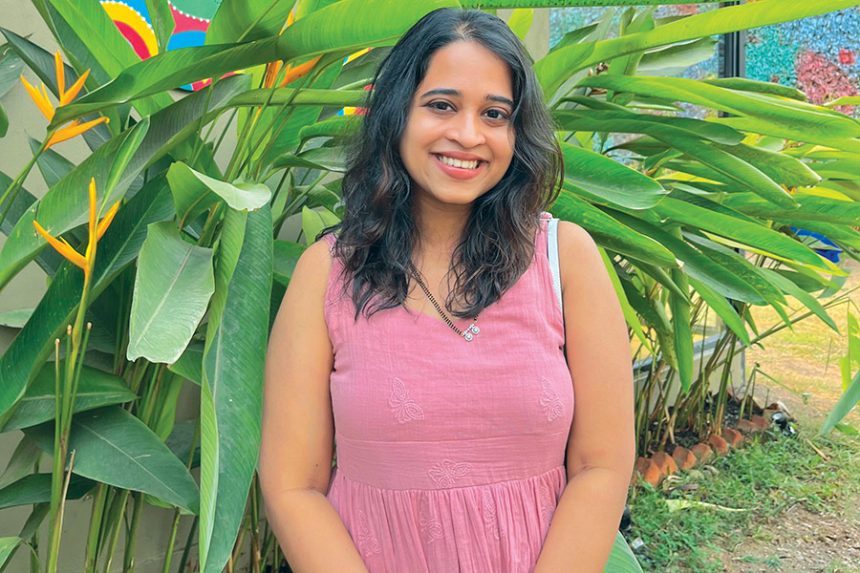
With her incense brand Idika, Samiksha Mandurkar Karmali wants to build a community of conscious living people, who seek choices that are environmental-friendly and healthy too
KALYANI JHA | NT BUZZ
An electronics engineer by education, but an entrepreneur at heart Samiksha Mandurkar Karmali explored corporate roles—from software development to working with a sustainable packaging company in Hyderabad. But along the way, she found herself drawn toward a deeper purpose.
“During my time in the sustainability sector, I was constantly exposed to the harmful impact of plastics and chemicals. It made me rethink my own lifestyle. I realised that change doesn’t happen overnight—it begins with small, consistent steps,” she says.
That realisation became the seed for Idika founded in June 2024. “The name ‘Idika’ is derived from a Sanskrit word associated with the Earth and Goddess Parvati. It mirrors the brand’s earthy and natural ethos,” explains Karmali.
Idika’s offerings includes its signature product—incense sticks, and dhoop crafted from toxin-free, natural ingredients like jaggery, honey, herb and resin mix, and wood powder.
“A lot of people, including in my own family, experienced allergies from regular incense. But since it is such an integral part of our culture, I thought—why not create something that preserves the ritual without compromising health?” she says.
The Ponda- based Idika works on the idea of reusability. These incense sticks burn for over an hour, creating a soothing atmosphere without the harshness of chemical alternatives. “Even after use, nothing is wasted—the ash can be put in soil of plants,” she says.
Idika’s fragrances are infused with natural essential oils, the collection ranges from Kevda, Mogra, Lavender, Rudrakshai, Sandal, and Loban, to more unique notes like Bhimseni Kapur, Oudh, Gulkand, and even spice-based blends like Trifala and Javitri. “We also have a series where in each of the incenses is related to Goan cultural stories. For instance, Mogra related to the tradition where Our Lady of Milagres sends a basket of mogra to devi Lairai,” she says, adding that the products are available on the website and at various shops across Goa.
Karmali’s products actively work toward reducing plastic usage, opting for minimal packaging only when necessary to protect the product and prevent wastage. “The incense packaging can be repurposed into small cards or even used as an incense holder,” she says.
But building Idika, however, has not been without its challenges. “One of the biggest learning curves was understanding the systems and processes behind running a business,” she says. “From sourcing to packaging to fulfilling orders, everything had to be learned step by step. At the same time, I had to balance creativity with the physical demands of execution.”
Beyond incense, Idika has begun expanding its range with products like natural scrub bars made from multani mitti, haldi, and geru, along with everyday sustainable essentials such as bamboo toothbrushes and handmade diaries. Production is supported through collaborations with small-scale units that employ rural workers, while final packaging is handled in-house.