Filmmakers Ipshita Bhattacharyya and Doel Trivedy will reflect on mangrove ecologies and the collaborative process of making a documentary at an upcoming talk
VINIKA VISWAMBHARAN
NT BUZZ
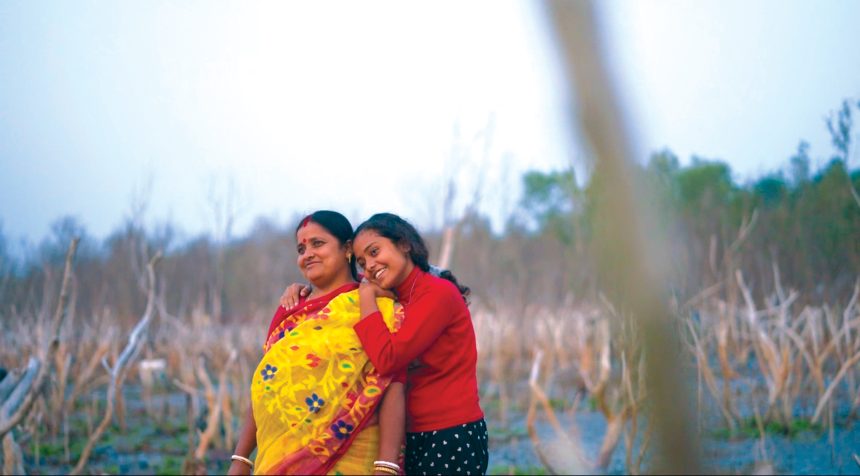
On April 8, a talk titled ‘From Idea to Ecosystem: Growing Films through Community’ will bring together filmmakers Ipshita Bhattacharyya and Doel Trivedy. Bhattacharyya, currently in residence through the Green Stories Artist-in-Residence Award, is working on her first independent feature documentary ‘My Mangrove Mother’.
What drew Bhattacharyya in was not just the landscape, but the way life continues within it. “The film is centred around the villagers of Buraburir Tat of Sundarbans, and how they live in a landscape of erratic climate patterns,” explains Bhattacharyya, whose filmmaking resists fixed structures. “The making of a film is rooted in many collective experiences,” she says. “You need a village to make a film.” The phrase captures the spirit of the upcoming conversation, which looks at filmmaking as an ecosystem rather than a solitary act. “You have an initial idea, but you don’t really know where it is going to end. It meanders. And how do you actually make a film? The ecosystem is the answer, with different people and different expertise coming together.”
Her reflections also draw attention to the ecological complexity of mangroves, which form both the backdrop and the subject of her film. “They are not working in isolation,” she explains. “Some increase the pH of water, some decrease it. Crabs and fish use them as nurseries. The roots hold the ground.” The loss of these systems is not abstract. “Each year I go back, land that we stood on is now underwater.”
Bhattacharyya is equally interested in how such stories are told and supported. Her current residency at Sunaparanta Goa Centre for the Arts has become part of that process. The structure, she notes, has been intentionally fluid. “It has been very organic. Conversations lead to ideas which lead to new ways of thinking about the film.”
For Trivedy, who has spent over two decades in documentary filmmaking mentions that these conditions are not incidental but necessary. “Making films is a very isolating and long process,” she says. “From developing an idea to bringing it into the world takes time, commitment and resources.” According to her, what enables that journey to continue is often community. “It becomes your sounding board, your support system. Even a quiet, consistent presence can make all the difference.”
This thinking informs Green Stories, the platform she leads. “We exist to develop environmental and wildlife narratives told with craft, conviction and connection,” she says. “These stories are seen not in isolation, but through culture, nature, science, community and justice.” The focus is on supporting films beyond their early stages. “We are committed to seeing them through their full life, from development to final impact.”
The platform also attempts to address gaps specific to the region. “Asia holds some of the world’s most urgent ecological frontlines and most underrepresented environmental stories,” notes Trivedy. “We want to bring these stories, and the storytellers, to the forefront.” Through mentorship and pitching forums, filmmakers are able to refine their work and connect with producers, broadcasters, and funders.
For Bhattacharyya, this support has been both practical and intangible. “Sometimes it is funding, sometimes it is access to equipment, sometimes it is just meeting people who understand what you are trying to do,” she says. The challenges, however, remain ongoing. “It is a cycle of rejection after rejection. And then one thing comes through, and you keep going.”
The collaboration between the two, and with Sunaparanta, developed from this shared ground. “When Ipshita received the award, we worked with the Sunaparanta team to shape this conversation,” says Trivedy. “We wanted to bring it to an open audience so people can understand what goes behind making a single film.”
Between Bhattacharyya’s evolving film and Trivedy’s work in building platforms, the idea of an ecosystem is less of a metaphor and more a method. That intention shapes what the upcoming talk hopes to do. “There are so many doubts and questions that people have about making films,” says Bhattacharyya. “If we can talk about them honestly, that itself is valuable.” For Trivedy, the conversation also extends to how such films are received. “I hope audiences go back with a sense of reflection on how films on wildlife and environment are an act of revolution, a form of activism and a show of love through art.”
(The talk will be held at 6.45 p.m. at Sunaparanta Goa Centre for the Arts, Altinho)