NT NETWORK
The Ghode-Modani festival of Parye village is a vibrant testament to tradition, unity and religious harmony. Celebrated alongside the Shimgotsav festival, which honours all local deities, Ghode-Modani reflects centuries-old customs that bring together Hindu and Muslim communities in a shared celebration.
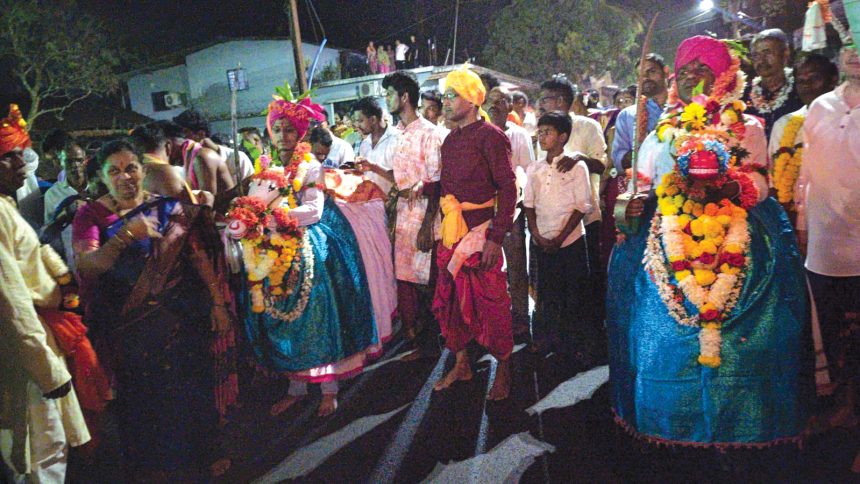
The festival begins in Parye with the preparation of elaborately decorated horse effigies. On the first day, the horses are dressed and danced to mark the start of the festivities. The following day, the effigies are brought to Tulshimala for worship before the procession begins its journey towards Dattawadi in Sanquelim. Along the route, participants perform the traditional Pavali dance, highlighting the cultural essence of the celebration.
Reaching Dattawadi, the procession is welcomed by the local Romtamel group of Sanquelim. In keeping with a long-standing tradition, the horses first visit the Babar Pir Dargah, where members of the Muslim community perform ceremonial worship and offer hospitality to participants. Abdullah Sheikh and Riyaz Khan said they continue to uphold this ritual, which has been passed down through generations and symbolises the spirit of communal harmony.
After the dargah, the procession proceeds to the Sanquelim market, stopping at the Shri Maruti Temple, which marks the boundary of Parye village. From there, the horses visit selected Shimgotsav mandaps and households, where devotees offer prayers and traditional offerings. Jalba Majik from Parye said the visit to Babar Pir is a central part of the celebration and strengthens the bonds between communities.
The festivities conclude with the horses returning to Tulshimala, completing a journey that blends devotion, culture and shared heritage. Ghode-Modani continues to be celebrated with enthusiasm, preserving traditions that inspire unity and peaceful coexistence across generations.