Miguel Braganza
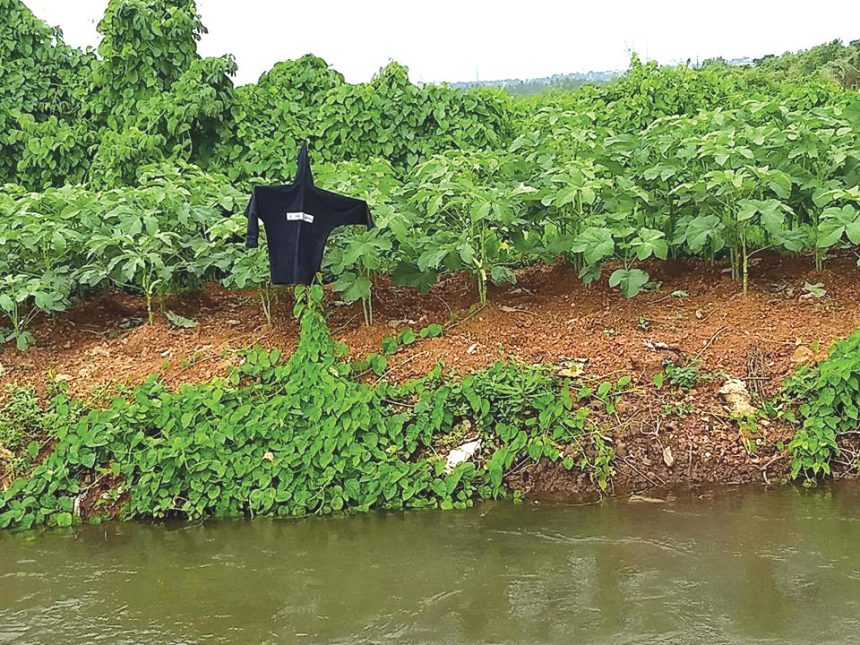
The ladyfingers, Abelmoschus esculenta, or ‘Bhendde’ are the pride of Jua that the Portuguese named after St. Stephen, the first martyr for Christ, as Santo Estevao. During the monsoons, ladyfingers are traditionally grown between the coconut palms on the dykes or bunds, locally known as bandh. These bunds and sluice gates, or manos, were erected along the Mandovi River to reclaim the intertidal mudflats as khazan fields to grow rice during the
monsoons and vegetables in the winter and summer. So popular were the ladyfingers on the island that the residents of Jua came to be
nicknamed as ‘Bhenddo’.
The headmistress of St. Theresa’s High School, Jua, Sr. Liberata Fernandes is reviving the local pride
in ladyfingers in the youth of Jua through hands-on cultivation of the crop at school and in their home gardens, using local farmers as the resource persons. This small island village boasts of two of the nine members of the Diocesan Commission for Ecology (DCE), the other being the youngest member, Yannah Angelica Marchon. After celebrating ‘World Environment Day’ and ‘Vanamahotsav’ with projects, exhibitions and tree planting
by the staff and students on the
school campus, Fernandes led the students in sowing ladyfinger seeds on ridges in the traditional ‘ridges and furrows’ method
of sowing vegetables during monsoons to prevent rotting of seeds in case
of heavy rain.
The Jua local ‘Sath Xirancho Bhendo’, or ladyfinger with seven ridges (instead of five), now has
a ‘Geographical Indication’ or G.I.
tag for Goa and has revived interest in this variety. During the COVID-19 pandemic, the vegetable growing habit has caught on again. The
webinars by Agricos Alumni Association on the benefits of pesticide-free
fresh vegetables are available
online. Such sessions are continuing with a daylong workshop on August 9
at Xavier Retreat House, Baga-Calangute, and the 34th edition of the
‘Festival of Plants and Flowers’ at SFX School, Siolim, from August 21 to 23.
Rainfall is erratic this year and there are sudden dry spells. Chemical
fertilisers are water soluble. In dry weather, the fertilisers draw water from the plant instead of the plant drawing water from the soil through its roots. It is therefore, better to
use organic manures such as compost instead of chemical fertilisers. The compost is also a good medium for potash and phosphate solubilising bacteria (PSB) and fungus (PSF)
that are now available online as well as with Goa Bagayatdar Society’s outlets or from private seed or
fertiliser dealers.
You can also buy Rhizobium bacteria culture, apply it to cowpea seeds and sow in between the ladyfinger seeds. The cowpea will grow as ground cover while the ladyfinger plants grow tall. The nitrogen-fixing property
of the cowpea will save you the need
for nitrogenous fertiliser and also give
you leafy vegetable and pods to
eat fresh or dried for pulses. Fertiliser prices are high and urea has a small percentage (0.07%) thiourea that is carcinogenic. We can avoid it by growing
pulses as our ancestors did. We have people like Rajat Rudresh Prabhu from Nirankal, Ponda, Varad Nagesh Samant from Dharbandora, and Krishna Anant Sinari Gaonkar from Amona, Bicholim earning handsome profits from ladyfinger
cultivation in Goa. The ‘Sath Xirancho Bhenddo’ is Goa’s pride. We can
even export it.