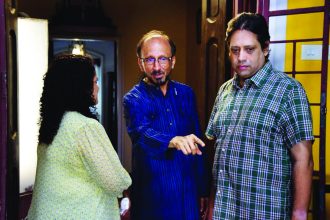
With ‘STY’ selected for the Ahmedabad International Film Festival, Sakshi Ramnathkar shares how it came together
CHRISTINE MACHADO
A film made in 60 hours is still drawing attention nearly two years later. For filmmaker Sakshi Ramnathkar, ‘STY’ has now received its seventh recognition with its selection for the Ahmedabad International Film Festival. It was previously part of the Viewing Room at Film Bazaar during IFFI and was also selected for the Bengaluru International Film Festival, an Oscar-qualifying festival.
“Each recognition has its own significance but reaching this point feels rewarding because the film has continued to find an audience and receive appreciation across different platforms,” says Ramnathkar.
‘STY’ was made during the 60 Hours Filmmaking Challenge at the Waves International Short Film Festival in October 2024. Set in a corporate workplace, the film explores how a person’s silence can be interpreted through the fears and biases of those around them. “The film looks at the gaze of men in positions of power and how absence can sometimes reveal more than presence,” she says.
Given that it was made in 60 hours, Ramanathkar admits that it brought some constraints. “There was very little room for mistakes or changes once we started. Working with resources was also a challenge. We had to be clear about what was essential to the film and avoid spending time on things that did not serve the story,” she says.
Vardhan Kamat and Prajakta Kavlekar play the lead roles in the film, which Ramnathkar made with a team she calls “wonderful and efficient”. “There was a lot of trust within the team and everyone involved was very adaptable,” she says.
The fact that ‘STY’ is a Konkani film is also important to Ramnathkar. “I hope that it also shows that stories in our language can travel to different platforms,” she says.
Ramnathkar has also made short films such as ‘A Gust of Wind’ and ‘Kokum’. She has another one in the pipeline and is working on commercials and music videos, while also developing a feature film.
But filmmaking was not something she set out to do initially. After studying mechanical engineering, she worked at a corporate firm for a few years. “But something in me always resisted straight lines,” she says. “I was always drawn towards stories, characters, and all things related to filmmaking.” In fact, she watches at least four films a week, paying attention to how different filmmakers tell their stories and approach their work.
“As I continue, I want my work to represent Goa and create more space for women in film,” she says. “If my journey can make someone feel that they too can take creative risks and create something they care about, that would mean a lot to me.”