Retaining the heritage aspect of Bonderam while making it more relevant for the younger generations will be the key goal for Malar Bonderam as it returns on August 15
Organised by St Mathias Sports Club, Malar, the festival will be held from 10 a.m. to 10 p.m. at Malar on Divar Island.
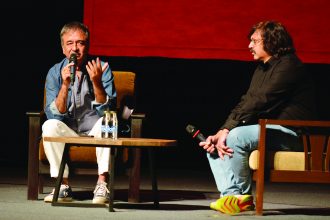
The panel at a recent press conference comprised St. Mathias Sports Club president and state footballer Remus Gomes, Festacar Marius Fernandes, general secretary Remy de Almeida, environmentalist Saaesh Prabhudesai, senior journalist and member of State Advisory Board on Disability Prakash Kamat, and youth committee member Lucius de Almeida.
Speaking about the changes this year, Gomes said the club has decided not to sell or promote alcohol at the festival, although alcohol would continue to be available through independent vendors. The move is intended to reduce the festival’s alcohol footprint while creating a more responsible environment for children and young people.
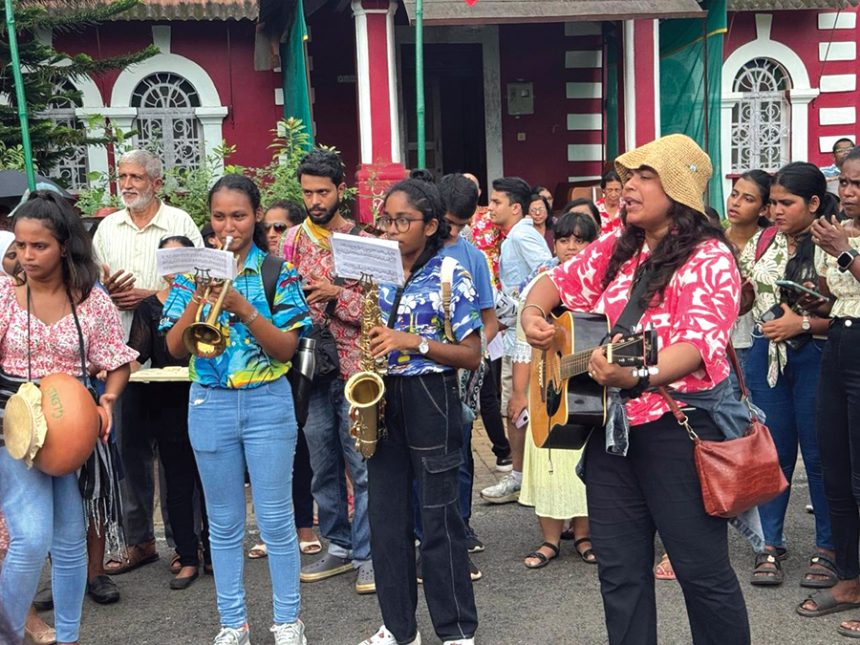
The day will begin with the lighting of the lamp at 10 a.m., followed by heritage workshops at 10.30 a.m. and GED talks at 11 a.m. An acoustic band performance accompanied by traditional food is scheduled for 12.30 p.m. The traditional ‘Pasoi’ will take place at 3 p.m. followed by fancy dress and Konkani songs at 4 p.m. Floats will be presented at 5 p.m., with a musical evening at 7.30 p.m.
In an effort to make the event more environmentally responsible, Fernandes informed, “EV shuttle buses will ferry visitors from the Old Goa ferry area to the venue in order to ease traffic. We are trying to put an effort to show people a futuristic way,” he said.
The environmental focus will extend to the festival’s floats, which, the organisers said, would be encouraged to use organic materials instead of plastic and thermocol. Waste segregation and other measures are also being planned.
The ‘Pasoi’, meanwhile, will remain central to the celebrations. The procession, which involves carrying flags and walking through the village, recalls the historic boundaries of the area. Fernandes said the tradition also carries a message of coexistence and community, linking the historical practice with the festival’s wider emphasis on bringing people together.
Almeida said the festival is also seeking greater recognition for aspects of Bonderam that often receive less attention than the main parade. To this end, the club had been working with the village youth to strengthen the festival’s social media presence through reels, videos and carousels showcasing the heritage workshops, ‘Pasoi’ and other activities. A reel-making competition has also been organised to encourage young people to document and participate in the festival.
The educational component will include talks on biodiversity, wildlife and waste segregation. This is intended to encourage students and visitors to better understand the changes taking place in their surroundings and the need for responsible waste management.
In an effort to make Bonderam more inclusive, food arrangements will take into account people from different faiths and dietary backgrounds.
Kamat welcomed the emphasis on inclusion and accessibility, noting that the St Mathias Sports Club premises had been made accessible for persons with disabilities. “If they are people’s festivals, people across the community should be able to come, appreciate, and participate with happiness,” he said.