Special Correspondent
Panaji
Chief Minister Pramod Sawant on Monday said that one of the most significant aspects of ‘Goa CARES Study’ initiative is to position Goa as an emerging centre for advanced public health research and international scientific collaboration.
Stating that non-communicable diseases like cardiac diseases, diabetes, cancer, chronic respiratory diseases and lifestyle-related conditions have become one of the biggest challenges of our times, the Chief Minister said that in Goa, nearly three-fourth of the overall disease burden is attributed to the non-communicable diseases.
“High blood pressure, obesity, high cholesterol level and environmental factors have emerged as major risk contributors,” he said. Sawant said that the data generated through the ‘CARES: Longitudinal Cohort Study’ would help in answering critical questions such as why are certain diseases increasing, which populations are more vulnerable, what role do the lifestyle and environmental factors play and how can we identify the risks through early interventions before the disease develops.
Earlier, the Directorate of Health Services (DHS), representing the state government, signed a Memorandum of Understanding (MoU) with the Centre for Cancer Epidemiology (CCE), Tata Memorial Centre, Mumbai, and the University of Oxford, United Kingdom, for the ‘Goa CARES: Longitudinal Cohort Study 2025’.
Speaking further, the Chief Minister said that this is not merely a research project but investment in the future health and well-being of every Goan. “It will help us in shaping the future healthcare policy, strengthening disease prevention programme, improving the screening strategies and supporting better allocation of the healthcare resources,” he said.
Envisioned as one of the most ambitious public health research initiatives undertaken in the state, Goa CARES Study aims to bridge the existing gaps in understanding the causes and patterns of non-communicable diseases (NCDs).
The study will follow a cohort of 1,00,000 adults aged between 25 and 70 years over a period of 10 years and focus on identifying key modifiable and non-modifiable risk factors associated with conditions such as cardiovascular diseases, diabetes, chronic respiratory disorders and cancer.
The project is designed to generate comprehensive health data. The study undertaken in Goa will involve the collection of medical histories, lifestyle assessments, genetic analysis and environmental exposure information from participants.
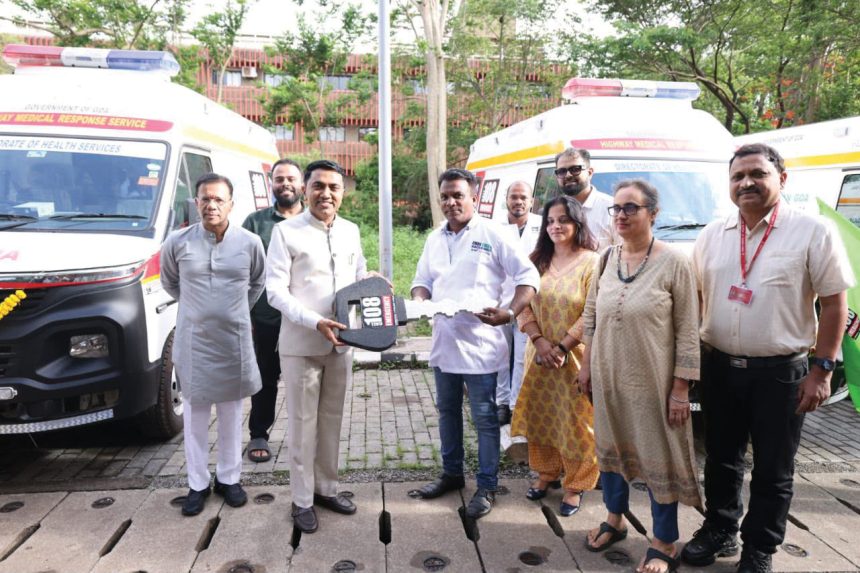
The Chief Minister later flagged off four advanced ambulances for the Directorate of Health Services under disaster management in the presence of Health Minister Vishwajit Rane and other officials.
The ambulances, procured at a cost of Rs 1.43 crore, will be used for highway medical response and emergency healthcare assistance during accidents and disasters.
Director of Health Services Rupa Naik and Director of the Centre for Cancer Epidemiology (CCE), Tata Memorial Centre, Rajesh Dikshit were also present.