Police-panchayat jurisdiction tussle stalls action against unlawful sellers
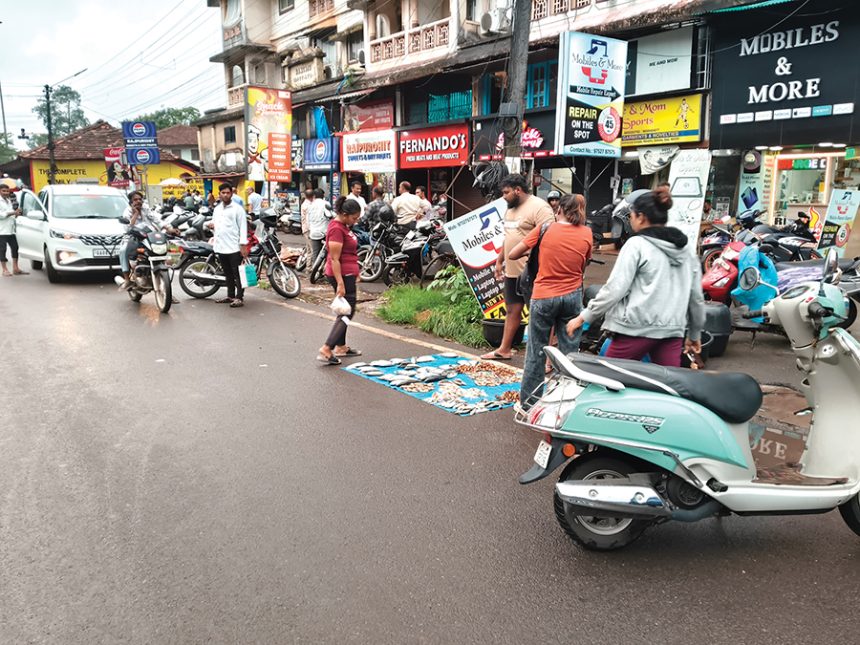
Margao: Despite the state government’s directives to curb illegal roadside fish vending and the introduction of the ‘Fishermen Card’ system, unauthorised sale of fish continue to operate across several parts of Salcete.
The ‘Fishermen Card’ identity system requires 15 years of residency proof to protect traditional local fish traders. Under the state’s new policy, only traditional Goan fishermen holding valid Fisheries Department identity cards are permitted to sell fish. Retail fish sales are also required to shift to designated municipal markets or village tintos, while non-resident migrant vendors are barred from carrying out retail fish vending.
However, roadside fish stalls continue to operate in Navelim, Davorlim, Aquem Baixo and Chinchinim. In Navelim, several vendors have encroached on portions of the national highway.
Local commuters and residents have raised concerns over traffic bottlenecks, road safety hazards and unhygienic conditions caused by the improper disposal of fish waste along arterial roads.
Residents said they have submitted several formal complaints, but alleged that no concrete corrective action has followed.
The issue has also been complicated by a jurisdictional dispute.
Senior police officials have said that regulating unauthorised vendors and issuing trade licences fall under the jurisdiction of local bodies and village panchayats. Panchayat authorities, on the other hand, have frequently cited a shortage of police personnel to safely carry out eviction drives.
The vendors, however, defended their livelihood.
“With no employment, we are left with no option but to take up side jobs like selling fish. I have been selling fish since the Covid outbreak and earn my living by selling fish. If the government removes my source of income, what am I to feed my family?” said James Fernandes.
Similar sentiments were expressed by another fish vendor, V Naik.
“We sell fish for about two to three hours a day as we have no other source of employment. If the government cracks down on those who are earning their daily bread, then we will have to end our lives as our families will die of hunger. The government should provide alternative employment or take the stakeholders into confidence before implementing the 15-year rule,” he said.