Shahin Bepari Lambe
Panaji
Goa Medical College and Hospital (GMC) is witnessing a rise in patients with monsoon-related illnesses, with doctors seeing 60 to 80 fever patients every day who require blood tests to rule out infections such as dengue and malaria, said Dr R G Wiseman Pinto, former Professor of Pathology and former Head of Department of Pathology, Goa Medical College.
Dr Pinto said viral fever, respiratory infections, diarrhoea, food poisoning and dengue were among the common illnesses during the rainy season.
“Monsoon months from June to September bring an increase in illnesses due to high humidity, fluctuating temperatures and reduced sunlight, which create favourable conditions for bacteria and viruses to multiply,” he said.
Malaria, once one of Goa’s major monsoon diseases, has reduced drastically over the years due to government control measures, but a few positive cases are still detected, mostly among migrant workers, said Dr Pinto.
According to him, monsoon illnesses mainly fell into three groups—air-borne, water-borne and mosquito-borne diseases.
Air-borne infections include viral fever, influenza and the common cold, while water-borne diseases become more common when food and drinking water get contaminated. Mosquito-borne diseases remain a major concern. GMC recorded eight dengue cases between January and May this year and 21 cases in June alone.
A senior private practitioner in Panaji, who did not wish to be identified, said five dengue cases had been reported at the facility so far this month.
Dr Edward D’Mello, consultant doctor and former senior physician at South Goa District Hospital, said hospitals usually witness a rise in seasonal illnesses such as viral fever, cough and cold, respiratory infections, diarrhoea, food poisoning, dengue and leptospirosis during the monsoon.
“Heavy rainfall followed by a dry spell, high humidity, waterlogging and poor food hygiene create favourable conditions for the spread of such diseases. People must to maintain personal hygiene, drink safe water, eat freshly cooked food, avoid stagnant water, use mosquito protection and seek medical attention early if symptoms persisted,”
he said.
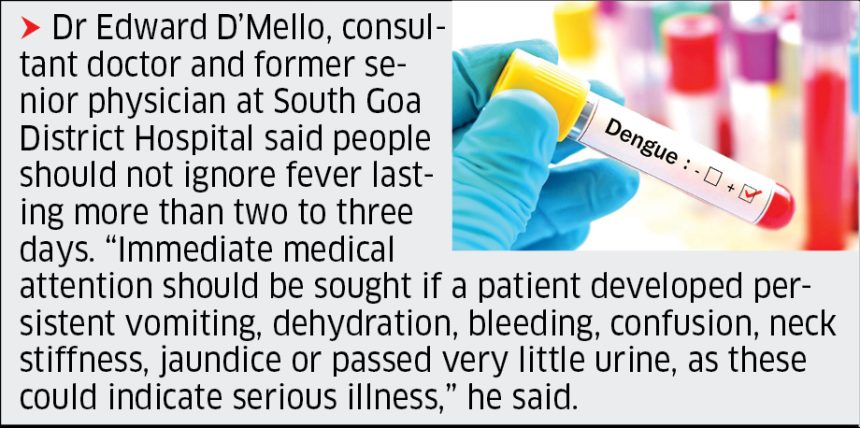
D’Mello said people should not ignore fever lasting more than two to three days. “Immediate medical attention should be sought if a patient developed persistent vomiting, dehydration, bleeding, confusion, neck stiffness, jaundice or passed very little urine, as these could indicate serious illness,” he said.