PTI
New Delhi
In a major crackdown following the NEET paper leak controversy, the National Testing Agency (NTA) has terminated 47 officials and is set to initiate legal and criminal action against several of them, senior officials said on Friday.
The move comes a day after Higher Education Secretary Vineet Joshi was shunted out to the Panchayati Raj Ministry amid a series of top-level transfers triggered by student outrage over paper leaks and CBSE digital evaluation glitches.
“The NTA is set to undergo an overhaul and more reformative actions will follow,” a senior official said.
He said that the measures are part of a systematic strengthening of the agency’s academic, operational, technological and integrity capabilities.
To restructure its operations across ten functional verticals recommended by a High-Level Committee of Experts, the NTA has issued advertisements for General Managers, opened engagement for 16 Young Professionals via the UPSC Pratibha Setu portal, and invited Expressions of Interest for new Subject Matter Experts and Translators.
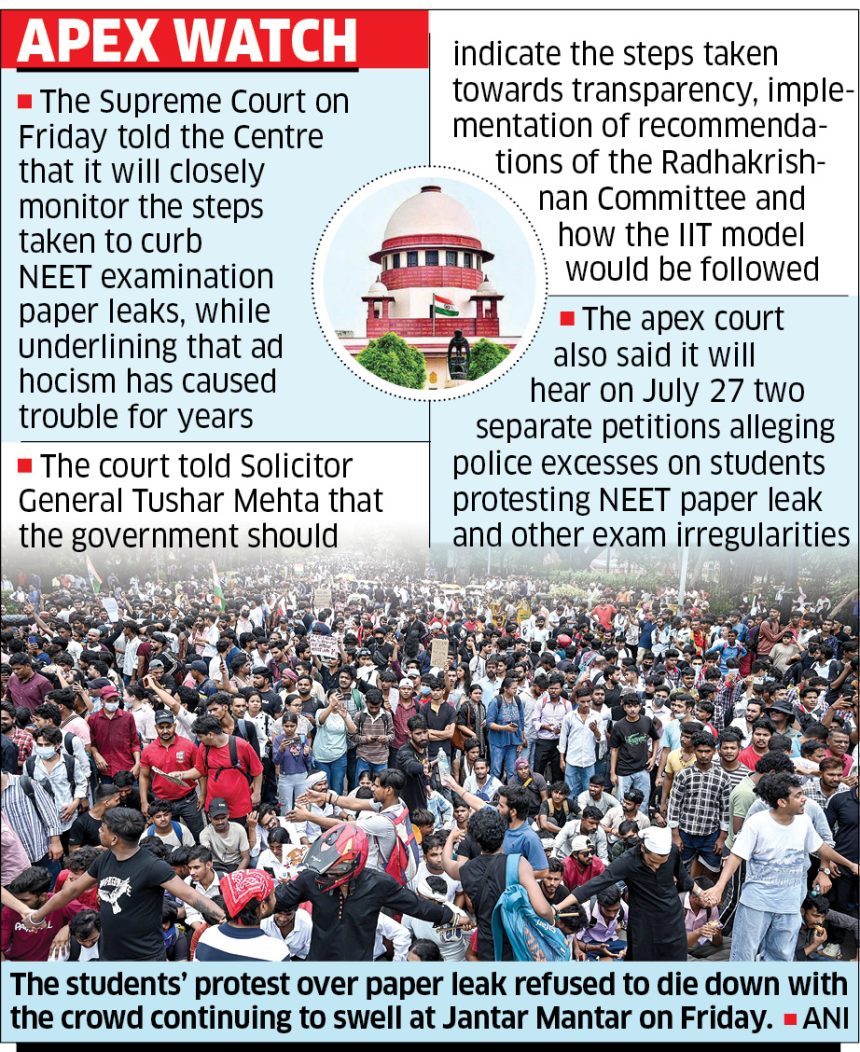
Meanwhile, student anger spilled onto the streets with massive protests at Jantar Mantar.
Protesters and Opposition parties are demanding the resignation of Education Minister Dharmendra Pradhan, an apology from the Prime Minister over alleged police brutality during a July 20 Parliament march, reforms in the education system and Rs 1 crore compensation for the families of students who committed suicide following the May NEET-UG leak.
However, sources indicate the entire cabinet stands behind Pradhan, making his resignation unlikely, while the government aims to iron out all NTA-related reform issues within one to two months.
In tandem with the agency’s overhaul, the Union cabinet on Friday approved a draft bill seeking stricter punishments for exam malpractices, following a Thursday midnight announcement by Prime Minister Narendra Modi.
The bill, expected to be tabled in the Parliament on Monday, proposes amendments to the Public Examinations (Prevention of Unfair Means) Act, 2024.
The draft legislation raises penalties for organised paper leaks to a maximum of 10 years’ imprisonment and fines up to Rs 10 crore, compared to Rs 1 crore minimum fine under the current law.
For individuals involved in leaks or unfair means, it proposes a minimum jail term of five years. The bill also mandates time-bound probes to be completed within three months and requires trials to take place in fast-track courts.
While the existing 2024 law targets organised gangs and malpractices in recruitment and entrance tests like UPSC, SSC, NEET, JEE and CUET, the new amendments especifically aim to penalise monetary-driven syndicates while protecting innocent candidates.
Sources said that although an education policy under former prime minister Rajiv Gandhi previously discussed legislation to curb paper leaks, no subsequent Congress government had introduced such a law until the current administration enacted the 2024 framework.