PRAJYOT MAINKAR
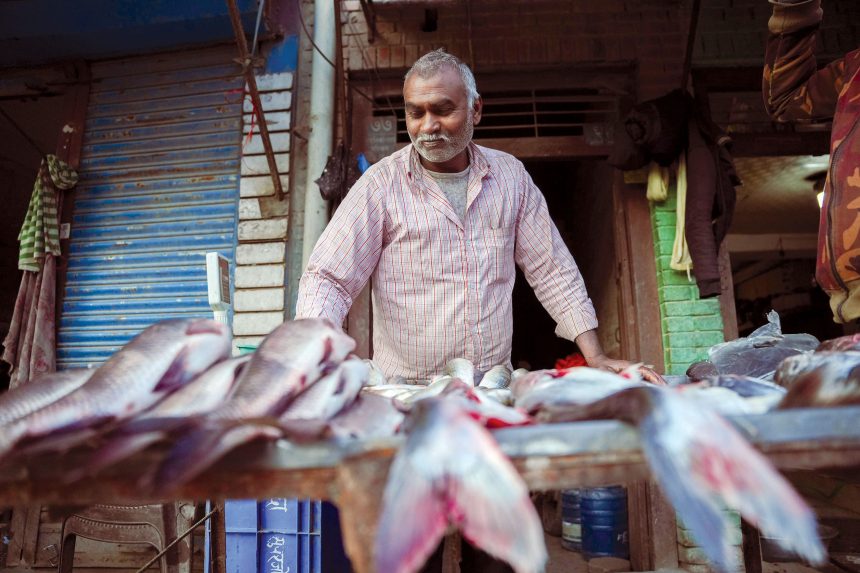
India’s ornamental fish industry made the news this month for an odd reason. The government values it at about Rs. 3000 crore at home, yet exports totaled just Rs 16.94 crore in the latest year on record.
The gap isn’t peculiar to India. Live ornamental fish worth roughly $350 million cross borders each year, according to the Observatory of Economic Complexity. Estimates drawing on the Food and Agriculture Organisation of the United Nations since the late 1990s put the whole industry, including tanks, feed, shops and wages, at $15 billion to $30 billion. The fish that cross borders are a sliver of what the hobby is worth.
A small trade behind a big hobby
Japan is one of the biggest exporters. Koi contributed to raising the farm and food exports from Japan to China to 7% in 2025, while Japan is targeting the export of koi to be worth ¥10 billion by 2030. The export of seafood from India to record $8.46 billion in 2025-26, while ornamental fish is just a rounding error in that amount. To grow the ornamental side, the government’s PMMSY fisheries scheme has backed 2,672 rearing and integrated units.
Read the numbers with care
Greeting cards have unusually good data because trade bodies count them. The US Greeting Card Association estimates Americans buy about 6.5 billion cards a year, worth $7 billion to 8 billion. Britain’s Greeting Card Association says in its latest report that single-card sales rose 1.1% to £1.53 billion while the number sold fell 2.2% to 782.4 million. Buyers are paying more per card.
Candles are harder to pin down. IMARC Group puts the 2025 global market at $11.0 billion, while another research house went from $14.06 billion in one edition to $10.78 billion in the next. A swing like that probably says more about methods than about candles.
For wigs, eyelashes, artificial flowers, and retail fish, the numbers come mostly from commercial research firms, each defining the market its own way. Grand View Research puts wigs and extensions at $15.22 billion for 2025, while Polaris Market Research’s estimate is roughly half that. False eyelash estimates for 2025 run from $1.60 billion to $2.0 billion, and retail ornamental fish from $7.5 billion to $8.4 billion.
Customs data make a good reality check. Grand View Research estimates the value of the artificial flower market globally to be $3.2 billion by 2025, but even Chinese exports of artificial flowers and plants made of plastic amounted to $2.84 billion in the same year, according to OEC. Both figures taken into account give exporters and retailers almost nothing as profit. Always double-check your numbers from trade statistics.
What people are paying for
Ask the US National Candle Association (NCA) why people buy candles, and the answer is smell. Three-quarters of buyers call fragrance “extremely” or “very” important, and about 35% of sales fall in the holiday season. NCA president Steve Horenziak told Freakonomics Radio that since the late 1970s the candle’s job has been decor and ambiance. Outside a power cut, hardly anyone buys one to see by.
A card is proof that someone remembered, in a form you can keep. A wig can be about fashion, faith, or getting through chemotherapy. An aquarium is something calm to look at. Once the purchase is about feeling, cheaper substitutes stop competing. A WhatsApp message costs nothing, and people still buy cards.
Follow the supply chain
A fish comes with a shopping list: tank, filter, heater, food and the odd course of medicine. Much of it gets bought again and again.
Hair is an even more striking case in point. As per the data from Statista, India exported nearly $700 million worth of human hair and products containing hair during FY2025. Anthropologist Emma Tarlo from Goldsmiths University suggests that around 70% of all exported hair is the hair collected through combing from households and not from temples. Quite a significant portion of this exported hair is processed outside India. Xuchang city in China’s Henan province accounts for roughly 60% of the global supply of wigs. As reported by Sixth Tone, the city’s Commerce Bureau noted hair industry trade value of 11.56 billion yuan or $1.72 billion during the first six months of 2026.
Candles and cards
outlived their purpose
By rights, both should be museum pieces. Candlemaking declined after the light bulb arrived in 1879, the NCA notes, and recovered only when the industry started selling atmosphere instead of light. Greeting cards came out of cheap postage. Henry Cole commissioned the first commercial Christmas card in 1843, three years after he helped launch Britain’s Penny Post. By the time email arrived, sending cards was a ritual that email couldn’t replace.
Questions to ask first
Market size is a poor starting point. Better to ask who exactly the buyer is and what annoys them about current options. A wedding planner and a homeowner both buy artificial flowers, but serving them is two different businesses. Identify what will draw them back, whether it is fish food, lash glue, or candles that burn down. Find out where the margins lie in the supply chain and if an upstart company can access them. And be wary of low entry costs. Horenziak says almost anyone can start a candle company, which also describes every competitor you’ll face.
A big market doesn’t make a profitable business. India’s ornamental fish sector has domestic demand, subsidies of up to 60% for some units and plenty of native species. It still exports little, mainly because commercial breeding, quality standards and logistics haven’t caught up.
From a distance, the ornamental fish trade looks a little absurd: all that money for animals nobody eats. The fish crossing borders are worth a few hundred million dollars a year, while the habit of keeping them supports an industry many times larger. Odd industries tend to work like this. The object is cheap and easy to copy. The money is in the routine around it, and in getting paid each time it repeats.