

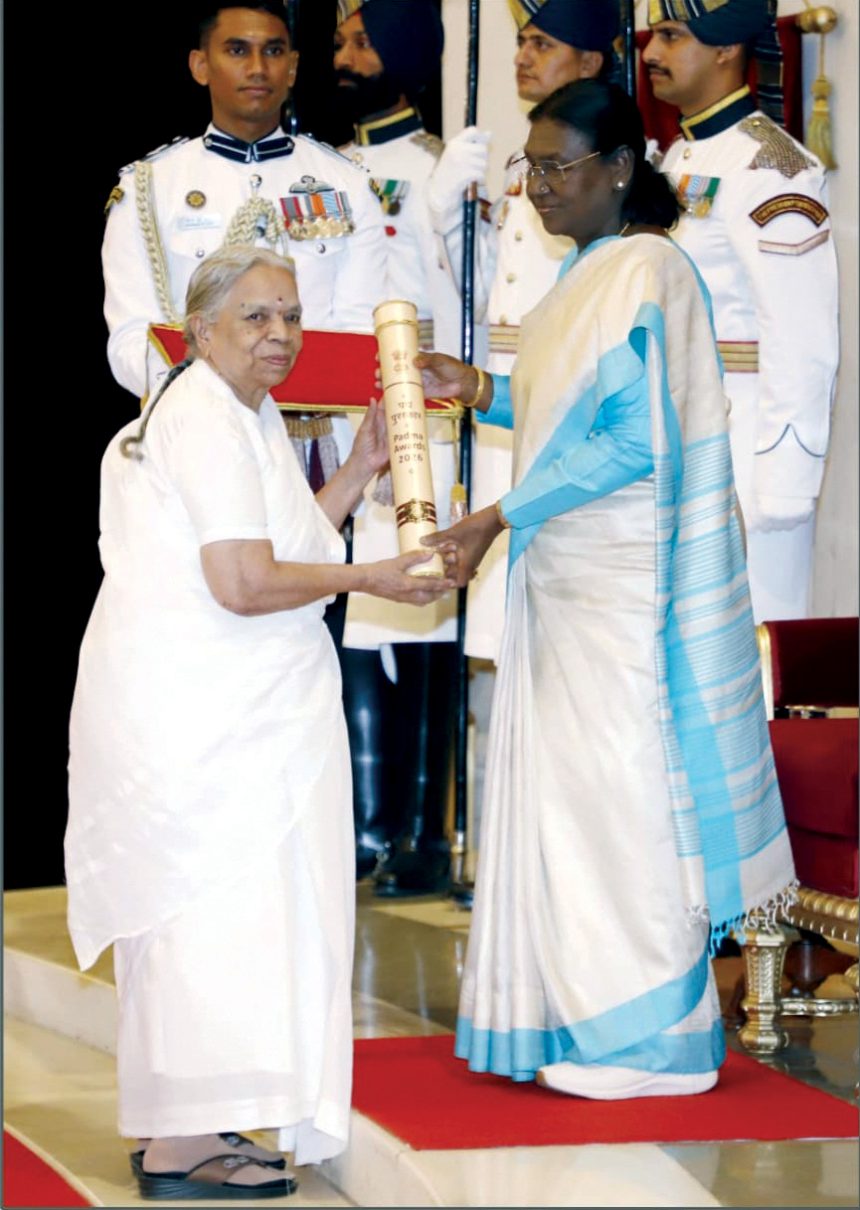
Padma Shri awardee Dr. S. G. Susheelamma, widely known as “Amma”, began Sumangali Seva Ashrama with only fifteen rupees. Today, it is one of Karnataka’s pioneering social welfare institutions. In conversation with NT NETWORK, she reflects on her journey, challenges, and commitment to dignity, self-reliance and change
MARIA FERNANDES | NT
You have devoted over five decades to social service. Looking back, which childhood experiences most influenced your commitment to the underprivileged?
Growing up in Chamarajpet, Bengaluru, I was deeply affected by the hardships I saw around me. Intelligent and hardworking women had little opportunity to shape their own futures because they lacked education or financial independence. I also saw children whose dreams were limited because of poverty.
My family played a crucial role in shaping my values. They never spoke much about service but they lived it every day whether it was by helping a neighbour in difficulty or sharing what little they had with someone in need.
These experiences shaped my belief that true change comes not from charity alone but from empowering people through education, skills, and self-reliance.
Growing up in a time when opportunities for girls were limited, what challenges did you face in pursuing your education? Who encouraged you to persevere?
Growing up, pursuing education as a young woman was not always easy. Society often expected girls to focus on household responsibilities rather than aspire to higher studies or independent careers. But I was fortunate to have a family that valued education and encouraged me to learn and grow. Their support, along with the guidance of inspiring teachers and mentors, gave me the confidence to pursue my goals despite the obstacles.
What kept me motivated was the belief that education is more than a means to personal success; it is a powerful tool for social change. As I learned more about the struggles faced by vulnerable communities, particularly women and children, I became increasingly determined to use my education to make a difference. Looking back, every challenge made me stronger and deepened my belief that knowledge should be used to create opportunities, empower people, and contribute to society.
One incident often associated with your childhood is receiving a donated textbook. How did that experience influence your understanding of poverty, dignity,
and opportunity?
I grew up in a family of 14 children. Financial difficulties were a part of daily life. When I was in Class 9 at Vani Vilas Government School, I remember standing in a queue to receive a textbook donated by former students of the school. As the principal explained how these alumni had come forward to help students like us, what touched me most was that the help was given with kindness and respect, not sympathy. It taught me an important lesson that helping people is not just about giving assistance but about giving them a chance to move forward with dignity. I decided then that when I started earning, I would do my part to help others access the opportunities I
had received.
Many years later, that lesson became the foundation of my work at Sumangali Seva Ashrama. We have always believed in empowering people to become self-reliant rather than making them dependent on support.
Your life has been guided by the philosophy of ‘Kayakave Kailasa’ (work is worship). How has it helped you remain steadfast through the years?
When we started Sumangali Seva Ashrama, we had only fifteen rupees. We did not have many resources, but we had a strong desire to help people. Whether it was teaching a woman a skill so she could earn a living, helping a child continue their education or supporting someone in need, every effort mattered.
Over the years, I have seen how work can transform lives. It gives people confidence, self-respect, and the ability to stand on their own feet. This is especially true for women, many of whom have become financially independent through the training and opportunities we provided.
My own life has taught me that no honest work is small. For me, ‘Kayakave Kailasa’ means that sincere work is a path to dignity, service,
and fulfilment.
You founded Sumangali Seva Ashrama in 1975. What inspired the vision and what were the earliest struggles?
I started Sumangali Seva Ashrama because I could not ignore the difficulties faced by women who had no support and nowhere to go. I believed that every woman deserved a safe place where she could rebuild her life with dignity, confidence and hope. With the support of a few dedicated people, especially our secretary, M. Kanthamma, I began what became a lifelong mission.
The early days were very challenging. We worked from a small zinc-sheet shed in Bengaluru and had very little money. There was no furniture, no regular source of funds and many days we worried about how we would manage our basic expenses. We did everything ourselves; cooking, cleaning, caring for the women, teaching them skills and seeking help from anyone willing to support our work.
As a young woman running an ashram, I often faced questions and criticism. Many doubted whether I could continue such work. While this was discouraging, it only made me more determined. Slowly, through honesty, hard work and commitment, we earned the trust of the community.
One of our biggest challenges was helping women regain confidence in themselves. Many believed that poverty and dependence were their destiny. We focused on teaching skills and helping them become self-reliant. Watching women gain confidence, earn an income, and build a better future for themselves brought me great happiness and reminded me why we had started this work.
Looking back, I have learned that social change does not begin with money. It begins with compassion, determination, and the courage to keep going, even when the future is uncertain.
What began as a refuge for women in distress has today become a centre for education, healthcare, and self-reliance. How did this transformation evolve and what principles have remained at the heart of
its mission?
Our focus for Sumangali Seva Ashrama was very simple. We wanted to provide a safe place for women who had nowhere else to go. Many arrived carrying deep emotional wounds, uncertainty, and fear about the future. As I spent time with them, listening to their stories and struggles, I realised that a roof over their heads and a meal on the table, though important, were only the beginning. If their lives were to truly change, they needed education, healthcare, skills and above all, the confidence to believe in themselves again.
My thinking was greatly influenced by Gandhian ideals, which had inspired me from a young age. Gandhi taught us that the true measure of progress is how we treat the most vulnerable members of society. That belief became the foundation of our work. We wanted every woman, child and family who came to us to feel valued, respected, and capable of building a better future.
Instead of encouraging dependence on charity, we focused on self-reliance. Through vocational training, education and livelihood opportunities, we helped people discover their strengths and earn with dignity.
Which are the different initiatives undertaken by the Ashrama and which have had the most lasting impact?
Our work rests on four key pillars. First, we provide shelter and care for vulnerable women, children, and the elderly. Second, we promote education and healthcare through our schools, primary health centre, well-women clinics, scan centre, and mobile health services. Third, we focus on economic empowerment through entrepreneurship and vocational training in areas such as tailoring, embroidery, weaving, screen printing, plant nurseries, and driving. Finally, we engage in community outreach, addressing issues such as female foeticide, illiteracy and substance abuse while supporting anganwadis and legal aid initiatives.
Among our many programmes, three have been especially transformative. Our Vocational Training and Entrepreneurship Development Programme has trained more than 60,000 women, helping them become financially independent and self-reliant.
Secondly, the Integrated Child Care and Education model, which combines our orphanage, schools, and more than 130 anganwadis, creates a strong foundation for children from infancy through adolescence. Many former beneficiaries have gone on to become doctors, engineers, lawyers, and other professionals.
Our holistic healthcare initiative has benefited nearly thousands by improving maternal and child health, promoting preventive care and ensuring that good health becomes a foundation for empowerment and opportunity.
Through your literacy work, what have you learned about the struggles experienced by marginalised communities? How have you seen education make a real difference?
My work in literacy campaigns taught me that illiteracy is about much more than not being able to read or write. It often means living without confidence, opportunities or the ability to speak up for oneself. I met many women who believed that education was only for other people, not for them. Some were afraid to join a class because they felt embarrassed or thought they were too old to learn.
What moved me most was seeing that fear and self-doubt slowly disappear. I still remember the joy on a woman’s face when she signed her name for the first time instead of using her thumbprint. For her it was a moment of pride and self-respect. She felt more independent and confident.
Over the years, I have seen education change lives in many ways beyond helping people find jobs. It gives people confidence to ask questions, make better decisions and stand up for their rights. I have seen women take leadership roles in their communities, support their children’s education and question practices they once accepted without thinking.
For me, the greatest gift of education is that it changes how people see themselves. When people begin to believe in their own abilities and value, real and lasting change becomes possible.
What, in your opinion, are the biggest barriers that continue to prevent women from achieving true equality and independence?
Women today have made great progress in education, employment, and leadership. However, true empowerment is about giving women the freedom and confidence to make decisions about their own lives and futures.
Many challenges still remain. Women often have to balance jobs with most of the household and caregiving responsibilities. Many do not own property or other assets, which limits their financial independence. In some communities, traditional attitudes still discourage women from taking on leadership roles or pursuing their ambitions.
Safety is another major concern. Women cannot be truly empowered if they feel unsafe at home, at work or in public places.
To overcome these challenges, we need not only better policies but also a change in attitudes. Real equality will be achieved when every woman has equal opportunities, access to resources, and the freedom to follow her dreams without fear, dependence
or discrimination.
Your work has taken you to many tribal communities that lack basic services. What experiences touched you the most? What challenges do they still face today?
My journey with tribal communities began when I visited remote villages and saw how isolated many families were from opportunities that others often take for granted. What touched me most was not their poverty but the resilience and dignity with which they faced daily hardships. I felt compelled to stand by them and do what I could to reduce these inequalities.
Even today, education remains one of the biggest challenges. Many children are eager to learn, but language barriers, inadequate facilities, and long distances to schools often make that journey difficult.
Healthcare is another concern. I have seen mothers travel long distances for basic medical care and families struggle to access timely treatment. These experiences reinforced my belief that healthcare must reach people where they live.
Livelihoods are equally important. Many tribal families possess remarkable skills and knowledge, yet they often lack access to markets, resources, and fair opportunities.
Many tribal communities face pressure to adapt to a rapidly changing world. How can development empower them while allowing them to remain connected to their traditions and values?
I believe the first step towards development is listening to people. The best results come when communities are involved in finding solutions to their own challenges. When people are respected and included, they become active partners
in development.
I have also learned that education and livelihood programmes should build on local strengths. Children should be able to receive a good education without losing touch with their language, culture and traditions. Traditional skills and knowledge should be respected and encouraged,
not ignored.
For me, true development means creating better opportunities while protecting people’s dignity and cultural identity. When communities have access to education, healthcare and livelihoods without losing their roots, development becomes meaningful and lasting.
Can you recall a memorable experience that shows how access to education and opportunity can open new doors for tribal families?
One such story is that of Kavitha (name changed), a young girl from a tribal family. When we first met her, she was looking after her younger siblings at a brick kiln instead of going to school. We brought her into our residential programme, provided her with education, nutrition, and a safe environment, and encouraged her to learn at her own pace. She gradually gained confidence, completed her studies, and later earned a degree in social work. Today, she works as a community organiser and encourages other families to educate their children.
Another inspiring story is that of Basamma, a mother from a rural village who struggled to support her family through seasonal farm work. Through our livelihood programmes, she received training in sustainable farming methods and learned how to make better use of local resources. Over time, she improved her income, became financially independent, and cleared her debts. Today, she is able to support her children’s education through her own earnings.
Looking back, what achievement makes you most proud and what more needs to be done to help society’s most vulnerable?
The deepest satisfaction comes from seeing individuals who arrived at our Ashrama feeling abandoned, fearful, and without hope emerge with confidence, dignity and purpose.
Nothing is more rewarding than watching a woman become self-reliant, a child become the first graduate in their family or a marginalised individual discover their own strength and potential.
At the same time, significant challenges remain. Poverty, inequality, lack of access to quality education and healthcare, and social discrimination continue to affect many vulnerable communities. We must continue creating opportunities, strengthening communities, and ensuring that every individual has the chance to live with dignity, self-respect, and hope for a better future.


