FILM REVIEWS SACHIN CHATTE
Film: Toy Story 5
Voices of: Tom Hanks, Tim Allen, Joan Cusack
Directed by: Andrew Stanton, McKenna Harris
Duration: 1 hour 42 minutes
Rating: * * * *
Toy Story ranks among Hollywood’s longest-running animated franchises. More importantly, in an industry where sequels are often accused of existing primarily to generate revenue, the Toy Story films have consistently managed to be a few notches above the rest. The journey began in 1995 and, with its newest instalment, the franchise is still going strong. Crucially, it continues to keep itself relevant with changing times and audiences.
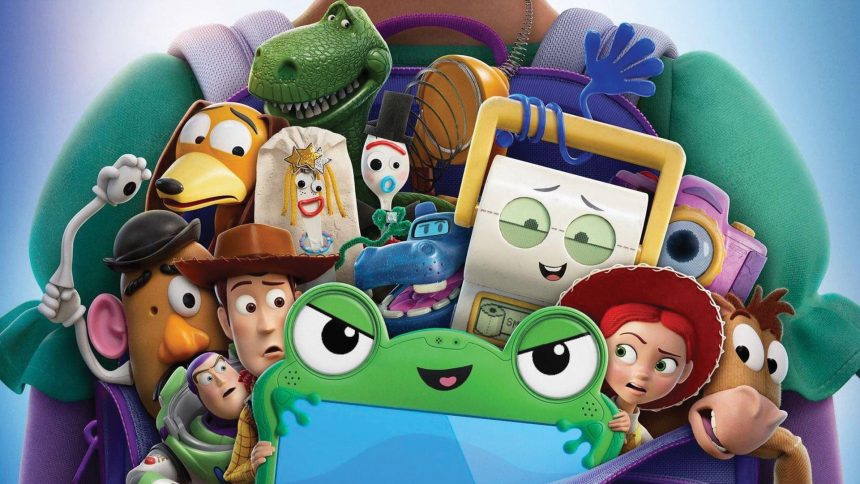
Co-directed by Andrew Stanton and McKenna Harris, Toy Story 5 is fully aware that it has been around for a while. While the characters themselves have not aged noticeably, there is a running joke about Woody (voiced by Tom Hanks), who now sports a bald patch and a slight paunch. The franchise and its characters may be old, but there is an undeniable zest to the film, and it is admirable how it continues to reinvent itself without losing its essence.
To its credit, the Toy Story films have never been restricted to children alone. They possess a charming ability to appeal to adults, tugging at the heartstrings through stories centred on toys. At a time when the world often feels bleak and divided, the innocence and warmth of Woody, Buzz, Jessie and their friends are
especially heartening.
The central theme, once again, is universal. The film explores the growing disconnect between children and the real world because of technology. The amount of time spent in front of screens impacts people in more ways than one, but the film never becomes preachy or heavy-handed.
Bonnie (voiced by Scarlett Spears) has grown into a nine-year-old who finds it difficult to spend time with the neighbourhood children because they are all busy on their tablets. Wanting to fit in, she gets one herself—a tablet she names “Lilypad”—and soon begins spending considerable time with it. Jessie (Joan Cusack), Bullseye, and the rest of the toys start feeling neglected as Bonnie increasingly chooses the digital screen over them. Sensing trouble ahead, Jessie reaches out to Woody for help, with Buzz Lightyear (Tim Allen) by her side.
When Bonnie heads to a friend’s house for a sleepover, she discovers, much to her disappointment, that hanging out with friends now means sitting alongside them while everyone remains glued to their respective devices. She is even teased for bringing Jessie and Bullseye along, and for wanting to play with toys. While previous films largely placed Woody and Buzz at the centre of the action, this time Jessie emerges as the driving force—a toy on a mission to help Bonnie rediscover genuine human connection.
The film also delves into Jessie’s backstory as she finds her way to Emily’s house, the home of her original owner. Along the way, she befriends an old camera, a potty-training device, and a small car with limited GPS capabilities. On paper, these may not sound like particularly compelling additions, but the voice performances and the characters’ antics infuse them with considerable charm.
Andrew Stanton, a two-time Oscar winner, knows exactly how and when to dial up the emotional quotient. While the film’s premise may initially appear to pit humans against technology, its message is more nuanced. Rather than dismissing technology outright, it advocates for balance and meaningful human interaction. In a subtle yet effective manner, it also highlights the impact of peer pressure on children. Bonnie wants to play with toys, but the fear of being ridiculed compels her to suppress her instincts and conform.
What makes Toy Story 5 work is that it tackles contemporary concerns without sacrificing the humour, adventure, and emotional sincerity that have defined the franchise from the beginning. The film understands that technology is now an inseparable part of modern life, but it also reminds viewers that genuine friendships, imagination and shared experiences
remain irreplaceable.
In the end, Toy Story 5 succeeds because it approaches a timely subject with warmth, humour and empathy rather than easy answers. It is a film that acknowledges the realities of modern childhood while celebrating the simple joys of imagination and companionship. Even after all these years, the franchise retains its ability to entertain younger viewers and leave older ones with something to reflect upon—a rare achievement for a series now entering its
fourth decade.
Triple trouble
Film: Cocktail 2
Cast: Shahid Kapoor, Rashmika Mandhana, Kriti Sanon
Directed by: Homi Adjania
Duration: 2 hours 30 minutes
Rating: * 1 /2
There is no delicate way to put this: Cocktail 2 boasts one of the most ludicrous stories I have encountered in recent memory. A spiritual sequel to Cocktail (2012), the film ostensibly wants to discuss modern relationships, commitment issues, and the institution of marriage. Unfortunately, it takes such a circuitous route to get there that it makes a GPS with no signal
look reliable.
Perhaps the filmmakers concluded that the success of the original film rested on foreign locations, chiselled bodies, designer wardrobes, dance numbers, and relationships—in precisely that order. The first four boxes are ticked with admirable enthusiasm. The fifth, however, is left conspicuously blank. The story, by Luv Ranjan with a screenplay co-written by Tarun Jain, revolves around a woman who has been in a long-term live-in relationship. Neither she nor her partner appears particularly interested in marriage, except when a random uncle or aunty decides to remind them that time is running out. Then comes her masterstroke: to test whether her boyfriend truly loves her, she invites her good looking, skimpily dressed friend—whom she has barely spoken to in years—to seduce him. Because apparently the healthiest way to assess a relationship is to conduct a sting operation on it.
The couple in question are Dia (Rashmika Mandanna) and Kunal (Shahid Kapoor), college sweethearts who have settled comfortably into a live-in arrangement. He is a chef who, in one scene, rushes out to buy golgappas from a roadside vendor for his restaurant patrons. She appears to have a corporate job. They drive a BMW, live well and seem financially secure. How exactly they earn their money remains one of the film’s many enduring mysteries because after the opening act, their professions disappear faster than logic in the screenplay.
Things begin to unravel at a party where Kunal cracks a rather silly misogynistic joke. This sets off Dia’s internal alarm system, although the film later attempts to justify the joke in a manner even sillier than the joke itself. To smooth things over, the couple heads to Sicily for a vacation, because Bollywood has long believed that relationship problems become more glamorous when discussed against postcard-
perfect backdrops.
Enter Alisha, aka Ally (Kriti Sanon), Dia’s old friend. Despite not being gainfully employed, Ally possesses the enviable ability to spend her days wandering picturesque locations looking effortlessly fabulous. It is here that Dia unveils her ingenious plan: “Why don’t you try and seduce my boyfriend?” Before long, Dia is left behind while our chef hero is busy cooking kadhi chawal and forging connections with his new acquaintance. Nothing says romance quite like comfort food and questionable decision-making.
From this point onward, the film descends with remarkable commitment. One moment the two women are locked in an emotional tug-of-war over Kunal; the next, the film abruptly transforms into a comedy. Characters cry, shout, reconcile, misunderstand, and overreact with such frequency that one begins to suspect everyone involved is operating under severe jet lag.
To be fair, the film occasionally stumbles upon a moment of accidental wisdom. At one point, Kunal remarks, “Yeh sab social media ki wajah se hota hai”, while discussing relationship complications. Later, exasperated by the two women, he protests, “Tum dono ne mera mazaak bana rakha hai”. Frankly, that sentiment could apply to the trio.
There isn’t much to write home about in terms of performances, though Kriti Sanon makes the strongest impression in a relatively substantial role. Rashmika Mandanna is saddled with a character whose decisions become increasingly difficult to defend. Shahid Kapoor remains sincere throughout, and it is genuinely refreshing to see him in a role that doesn’t require him to channel his inner Kabir Singh every 15 minutes.
Having endured the film, Cocktail 2 left me longing for a stiff drink. But then I remembered the censor board’s warning, which popped up with admirable regularity throughout the runtime: “Drinking alcohol can be injurious to health”. After watching Cocktail 2, I am inclined to believe there should be a similar warning for bad
relationship advice.