AP
Tehran
The United States demanded on Wednesday that Iran immediately reopen the Strait of Hormuz after the Islamic Republic closed the waterway in response to Israeli attacks against the Hezbollah militant group in Lebanon.
Iran’s move cast doubt over whether an already precarious ceasefire to end more than a month of war would hold.
The United States and Iran both claimed victory after reaching the agreement, and world leaders expressed relief, even as more drones and missiles hit Iran and Gulf Arab countries.
Israel also intensified its attacks in Lebanon, hitting several commercial and residential areas in Beirut without warning. At least 112 people were killed and hundreds were wounded in one of the deadliest days in the latest Israel-Hezbollah war.
The fresh violence threatened to scuttle what US Vice President JD Vance called a “fragile” deal.
“Aggression towards Lebanon is aggression towards Iran,” Gen Seyed Majid Mousavi, aerospace commander of Iran’s Revolutionary Guard, wrote on X. He warned that Iranian forces were preparing a “heavy response” without revealing details.
Iranian Foreign Minister Abbas Araghchi insisted that an end to the war in Lebanon was part of the ceasefire agreement with the US.
“The world sees the massacres in Lebanon,” he said in a post on X. “The ball is in the US court, and the world is watching whether it will act on its commitments.”
Iran, the US and Israel agreed to a two-week ceasefire in an 11th-hour deal that headed off US President Donald Trump’s threat to unleash a bombing campaign to destroy Iranian civilisation. But hours after the announcement, Iran and Gulf Arab countries reported new attacks on Wednesday.
Iran said the deal would allow it to formalise its new practice of charging ships passing through the Strait of Hormuz, a crucial transit lane for oil. But the details were not clear, nor was it known whether vessels would feel safe using the channel or whether ship traffic had resumed. It also was unclear whether any other country agreed to this condition.
Pakistan, which helped to mediate the deal, and others said fighting would pause in Lebanon, where Israel has launched a ground invasion against the Iran-backed Hezbollah militant group. Israel said it would not, and strikes hit Beirut on Wednesday.
The fate of Iran’s missile and nuclear programmes – the elimination of which were major objectives for the US and Israel in going to war – also remained unclear. Trump said the US would work with Iran to remove buried enriched uranium, though Iran did not confirm that.
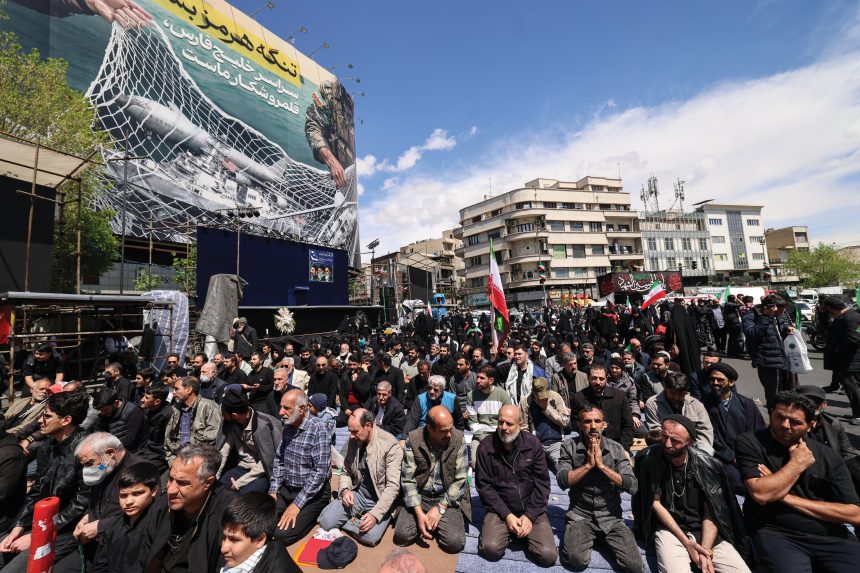
In the streets of Tehran, pro-government demonstrators screamed: “Death to America, death to Israel, death to compromisers!” after the ceasefire announcement and burned American and Israeli flags.
The chants underscored the anger animating hardliners, who have been preparing for what many assumed would be an apocalyptic battle with the United States. Trump warned Tuesday that “a whole civilisation will die tonight,” if a deal wasn’t reached.
Trump initially said Iran proposed a “workable” 10-point plan that could help end the war the US launched with Israel on February 28. But when a version in Farsi emerged that indicated Iran would be allowed to continue enriching uranium, which is key to building a nuclear weapon, Trump called it fraudulent without elaborating.
Vance later said the deal was being misrepresented within Iran, though he did not offer details.
Iran’s demands for ending the war include a withdrawal of US combat forces from the region, the lifting of sanctions, and the release of its frozen assets.
In his post Wednesday, Trump said: “We are, and will be, talking tariff and sanctions relief with Iran.”
It was not clear if other Western nations would agree to that, and the other points are likely nonstarters. United Nations Secretary General Antonio Guterres’s personal envoy arrived in Iran for talks on “the way forward.”
Pakistan said talks to hammer out a permanent end to the war could begin in Islamabad as soon as Friday.
Israel backed the US ceasefire with Iran, but Prime Minister Benjamin Netanyahu said the deal does not cover fighting against Hezbollah.
Israeli Chief of Staff Lt Gen Eyal Zamir said Israel will continue to “utilise every operational opportunity” to strike Hezbollah. The Israeli military said it struck more than 100 targets within 10 minutes Wednesday across Lebanon, the largest wave of strikes since March 1.
While Iran could not match the sophistication of US and Israeli weaponry or their dominance in the air, its ability to control the Strait of Hormuz proved a tremendous strategic advantage.
Iranian attacks and threats deterred many commercial ships from passing through the waterway, through which 20 per cent of all traded oil and natural gas passes in peacetime.
The ceasefire may formalise a system of charging fees in the strait that Iran instituted – and give it a new source of revenue.
The plan allows for both Iran and Oman to charge ships, according to a regional official who spoke on condition of anonymity to discuss negotiations they were directly involved in. The official said Iran would use the money it raised for reconstruction.
Shortly after the ceasefire announcement, Bahrain, Israel, Kuwait, Saudi Arabia and the United Arab Emirates all issued warnings about incoming missiles from Iran. That fire stopped for a time, then hostilities appeared to restart.
An oil refinery on Iran’s Lavan Island came under attack, according to Iranian state television. Its report said that firefighters were working to contain the blaze but no one had been hurt. It did not say who launched the attack.