

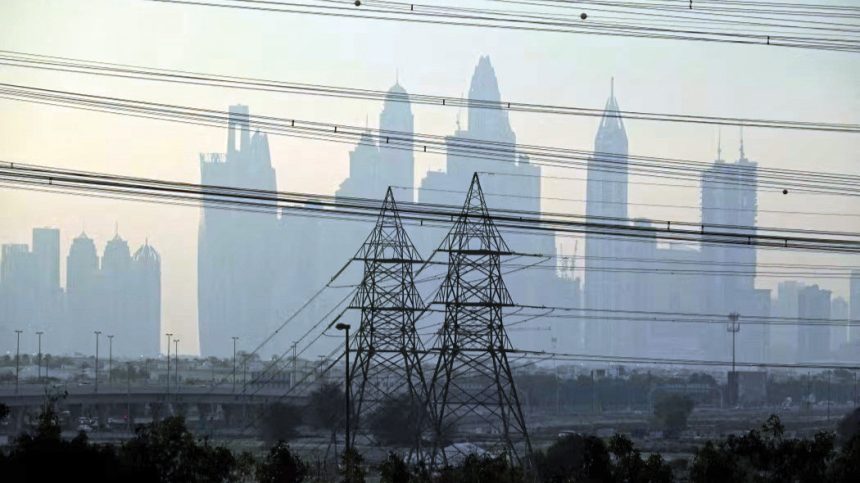
Tehran: Three times a week, Asghar Hashemi undergoes dialysis treatment at a hospital in northern Tehran. He fears that if power stations are knocked out, as US President Donald Trump has threatened in escalating rhetoric, his life will be in danger.
Tehran residents rushed Tuesday to stock up on bottled water and charge cellphones, flashlights and portable power banks as the hours ticked down to Trump’s latest ultimatum for a deal that includes Iran reopening the Strait of Hormuz or face attacks on power plants and bridges. Despite the threats and risks to his health, the 56-year-old employee at Tehran’s subway authority said he’s no worse off than other Iranians who’ve been living under attack for more than five weeks.
“I am worried, but I am more worried about my fellow citizens,” Hashemi said, lying on his bed at Tajrish Martyrs Hospital. “Whatever happens, we will stand until the end.”
I will be ready to pick up a gun and start a fight against the enemy,” he said.
Iranians’ main concern quickly became electricity as Trump’s deadline grew closer.
“When there is no electricity, there will be no water, no hygiene, nothing,” said Mahan Qayoumi, 23, who works at an artisan shop, where he said business would stop under a power outage. He brought emergency lights to his apartment to prepare, noting that “all aspects of life” would be affected.
A young designer in central Tehran, speaking on condition of anonymity for her safety, said her parents left at the beginning of the war, but she stayed behind to take care of her cat, Maya. Now, because of Trump’s threats, she said she plans to drive north which has largely been spared heavy strikes with Maya and join her family. In the streets of Tehran, security was tighter than usual Tuesday, with checkpoints in different parts of the capital.
Iran’s internet remains largely shut off, throttling news even as panic spread over Trump’s warnings.
A 26-year-old Pilates instructor said on condition of anonymity for her safety via Telegram that she’s been unable to prepare for possible attacks. She called this week the “worst atmosphere” since the war began. “Honestly, we’ve kind of lost it at this point,” she said, describing how she’s not left home for the last few days and she and her family refuse to leave Tehran. “Whatever is going to happen let it happen. We are dying bit by bit.”
One resident said that if the US follows through on its threat, the people of Iran not the government will be the victims.
“By attacking infrastructure, the Islamic Republic will not be destroyed, only we will be destroyed,” the woman, a teacher in her 20s, said via a message on Telegram, on condition of anonymity for her safety.
‘American journalist Shelly Kittleson released’
Baghdad: American journalist Shelly Kittleson, who was kidnapped from a Baghdad streetcorner last week, has been released, an Iraqi official with direct knowledge of the situation said on Tuesday. Kittleson was freed in the afternoon, said the official, who spoke to The Associated Press on condition of anonymity because he was not authorised to comment publicly. He did not share her current whereabouts but said that prior to her release, she had been held in Baghdad.
Kataib Hezbollah said in a statement earlier in the day it had decided to free Kittleson, who was abducted on March 31.
The group said its decision came “in appreciation of the patriotic stances of the outgoing prime minister,” Mohammed Shia al-Sudani, without giving more details. It added that “this initiative will not be repeated in the future.”
The statement added a condition – that Kittleson must “leave the country immediately” upon her release.
The US State Department did not immediately respond to a request for comment.
Kataib Hezbollah had not previously acknowledged that it was the one responsible for Kittleson’s abduction, although both US and Iraqi officials had pointed fingers at the group.
Two officials within the militia, who spoke on condition of anonymity because they were not authorised to comment publicly, told the AP that in exchange for freeing Kittleson, several members of the group who had previously been detained by Iraqi authorities would be released.
Kittleson, 49, a freelance journalist, had lived abroad for years before the kidnapping, using Rome as her base for a time and building a respected journalism career across the Middle East, particularly in Iraq and Syria. Like many freelancers, she often worked on a shoestring budget and without the protections afforded by large news organisations to staff.
She had entered Iraq again shortly before her abduction. US officials have said that they warned her multiple times of threats against her, but that she did not want to leave.
Iraqi officials have said that two cars were involved in the kidnapping, one of which crashed while being pursued near the town of al-Haswa in Babil province, southwest of Baghdad. The journalist was then transferred to a second car that fled the scene.
Three Iraqi officials said earlier Tuesday that attempts to negotiate her release had run into obstacles.
The two Iraqi security officials and one official from the pro-Iran Coordination Framework political bloc spoke to the AP on condition of anonymity because they were not authorised to speak about the sensitive case publicly.
One of the security officials said that an official with the Popular Mobilisation Forces, a coalition of Iran-backed militias that is nominally under the control of the Iraqi military, had been tasked with communicating with the abductors to secure Kittleson’s release but had run into difficulties in communicating with the Kataib Hezbollah leadership.
“The primary challenge is that the leaders of the Kataib militia – specifically, the commanders of the battalions – are nowhere to be found. No one knows their whereabouts, and the process of establishing contact with them is extremely complex,” they said. “These leaders have gone underground, maintaining no active lines of communication, out of fear of being targeted.”
The political official said a message had been sent to the Kataib leadership to determine their demands in exchange for releasing the kidnapped journalist. Iraqi authorities were willing to release six Kataib Hezbollah members who are currently detained, most of them in connection with attacks on a US base in Syria, they said.

